



Why Specialty Coffee Tastes Better: A Complete Guide
Table of Contents
- Why Specialty Coffee Tastes Better: The Fundamentals
- Bean Quality and Origin: Where Flavor Begins
- Specialty Coffee vs Commercial Coffee: What Sets Them Apart
- The Role of Roast Date and Freshness
- Precision Brewing: Variables That Matter
- Extraction Science and Flavor Development
- How to Brew Specialty Coffee at Home
- Sustainability and Ethical Sourcing as a Flavor Factor
- The Barista's Palate: Sensory Training and Bitterness vs Sourness
- Conclusion
Last Updated: August 12, 2026
Why Specialty Coffee Tastes Better: The Fundamentals
Specialty coffee tastes better because every step from farm to cup prioritizes flavor over volume. The difference between specialty coffee and commercial alternatives comes down to intention: one is engineered for consistency and shelf stability, the other for complexity and sensory experience.
When you taste specialty coffee, you're tasting the result of deliberate choices. The farmer selected specific coffee cherries at peak ripeness. The roaster developed a roast profile that highlights rather than masks the beans' natural characteristics. The person brewing it measured variables with precision. Each decision compounds.
Commercial coffee prioritizes shelf life and cost efficiency. Specialty coffee prioritizes what's actually in your cup. That's not marketing. That's the fundamental difference in how these products are made.
At Venro Coffee Co., we've spent years sourcing single-origin beans from specific regions and microclimates because origin characteristics matter. A coffee from Papua New Guinea tastes nothing like one from Peru, and that difference is the entire point. Commercial producers blend beans from multiple origins to create consistency. Specialty roasters celebrate the differences.

Bean Quality and Origin: Where Flavor Begins
The foundation of specialty coffee is bean quality. Not all coffee beans are created equal, and the origin, where the coffee was grown, determines much of what you'll taste in the final cup.
Specialty grade coffee refers to beans that score 80 points or higher on the Specialty Coffee Association's 100-point scale. Commercial coffee typically scores 65-75. That 5-15 point gap represents the difference between good and exceptional. The evaluation measures everything from aroma to acidity to body and balance.
Origin characteristics are non-negotiable. A coffee's terroir, the altitude, soil composition, climate, and rainfall of its growing region, shapes its flavor profile before the bean ever reaches a roaster. Mexican coffees tend toward chocolate and nutty notes. Kenyan coffees often express bright acidity and fruit-forward profiles. Papua New Guinea coffees develop caramel, honey, and fruit characteristics. These aren't flavor additions; they're what the plant produces.
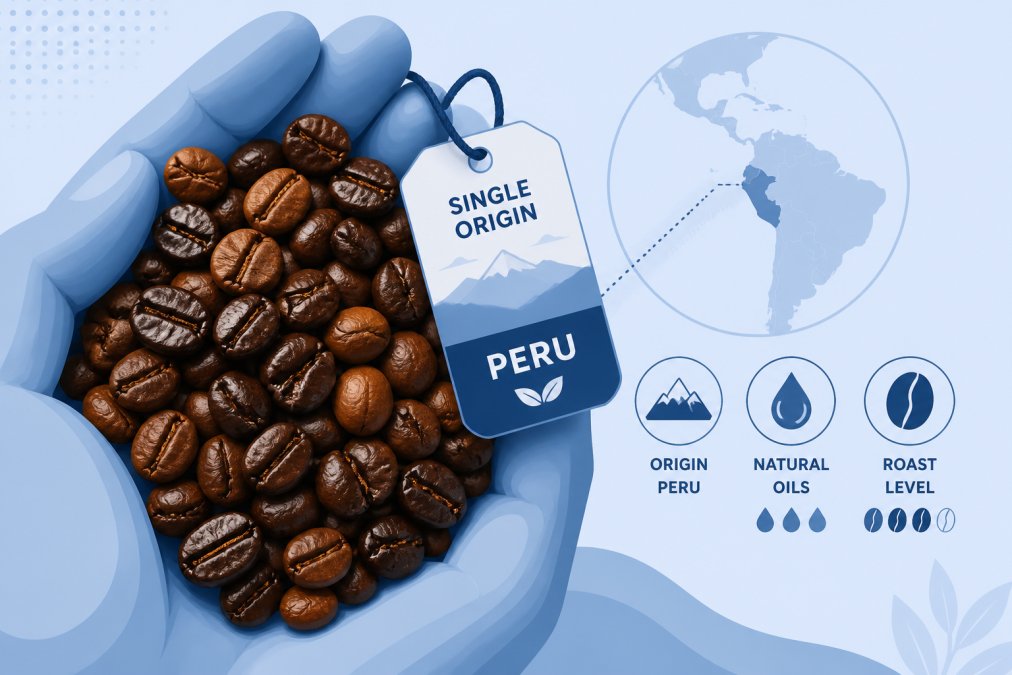
Smallholder farmers and agricultural cooperatives, the backbone of specialty coffee sourcing, harvest coffee cherries by hand, selecting only ripe fruit. Commercial operations use mechanical harvesting, which pulls both ripe and unripe cherries from the tree. That efficiency costs flavor. Unripe beans introduce sourness and vegetal notes that roasters must work to minimize.
Processing method also shapes flavor. Natural processing (drying the whole cherry) creates fruity, wine-like notes. Washed processing (removing the fruit before drying) produces cleaner, brighter flavors. Honey processing (removing skin but keeping some mucilage) falls somewhere between. Each method is deliberate. Each produces a different sensory result.
Varietal matters too. Bourbon, Typica, and Geisha are coffee plant varieties with distinct genetic profiles. Geisha beans from Panama command premium prices because they consistently express floral, tea-like characteristics that other varieties don't. You're not paying for marketing; you're paying for genetics and the work required to cultivate them.
Specialty Coffee vs Commercial Coffee: What Sets Them Apart
The gap between specialty coffee and commercial coffee is structural, not subjective. They're made through different processes, sourced differently, and designed for different purposes.
Commercial coffee prioritizes consistency and profitability. Beans come from multiple origins, multiple harvest years, and multiple processing methods. They're blended to hit a target flavor profile, usually something safe and inoffensive. The roast is often darker, which masks varietal characteristics and inconsistencies. Darker roasts taste more similar to each other than lighter roasts do. That's intentional.
Specialty coffee prioritizes transparency and flavor expression. Single-origin beans come from a specific farm or region in a specific harvest year. The roast profile is developed to highlight what makes that coffee unique. A light roast preserves acidity and origin characteristics. A medium roast balances acidity with body. A dark roast develops deeper, more bitter-forward notes. The choice depends on the bean, not on a formula.
The supply chain is different too. Commercial coffee moves through commodity markets and large distributors. Specialty coffee often moves directly from roaster to consumer or through specialty retailers who understand the product. That direct relationship means fresher coffee reaches you. It also means accountability. If a specialty roaster sources poor-quality beans, their reputation suffers immediately.
Flavor consistency differs fundamentally. Commercial coffee aims for consistency across batches. Specialty coffee aims for consistency within a batch while celebrating the natural variation that comes from growing a plant. Two bags of the same specialty coffee from consecutive harvests might taste slightly different because weather, soil conditions, and ripeness vary. That variation is a feature, not a flaw.
The Role of Roast Date and Freshness
Freshness is non-negotiable for specialty coffee. A coffee roasted three weeks ago tastes different from one roasted three days ago, and the difference matters.
When coffee is roasted, the heat triggers chemical reactions that create flavor compounds. The roasting process doesn't end when the beans cool; it continues through degassing, the process where carbon dioxide escapes from the bean. Peak flavor typically occurs 5-7 days after roasting. The coffee has degassed enough to extract properly but hasn't yet lost the volatile aromatic compounds that make it interesting.
After two weeks, the coffee is still good. After three weeks, the natural oils on the bean surface begin to oxidize. The acidity flattens. The aroma dulls. After a month, you're tasting a shadow of what the roaster intended.
Commercial coffee can sit in warehouses for months because it's designed to. Specialty roasters print roast dates on their bags because freshness is part of the product promise. When you buy specialty coffee, you're buying something that was roasted recently and shipped to you quickly.
Venro Coffee Co. roasts to order and ships immediately because we understand that specialty coffee's advantage disappears if it sits too long. A coffee roasted on August 1st and in your hands by August 5th tastes dramatically better than one roasted in June.
Storage matters too. Coffee absorbs moisture and odors. It's sensitive to light and heat. The best storage is an airtight container in a cool, dark place. Whole beans last longer than ground coffee because grinding increases surface area and accelerates oxidation. Grind immediately before brewing for maximum flavor.
Precision Brewing: Variables That Matter
Specialty coffee demands precision. This isn't snobbery; it's chemistry. Small changes in variables produce measurable changes in flavor.
The brew ratio, the weight of coffee to water, is the foundation. Most specialty brewers target a ratio between 1:15 and 1:18 (one part coffee to 15-18 parts water). A 1:16 ratio is common. If you use 20 grams of coffee, you'd use 320 grams of water. That precision matters. A 1:14 ratio produces a stronger cup. A 1:18 ratio produces a lighter cup. Neither is wrong; both are intentional.
Grind consistency shapes extraction. Uneven grinds extract unevenly. Some particles dissolve too quickly, releasing bitter compounds. Others don't dissolve enough, leaving sourness. A burr grinder produces consistent particle size. A blade grinder produces chaos. For specialty coffee, a burr grinder is essential.
Water quality is underrated. Tap water with high mineral content or chlorine affects flavor. Filtered water is better. Water chemistry, specifically, total dissolved solids, influences how efficiently coffee extracts. Water that's too soft extracts too quickly and tastes sour. Water that's too hard extracts slowly and tastes flat. Most specialty brewers use filtered water with controlled mineral content.
Temperature control determines extraction speed. Water at 195-205°F is standard. Hotter water extracts faster and more completely. Cooler water extracts slower, potentially leaving sourness. The specific temperature depends on the brew method and the roast profile. A light roast often benefits from slightly hotter water. A dark roast often benefits from slightly cooler water.
Brew time varies by method. A pour-over takes 3-4 minutes. An espresso shot takes 25-30 seconds. A French press takes 4 minutes. These times aren't arbitrary; they're calibrated to achieve the right extraction yield, the percentage of the coffee's soluble material that ends up in your cup. Under-extraction leaves sourness. Over-extraction produces bitterness.
Extraction Science and Flavor Development
Understanding extraction explains why specialty coffee tastes better. It's the bridge between bean quality and what you experience in your cup.
Extraction is the process of dissolving soluble compounds from coffee grounds into water. Those compounds, acids, sugars, oils, proteins, and hundreds of other molecules, create flavor. The goal is to extract the right amount. Too little extraction leaves sourness and underdeveloped flavor. Too much extraction produces bitterness and harsh astringency.
The Specialty Coffee Association defines ideal extraction as 18-22% of the coffee's mass dissolving into water. That narrow range is where all the good flavors come through and the unpleasant ones stay behind. Achieving that range requires controlling multiple variables simultaneously.
Water chemistry influences solubility. Minerals in water, calcium and magnesium specifically, help extract flavor compounds. Water with no minerals (distilled water) extracts poorly. Water with too many minerals can over-extract. Total dissolved solids between 75-150 parts per million is ideal for most brewing methods.
Particle size affects surface area. Finer grinds have more surface area, so they extract faster. Coarser grinds extract slower. For a 3-minute pour-over, a medium grind works. For a 30-second espresso shot, a fine grind is necessary. For a French press, a coarse grind prevents over-extraction during the 4-minute steep.
The bloom phase, the first 30-45 seconds of brewing when hot water first contacts the grounds, releases carbon dioxide and begins extraction. Many specialty brewers pause after pouring just enough water to saturate the grounds, allowing the bloom to complete before continuing. This improves extraction consistency.
Temperature stability matters because extraction accelerates as water cools. A pour-over that starts at 205°F and cools to 180°F extracts differently at the beginning than at the end. Some brewers use insulated vessels or preheat equipment to maintain temperature throughout the brew.
Flavor development is the result of successful extraction. Acidity, the bright, tangy notes, comes from acids in the bean. Sweetness comes from sugars that dissolve during roasting and extraction. Body comes from oils and proteins. Balance comes from the right proportion of all three. Specialty coffee tastes better because the beans are better and the brewing method respects the extraction science.
How to Brew Specialty Coffee at Home
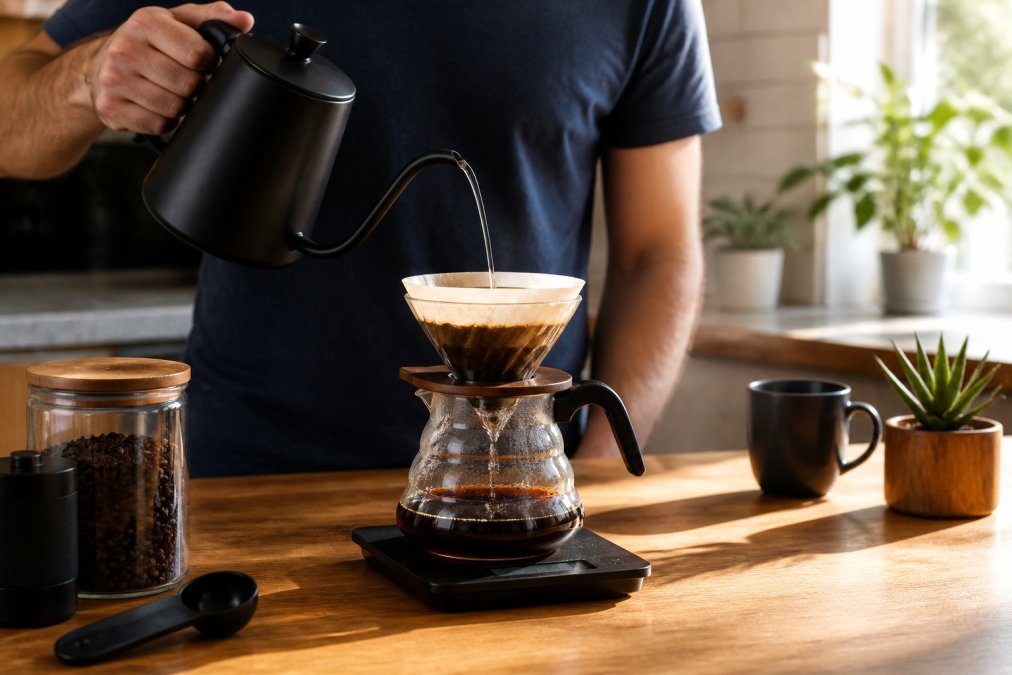
Brewing specialty coffee at home is straightforward if you understand the variables. You don't need expensive equipment; you need intention.
Start with a burr grinder. This is non-negotiable. A burr grinder produces consistent particle size. A blade grinder doesn't. Consistency is the foundation of repeatable, good-tasting coffee. Grind immediately before brewing.
Choose a brew method that fits your routine. Pour-over is forgiving and produces clean, bright coffee. A French press is simple and produces full-bodied coffee. An AeroPress is versatile and produces balanced coffee. Espresso requires more equipment and skill but produces concentrated, syrupy coffee. Pick one and master it before moving to another.
Measure by weight, not volume. A kitchen scale costs $15-30 and changes everything. Volume measurements are inconsistent because coffee density varies. Weight is precise. Use a 1:16 ratio as your starting point: 25 grams of coffee to 400 grams of water. Adjust from there based on taste.
Use filtered water. Tap water varies by location. Filtered water is consistent. If you want to optimize further, use water with 75-150 parts per million total dissolved solids. Most filtered water falls in that range.
Water Quality and Temperature Control
Water quality shapes extraction more than most people realize. Coffee is 98% water. Poor water means poor coffee.
Tap water contains chlorine, fluoride, and minerals that vary by location. Some tap water is excellent; some is terrible. Filtered water removes chlorine and reduces mineral content. A simple pitcher filter or faucet filter works. For serious brewing, a water filtration system that produces water with controlled mineral content is ideal.
Temperature control is straightforward with a simple digital thermometer or a kettle with a temperature display. Aim for 195-205°F. Let water cool for 30 seconds after boiling if you don't have a thermometer. That's close enough.
Grind Consistency and Brew Ratio
Grind consistency determines extraction speed. Inconsistent grinds extract at different rates, producing both sourness and bitterness in the same cup.
A burr grinder produces uniform particles. Burr grinders come in two types: blade burrs (cheaper, less consistent) and conical burrs (more expensive, more consistent). Even an entry-level conical burr grinder outperforms a blade grinder.
Brew ratio is the ratio of coffee to water by weight. A 1:16 ratio means 16 grams of water for every 1 gram of coffee. A 1:15 ratio produces a stronger cup. A 1:17 ratio produces a lighter cup. Start at 1:16 and adjust based on taste. If the coffee tastes sour, try 1:15 (more coffee, stronger extraction). If it tastes bitter, try 1:17 (less coffee, lighter extraction).
Sustainability and Ethical Sourcing as a Flavor Factor
Ethical sourcing and sustainability aren't separate from flavor; they're connected to it.
Farmers who are paid fairly invest in their farms. They select ripe cherries carefully. They experiment with processing methods. They maintain soil health. All of this produces better coffee. Farmers who are paid commodity prices cut corners. They harvest mechanically. They focus on volume, not quality.
Specialty coffee roasters often work directly with farmers or through fair-trade cooperatives. That relationship creates accountability. The roaster knows where the coffee comes from and how it was grown. The farmer knows their coffee will be valued for quality. That alignment produces better coffee.
Environmental sustainability also affects flavor. Shade-grown coffee, where coffee plants grow under a canopy of taller trees, produces beans with different characteristics than sun-grown coffee. Shade-grown coffee often expresses more acidity and complexity. The slower ripening that shade provides develops more nuanced flavors.
Water conservation and soil health in coffee-growing regions affect the coffee's terroir. Regions with depleted soil or water stress produce inferior coffee. Regions where farming practices prioritize long-term sustainability produce better coffee year after year.
When you buy specialty coffee from a roaster like Venro Coffee Co. that emphasizes ethical sourcing, you're not just supporting farmers. You're buying coffee that was grown with intention, harvested with care, and roasted to express what makes it special.
The Barista's Palate: Sensory Training and Bitterness vs Sourness
A skilled barista tastes coffee constantly. That training develops a palate that can identify what's happening in a cup.
Bitterness and sourness are different sensations with different causes. Sourness comes from under-extraction. The coffee tastes sharp, thin, and acidic. It's unpleasant. The fix is to extract more: use a finer grind, hotter water, or longer brew time.
Bitterness comes from over-extraction. The coffee tastes harsh, dry, and astringent. It's also unpleasant. The fix is to extract less: use a coarser grind, cooler water, or shorter brew time.
A trained palate can taste the difference immediately and adjust. A beginner palate might confuse the two. This is where brewing specialty coffee at home gets interesting. You develop your own palate through repetition. You brew the same coffee multiple ways and taste what changes.
Acidity in specialty coffee is different from sourness. Acidity is a positive characteristic, it's brightness, complexity, and liveliness. A well-extracted light roast expresses acidity as a pleasant sensation. Under-extracted coffee expresses acidity as unpleasant sourness. The coffee is the same; the extraction determines how you experience it.
Sweetness develops through roasting and extraction. Longer roasts develop deeper, more caramel-like sweetness. Shorter roasts preserve the coffee's origin-driven sweetness. Proper extraction brings that sweetness forward.
Body is the weight and texture of the coffee in your mouth. Full-bodied coffees feel thicker. Light-bodied coffees feel thinner. Body comes from oils and proteins. A French press produces more body than a pour-over because the metal filter allows oils to pass through. The same coffee brewed two ways will taste different.
Developing your palate takes time. Taste specialty coffee from different origins. Notice how a Kenyan coffee tastes different from a Brazilian coffee. Taste the same coffee brewed different ways. Notice how temperature and grind affect flavor. That active tasting is how you develop the ability to recognize what you're experiencing and adjust your brewing to get better results.
Specialty coffee tastes better because it's built to. From the farmer who selects ripe cherries to the roaster who develops a profile that highlights origin characteristics to the person brewing with precision, every step prioritizes flavor.
If you're ready to experience specialty coffee at home, start with freshly roasted beans from a roaster who prints the roast date on the bag. Venro Coffee Co. offers single-origin coffees like Mexico, Nicaragua, Papua New Guinea, and Peru, each expressing distinct origin characteristics and roasted to highlight what makes them special. Invest in a burr grinder and a simple scale. Measure your coffee and water by weight. Control your temperature. Let the beans speak. The difference is immediate.


Frequently Asked Questions
What is the difference between specialty coffee and commercial coffee?
Specialty coffee is graded by strict standards: specialty grade beans score 80+ points on a 100-point scale and come from traceable origins with documented processing methods. Commercial coffee blends lower-grade beans (below 80 points) to reduce costs, often masking defects with darker roasts. Specialty coffee emphasizes origin characteristics, varietal differences, and flavor notes. Commercial coffee prioritizes consistency and shelf stability over complexity. The difference shows immediately in the cup: specialty coffee delivers distinct flavor notes, while commercial blends taste flat and bitter.
How important is the roast date when buying specialty coffee?
Roast date is critical to specialty coffee quality. Coffee begins degassing immediately after roasting and reaches peak flavor 3-7 days after the roast date. Beans older than 30 days lose aromatic compounds and natural oils that create the bright, complex flavors specialty coffee is known for. Commercial coffee often sits in warehouses for months, which is why it tastes stale. Always check the roast date on your bag, specialty roasters like Venro Coffee Co. print it prominently because freshness is non-negotiable for quality.
Will I actually taste the difference between specialty coffee and what I buy locally?
Yes, if you're comparing specialty-grade beans to commercial blends. The difference appears in three ways: clarity (you'll taste specific flavor notes like chocolate, citrus, or caramel instead of generic 'coffee'), smoothness (specialty coffee has balanced acidity and body without harsh bitterness), and complexity (multiple flavor layers unfold as the coffee cools). Single-origin coffees like Venro's Peru or Nicaragua beans make this especially obvious because the terroir, the region's soil, altitude, and climate, creates distinct flavor profiles you won't find in generic blends.
What brewing method brings out the best flavor in specialty coffee?
Pour-over and French press methods work best because they give you control over three critical variables: water temperature (195-205°F), brew ratio (1:16 coffee to water), and contact time. These methods highlight the origin characteristics and flavor notes specialty coffee is prized for. Espresso machines work too but require more precision. Avoid automatic drip machines, they often brew at incorrect temperatures, causing under-extraction (sour, thin coffee) or over-extraction (bitter, harsh). The key is controlling grind consistency, water chemistry, and thermal stability throughout the brew.
This article was written using GrandRanker