



How to Identify Ethically Sourced Coffee: A 2026 Guide
Table of Contents
- What Is Ethically Sourced Coffee?
- Understanding Fair Trade vs Direct Trade Coffee
- Coffee Certification Labels Explained
- Evaluating Supply Chain Transparency and Traceability
- Assessing Labor Conditions and Fair Wages
- Environmental Impact: Shade-Grown and Sustainable Farming
- How to Read a Coffee Label for Ethical Claims
- Best Ethically Sourced Coffee Brands and What to Look For
- DIY Verification Checklist: Spotting Greenwashing
- Conclusion
Last Updated: August 8, 2026
What Is Ethically Sourced Coffee?
Ethically sourced coffee is produced with consideration for environmental, social, and economic impact, meaning farmers receive fair compensation, workers operate under safe conditions, and farming practices protect ecosystems. It contrasts sharply with commodity coffee, where prices are driven to the lowest point and only the largest middlemen benefit.
Conventional coffee production often harms both people and land: farmers in developing countries earn less than production costs, pesticides contaminate water supplies, and forests are cleared for monoculture plantations. Ethically sourced coffee builds accountability into the supply chain to address these failures.
At Venro Coffee Co., we source beans from farms and cooperatives prioritizing worker welfare and environmental stewardship. Understanding what makes coffee truly ethical, versus merely marketed that way, requires looking beyond labels into the mechanisms that ensure fairness.
Understanding Fair Trade vs. Direct Trade Coffee
Fair Trade and Direct Trade represent two different approaches to ethical sourcing, each with distinct mechanisms.
Fair Trade certification uses a standardized third-party system. Fair Trade organizations set minimum prices, require labor standards, and certify producers meeting those benchmarks. Farmers receive a guaranteed price floor regardless of market fluctuations, enabling investment planning. Fair Trade also mandates that a portion of revenue fund community development projects like schools, water systems, and healthcare.
Direct Trade eliminates the middleman entirely. Roasters buy directly from farms or cooperatives at prices typically higher than Fair Trade minimums, with no third-party certification. Instead, roasters take responsibility for verifying conditions through long-term partnerships, farm visits, and annual price negotiations. This model rewards exceptional quality and allows farmers to capture more profit per pound.
The trade-off is verification. Fair Trade's standardized system means any Fair Trade coffee carries audited certification. Direct Trade depends entirely on roaster integrity. A roaster claiming Direct Trade relationships might be thorough or might use the term loosely. Neither is inherently superior; they reflect different philosophies about structuring ethical relationships in coffee.
Coffee Certification Labels Explained
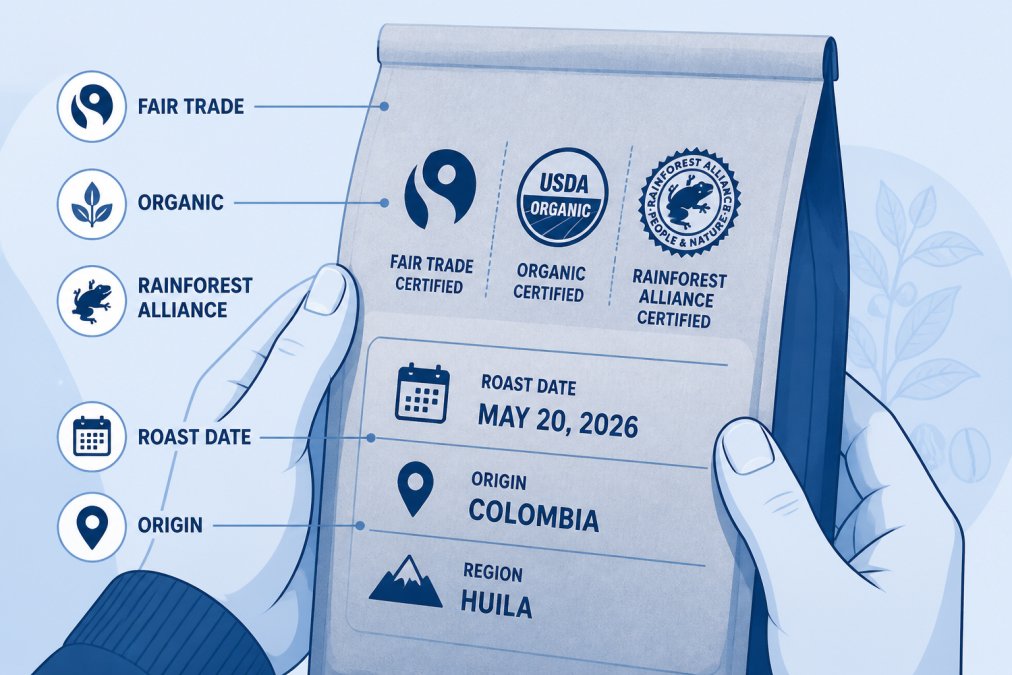
Multiple certification logos appear on coffee bags, each representing different standards and auditing processes. Understanding what each certifies is essential to cutting through greenwashing.
Fair Trade Certification
Fair Trade certification guarantees farmers received a minimum price per pound, workers have documented labor rights, pesticide use is restricted, and a social premium funded community development. The minimum price exceeds production costs, preventing the race-to-the-bottom pricing of commodity coffee. Fair Trade also prohibits child and forced labor, requires safe working conditions, and mandates environmental practices like soil conservation and water management.
One limitation: Fair Trade certification doesn't guarantee premium quality. A farm can be Fair Trade certified and produce mediocre coffee. Additionally, membership fees and compliance audits sometimes exclude the smallest producers who most need price protection.
Rainforest Alliance and Bird-Friendly Certifications
Rainforest Alliance certification emphasizes environmental protection alongside social responsibility. Certified farms must maintain shade trees, protect water sources, manage soil health, and preserve biodiversity. Shade-grown coffee, where plants grow under native tree canopies, supports bird populations and maintains forest ecosystems. "Bird-Friendly" labeling specifically certifies dense shade cover that migratory birds depend on.
Rainforest Alliance is less prescriptive about pricing than Fair Trade but rigorous about biodiversity, water conservation, and ecosystem health, areas where Fair Trade is less detailed.
Organic and Specialty Coffee Certifications
Organic certification guarantees coffee was grown without synthetic pesticides, herbicides, or fertilizers, preventing soil and water contamination. Organic farming typically requires more labor and knowledge, often correlating with better farmer treatment because the farm is more profitable per pound.
Specialty coffee certification from the Specialty Coffee Association focuses on quality: coffee scoring 80 points or above on a 100-point scale earns specialty status. This is a quality marker, not an ethical one, but specialty producers typically invest in farmer relationships and pay premiums for exceptional beans, creating economic incentive for ethical practices.
Evaluating Supply Chain Transparency and Traceability
The most reliable indicator of ethical sourcing is transparency about where coffee comes from and how it reached you. A truly ethical roaster can identify the farm, cooperative, sometimes even the farmer's name, along with elevation, harvest date, processing method, and farmer payment.
Blockchain and Immutable Records
Blockchain creates a permanent, tamper-proof record of coffee movement from farm through export, import, roasting, and sale. Each transaction is recorded with timestamps and verified by multiple parties. Consumers can scan a QR code to see the entire chain of custody. The advantage is that no single party can alter records retroactively; the disadvantage is that blockchain systems are expensive, currently used only by premium roasters. Blockchain proves coffee came from the stated origin but cannot verify conditions on the farm.
Cooperative and Farm Verification
Direct Trade and Fair Trade roasters often provide cooperative names and contact information, allowing independent verification. Some provide GPS coordinates of farms. This method is lower-tech but highly transparent: you can email a cooperative to verify they sold coffee to that roaster. Many specialty roasters now publish annual sourcing reports listing every farm and price paid per pound.
Lot Tracking and Harvest Documentation
Ethical roasters document harvest dates, processing methods, and lot numbers. A "lot" is a batch tracked together, preventing blending unknown coffee into a batch. Harvest documentation also indicates freshness: coffee roasted within 2-4 weeks of harvest is fresher than coffee aged months before roasting.
Third-Party Audit and Certification Records
Fair Trade, Rainforest Alliance, and Organic certifications maintain public registries of certified farms. You can search these registries to confirm a roaster's claims. Fair Trade USA maintains a searchable database of certified producers, providing free, accessible verification.
What to Ask Roasters
When evaluating transparency, ask:
- What cooperative or farm did this coffee come from? (Expect a specific name.)
- What price did the farmer receive per pound?
- When was it harvested and roasted?
- Can they provide a contact or website for the farm or cooperative?
- Is the coffee traceable through blockchain, lot number, or audit registry?
Legitimate roasters will answer all these questions. If a roaster claims ethical sourcing but can't discuss specifics or provides only vague responses like "we work with farmers in Ethiopia," look elsewhere.
Assessing Labor Conditions and Fair Wages
Fair wages and safe working conditions are the foundation of ethical sourcing, yet they're often hardest to verify. A coffee label cannot communicate whether workers are paid fairly or whether farms provide safe equipment and reasonable hours.
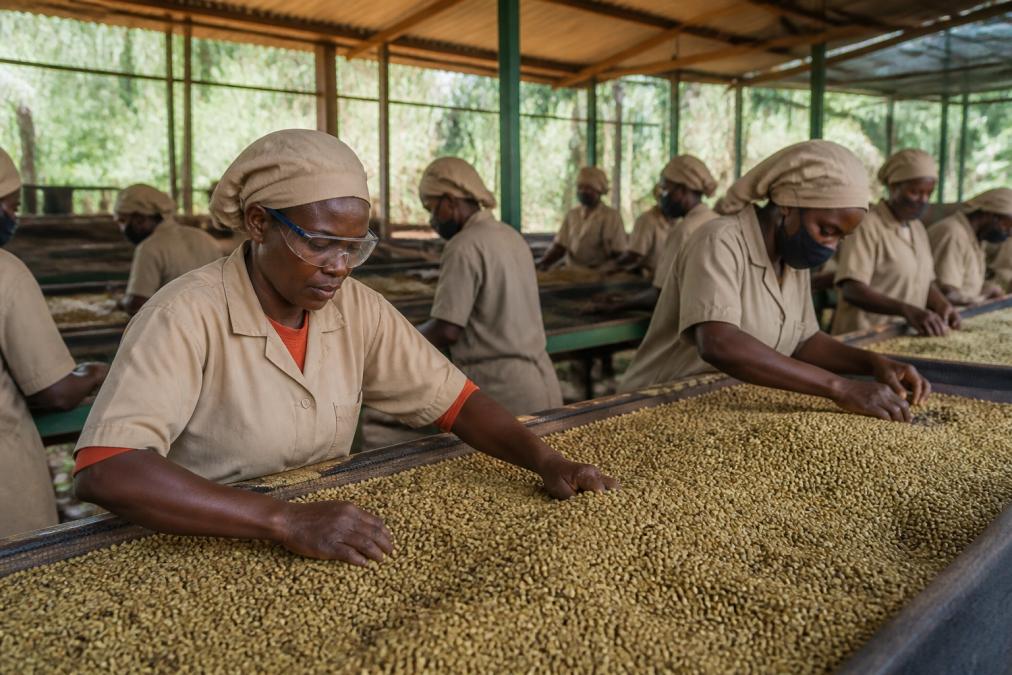
Coffee farming is labor-intensive, requiring hand-picking ripe berries and skilled processing. A farm respecting workers invests in training, provides protective equipment, maintains safe conditions, and pays wages above subsistence level.
The Critical Distinction: Living Wage vs. Minimum Wage
Most coffee-producing countries have legal minimum wages far below what people actually need to live. A living wage accounts for local costs of housing, food, healthcare, education, and transportation.
In Ethiopia, the legal minimum wage is approximately $0.30 per day, while a living wage is estimated at $1.50-$2.00 per day. In Honduras, the legal minimum is roughly $12 per day, but a living wage for a family of four is $25-$30 per day. These gaps mean minimum-wage workers cannot afford basic necessities.
Fair Trade certification requires living wage calculations specific to each region. Fair Trade USA conducts regional wage research and sets minimum prices designed to enable living wages. However, Fair Trade's calculations are sometimes criticized as conservative, and Fair Trade certification doesn't guarantee farmers will pass the full premium to workers.
Regional Variations in Labor Conditions
Labor challenges differ significantly by region:
Latin America (Colombia, Honduras, Peru, Guatemala): Seasonal wage volatility is the primary challenge. During harvest season, demand for labor is high and wages rise; during off-season, workers face unemployment. Many farms employ migrant workers lacking legal protections and vulnerable to wage theft. Child labor remains a risk in some areas. Fair Trade and Rainforest Alliance certifications specifically address these issues.
East Africa (Ethiopia, Kenya, Uganda): Extreme poverty and limited alternative employment are primary challenges. Coffee farming is often the only income source. Wage levels are lower than Latin America, and labor standards enforcement is weaker. However, cooperatives have grown stronger in recent years, and cooperative membership often correlates with better labor practices.
Southeast Asia (Indonesia, Vietnam): Limited worker organization, weak labor law enforcement, and reliance on migrant workers create challenges. Some regions have documented debt bondage and wage theft. Fair Trade and certification presence is lower than in other regions, making independent verification harder.
Verifying Labor Conditions
Look for roasters publishing farmer payment information and wage data. Some partner with organizations auditing labor conditions on supplier farms. Specific verification methods include:
- Published farmer payment data: Roasters disclosing average prices paid per pound allow comparison across roasters.
- Third-party labor audits: Fair Trade and Rainforest Alliance conduct on-site audits. Their certification databases are public.
- Cooperative membership: Coffee from cooperatives often involves better labor practices because they aggregate bargaining power.
- Direct Trade relationships: Roasters maintaining long-term Direct Trade relationships often visit farms, creating personal accountability.
- Living wage certification programs: Organizations like the Living Wage Foundation specifically certify living wage compliance.
What to Ask Roasters About Labor
- What is the average price you paid farmers for this coffee?
- Do your supplier farms employ seasonal workers, and if so, how are they protected?
- Are your coffees sourced from cooperatives?
- Do you conduct labor audits or partner with organizations that do?
- Can you provide information about worker wages on your supplier farms?
Environmental Impact: Shade-Grown and Sustainable Farming
Coffee farming can either regenerate ecosystems or destroy them. The difference comes down to farming practices, particularly whether coffee grows in shade or full sun.
Shade-grown coffee, where plants grow under native tree canopies, maintains forest structure and biodiversity. These farms support bird populations, preserve soil health through leaf litter, reduce water runoff, and maintain carbon sequestration. Shade-grown farming is more labor-intensive and produces lower yields per acre, but environmental and economic benefits are substantial. Shade trees provide additional crops, nuts, fruit, and timber, diversifying farm income.
Full-sun plantations maximize yield per acre but require heavy pesticide and fertilizer use, degrade soil over time, and eliminate habitat for birds and wildlife. Sun-grown coffee is cheaper to produce, which is why it dominates commodity markets, but the environmental cost is high.
Sustainable farming practices extend beyond shade-growing to include water conservation, soil management, and integrated pest management. Some farms implement regenerative practices like composting, cover cropping, and agroforestry that actively improve soil health.
Certifications like Rainforest Alliance and Bird-Friendly specifically require shade-grown practices. When evaluating environmental impact, shade-grown is a strong indicator that a farm prioritizes ecosystem health.
How to Read a Coffee Label for Ethical Claims
A coffee bag contains significant information if you know what to look for.
Certifications: Look for Fair Trade, Rainforest Alliance, Bird-Friendly, or Organic logos. These are third-party verifications. A bag claiming ethical sourcing without certification should be viewed skeptically.
Origin and farm information: Ethical roasters identify the country and often the region, cooperative, or specific farm. "Ethiopia, Yirgacheffe region, Kebena cooperative" is specific and indicates traceability. Some bags include the farmer's name or a QR code linking to farm information.
Roast date: This indicates freshness and shows the roaster cares about quality. Specialty roasters typically roast to order and print the roast date.
Price transparency: Some roasters print farmer payment directly on the bag, signaling confidence in their sourcing practices.
Processing method and altitude: Details like "washed," "natural," or "honey process" and elevation indicate a roaster understands quality and is communicating with knowledge.
Red flags include vague terms like "sustainably sourced" without certification, "ethically traded" without explanation, or unverifiable claims. Greenwashing relies on sounding ethical without providing specific, verifiable information.
Best Ethically Sourced Coffee Brands and What to Look For
When selecting ethically sourced coffee, evaluate roasters on certifications, transparency, sourcing practices, and quality. A roaster combining Fair Trade or Direct Trade sourcing with specialty coffee quality represents the intersection of ethics and excellence.
Venro Coffee Co. sources from farms and cooperatives prioritizing both quality and ethical practices. Our Peru Decaf Single Origin, for example, is Swiss Water decaffeinated, avoiding chemical solvents, and sourced from shade-grown farms.

When evaluating any roaster, ask:
- Do they provide specific farm or cooperative information?
- Are their coffees certified Fair Trade, Direct Trade, or both?
- Do they publish farmer payment information?
- Can they describe their sourcing relationships?
- Are their coffees specialty-grade quality?
- Do they roast to order or maintain fresh inventory?
Roasters combining ethical sourcing with specialty coffee quality typically charge $15-25 per pound, reflecting genuine value: farmer income, quality control, freshness, and traceability.
DIY Verification Checklist: Spotting Greenwashing
Use this checklist to distinguish genuine ethical sourcing from marketing:
| Red Flag | What It Means | Green Flag |
|---|---|---|
| "Sustainably sourced" with no certification | Vague claim without verification | Fair Trade, Rainforest Alliance, or Bird-Friendly logo |
| No farm or cooperative information | Lack of traceability | Specific farm, cooperative, or region named |
| No roast date | Coffee may be old or blended from unknown sources | Roast date printed on bag |
| "Ethically traded" without explanation | Marketing language without verification | Published farmer payment information or Direct Trade certification |
| Premium price without transparency | Charging for ethics without proof | Detailed sourcing report available upon request |
| Generic "coffee from [country]" | No traceability | Single-origin with altitude, varietal, and harvest date |
Beyond the label, verify claims by contacting the roaster directly. Ask for sourcing documentation, farm contacts, or certification details. Legitimate roasters welcome these questions.
Identifying ethically sourced coffee requires moving beyond marketing language to examine certifications, sourcing practices, and transparency. Venro Coffee Co. delivers this accountability through carefully sourced, freshly roasted specialty coffees with full traceability from farm to cup. Our commitment to quality sourcing means you can brew with confidence, knowing your coffee supports fair wages, environmental stewardship, and sustainable farming practices. Shop Coffee and experience the difference ethical sourcing makes in your daily ritual.
Frequently Asked Questions
What certifications should I look for on a coffee bag?
Look for Fair Trade, Rainforest Alliance, Bird-Friendly (Smithsonian), and organic certifications. Fair Trade ensures fair wages and working conditions. Rainforest Alliance certifies environmental and social practices. Bird-Friendly verifies shade-grown farming that protects ecosystems. Organic confirms pesticide-free cultivation. Multiple certifications indicate stronger commitment to ethical practices. Check the roaster's website for detailed information about their sourcing standards and third-party verification.
What's the difference between Fair Trade and Direct Trade coffee?
Fair Trade uses third-party certification bodies to ensure minimum prices and labor standards across supply chains, benefiting smallholder farmers through cooperatives. Direct Trade involves roasters buying directly from farms at negotiated prices, often higher than Fair Trade minimums, allowing greater transparency and relationship-building. Fair Trade provides broader protection; Direct Trade offers deeper traceability. Many ethical roasters use both models depending on the origin and farm partnership.
How can I verify if a coffee brand is actually ethically sourced?
Check for third-party certifications from recognized bodies. Visit the roaster's website for supply chain transparency details, including farm names, regions, and processing methods. Look for traceability information, ethical roasters provide farm-to-cup stories. Ask roasters directly about their sourcing practices, price premiums paid to farmers, and certifications. Be skeptical of vague claims like 'responsibly sourced' without supporting documentation. Greenwashing is common, so demand specific evidence of fair labor conditions and environmental stewardship.
Is shade-grown coffee better for the environment?
Yes. Shade-grown coffee preserves biodiversity by maintaining forest canopy, protects soil health, reduces water consumption, and lowers carbon footprint compared to sun-grown varieties. It supports bird populations and ecosystem stability. However, shade-grown requires more labor and produces lower yields, which increases costs. Many ethical roasters prioritize shade-grown beans because environmental stewardship and sustainable agriculture practices directly benefit both ecosystems and farmer economic sustainability long-term.
This article was written using GrandRanker