



Is Specialty Coffee Worth the Cost in 2026?
Table of Contents
- What Makes Specialty Coffee Different
- Specialty Coffee vs Commercial Coffee: The Quality Gap
- The Quality Score and What It Actually Means
- How to Identify High Quality Coffee Beans
- Benefits of Freshly Roasted Coffee
- Breaking Down the Cost: What You're Actually Paying For
- The Equipment Barrier and Hidden Costs
- Subscription vs Retail: Which Model Makes Sense
- Is Specialty Coffee Worth It for You?
Last Updated: August 30, 2026
What Makes Specialty Coffee Different
Specialty coffee is a fundamentally different product, sourced and roasted with precision that commodity coffee doesn't match. The difference starts in how beans are grown, harvested, and processed, and continues all the way to your cup.
Commodity coffee is grown for volume and consistency, with beans from different regions mixed together and roasted to a standard profile. Specialty coffee flips that model: single-origin beans come from a specific farm, region, or cooperative, hand-picked rather than machine-harvested, and roasted in small batches to bring out unique characteristics.
The Specialty Coffee Association defines specialty coffee as beans scoring 80 or above on a 100-point quality scale (sca.coffee). A coffee that hits 80+ has been evaluated by trained cuppers who assess flavor, aroma, body, acidity, and aftertaste. You're not paying for a label. You're paying for a product vetted against a measurable standard and roasted fresh to preserve the flavors that evaluation identified. At Venro Coffee Co., this commitment means sourcing beans that meet these standards and roasting them to order, ensuring what arrives at your door is as fresh as it gets.
Specialty Coffee vs Commercial Coffee: The Quality Gap
The gulf between specialty coffee and commercial coffee comes down to three core differences: sourcing transparency, roasting precision, and freshness.
Commercial coffee is often a blend of beans from multiple origins, all roasted to a one-size-fits-all profile. The supply chain is opaque. You rarely know which farm grew your beans, at what altitude, or how they were processed. The roast date might be months old by the time it reaches you.
Specialty coffee flips every variable. You know exactly where the beans came from, often down to the specific cooperative or farm. You know the processing method: washed, naturally processed, or honey processed. Each creates different flavor profiles. Washed coffees tend toward clarity and acidity. Natural process coffees develop more fruit-forward, complex sweetness. Honey process splits the difference.
The roast date matters because coffee is freshest within 2-4 weeks of roasting (peer-reviewed research). After that, the aromatics that create complexity begin to fade. Commercial coffee, sitting in warehouses for months, has already lost much of what made it interesting.
Flavor complexity is the practical difference you'll taste. Commercial coffee delivers a one-note, bitter, flat experience. Specialty coffee reveals layers. That single-origin from a specific region expresses terroir, the environmental factors that shape how the plant grows. High altitude, volcanic soil, and specific rainfall patterns create flavor. You might taste chocolate notes in one origin, citrus in another, honey sweetness in a third. These are real flavor compounds created by the plant's environment and processing method.
The Quality Score and What It Actually Means
The Specialty Coffee Association's 100-point scale is the industry standard for evaluating coffee. Trained cuppers evaluate coffee across multiple categories: fragrance and aroma, flavor, aftertaste, acidity, body, balance, uniformity, clean cup, and overall impression. A total of 80+ is specialty grade, 75-79.99 is premium grade, and below 75 is commercial grade.
A coffee scoring 80-82 is specialty grade but sits at the entry level. A coffee scoring 85-87 shows more complexity and nuance. A 90+ score is rare, representing exceptional clarity, complexity, and balance. The difference between an 82 and a 90 is the difference between a good coffee and one that makes you pause mid-sip because it's genuinely interesting.
Why does this matter for your purchase decision? Because the score correlates directly with what you'll experience. A higher-scoring coffee demands better brewing technique and fresher beans to shine, and justifies the price. A coffee that scores 88 has been evaluated by professionals who confirmed it's exceptional. You're not guessing. You're buying based on measurable quality.
How to Identify High Quality Coffee Beans
Identifying high quality coffee beans comes down to five signals: the roast date, the origin information, the processing method, the appearance of the beans, and the roaster's reputation.
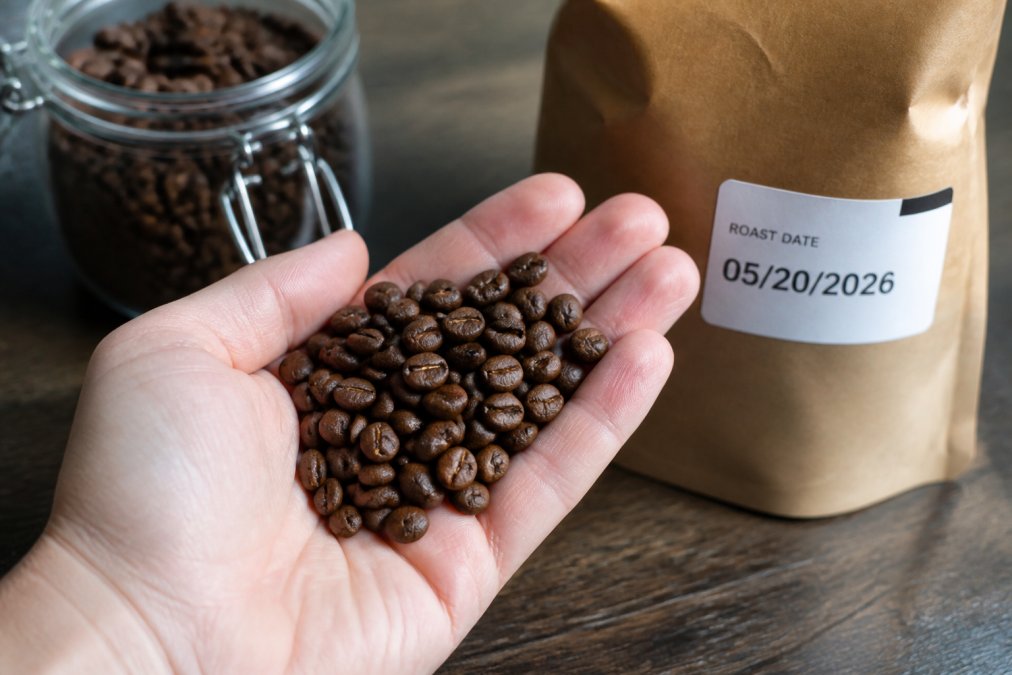
The roast date is non-negotiable. Quality specialty coffee always displays it prominently. If you can't find a roast date on the bag, that's a red flag. Look for beans roasted within the last 2-4 weeks.
Origin specificity matters more than you'd think. A bag labeled "Colombian coffee" is vague. A bag labeled "Colombia, Huila region, smallholder cooperative, 1,800m altitude" tells you the coffee comes from a specific place with specific growing conditions. That specificity signals the roaster cares about traceability and quality.
Processing method should be listed on the bag. Washed, natural, honey process, or fermented, each creates different flavor profiles. This information means the roaster understands their product and wants you to understand it too.
The appearance of the beans themselves tells you something. High quality specialty coffee beans are uniform in color and size, dense, not shriveled or cracked. Fresh, quality beans have a subtle sheen from their natural oils.
The roaster's reputation matters because roasting is a skill. A good roaster develops a profile for each origin that brings out its best qualities. They publish tasting notes because they've cupped their own coffee and know what you should be tasting.
Benefits of Freshly Roasted Coffee
Freshly roasted coffee delivers benefits that stale coffee simply can't match. The difference is immediate and measurable.
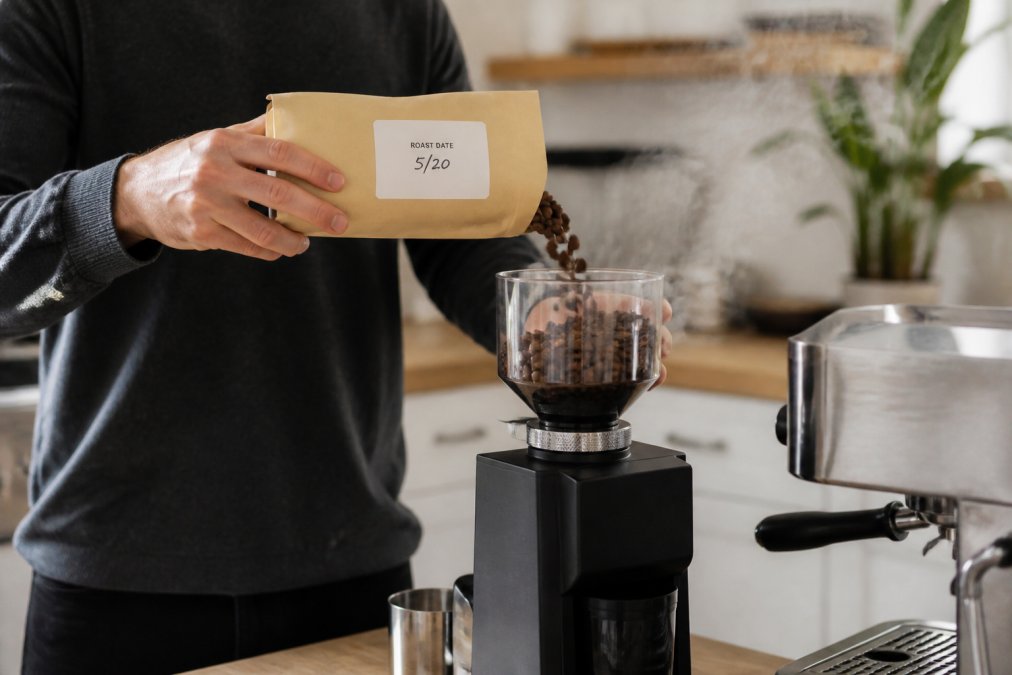
Coffee reaches its flavor peak 5-7 days after roasting, when the degassing process has stabilized but the volatile aromatics are still present (peer-reviewed research). At this point, you taste the full range of flavors the roaster intended. Acidity is bright but balanced. Sweetness is pronounced. You notice the subtle notes, the chocolate undertones, the citrus brightness, the floral hints. Older coffee tastes flat because those aromatic compounds have oxidized and disappeared.
Fresh coffee has predictable extraction characteristics. It grinds consistently, extracts evenly, and delivers the same result cup to cup. Stale coffee behaves unpredictably. The beans are brittle and fragment unevenly when ground.
Fresh coffee contains more antioxidants and beneficial compounds than stale coffee. As coffee oxidizes, these compounds degrade. You're getting less of what makes coffee potentially beneficial when you drink old coffee.
Knowing your coffee was roasted recently creates a different experience. You're not just drinking caffeine. You're participating in a supply chain that values quality enough to roast small batches and ship fresh. That intention changes how you approach your morning ritual.
Breaking Down the Cost: What You're Actually Paying For
The price difference between specialty coffee and commercial coffee often triggers sticker shock. Understanding what you're actually paying for removes the sense that you're being overcharged.
A bag of specialty coffee from Venro Coffee Co. runs $19.99 for a single-origin option like our Mexico or Peru offerings. That's roughly double what you'd pay for commercial coffee at a grocery store. But that price reflects several real costs that commercial coffee avoids.

Specialty coffee roasters pay farmers significantly more per pound than commodity coffee buyers do. A farmer growing specialty-grade coffee invests in better farming practices, selective harvesting, and careful processing. The specialty coffee supply chain is designed to be sustainable for farmers. That costs more upfront.
Specialty coffee doesn't get mixed with beans from other origins. It gets tracked from farm to roastery. This requires separate storage, separate transportation, and careful documentation. You're paying for the infrastructure that keeps your coffee's story intact.
Specialty coffee gets roasted in small batches, often to order. Each batch requires attention, monitoring temperature, adjusting airflow, deciding when the roast is complete. Small-batch roasting is labor-intensive and necessary because specialty coffee degrades quickly after roasting.
Specialty coffee comes in bags designed to preserve freshness, with one-way valves that let CO2 escape while preventing oxygen from entering. Shipping is often expedited to ensure the coffee arrives fresh.
A quality roaster has spent years learning their craft. They understand how different altitudes, processing methods, and bean densities require different roast profiles. They taste their coffee constantly to ensure quality. This expertise gets baked into the price.
The Equipment Barrier and Hidden Costs
Drinking specialty coffee well requires equipment that commodity coffee doesn't demand. Understanding this barrier is crucial to deciding whether specialty coffee makes financial sense for you.
Commercial coffee is forgiving. It's designed to taste acceptable in any brewing method. Specialty coffee rewards precision and punishes carelessness.
To taste specialty coffee properly, you need a burr grinder, not a blade grinder. A blade grinder creates inconsistent particle sizes, which means some grounds extract too fast and others too slow. A quality burr grinder creates uniform particles. A decent one runs $40-80. A very good one runs $150-300.
You also benefit from a scale. Measuring coffee and water by weight rather than volume gives you consistency. A basic digital scale costs $15-30.
The brewing method itself matters more than it does with commercial coffee. A pour-over, French press, Aeropress, or espresso machine all work, but they extract differently. Specialty coffee's complexity shines in some methods more than others.
Water quality is another hidden variable. Specialty coffee is sensitive to mineral content in water. Some specialty coffee drinkers invest in a water filter. That's another $20-50.
The cumulative equipment cost, grinder, scale, brewing device, water filter, can run $200-500 upfront. If you're already equipped, this isn't a barrier. If you're starting from scratch, it's a real consideration.
Subscription vs Retail: Which Model Makes Sense
Specialty coffee comes in two purchasing models: subscription services that ship regularly, and retail purchases from roasters or specialty shops. Each has advantages and costs that affect whether specialty coffee is worth it for you.
A subscription model typically works like this: you commit to a regular shipment, weekly, biweekly, or monthly, and receive freshly roasted coffee on a schedule. Venro Coffee Co. offers this convenience, ensuring your coffee arrives fresh without you having to remember to order. The advantage is guaranteed freshness and habit-building. The disadvantage is commitment. If you travel or want to experiment with different origins, a subscription locks you into a pattern.
Subscription pricing typically offers a small discount compared to buying individual bags retail, roughly 10-15%. That's meaningful if you're a consistent consumer. If you drink two cups a day, a monthly subscription makes sense because you'll go through the coffee before it loses freshness.
Retail purchasing gives you flexibility. You buy when you want, try different origins without commitment, and pause whenever you need to. The trade-off is paying full price and the responsibility of remembering to order before you run out.
A heavy coffee drinker, two or more cups daily, will spend roughly $60-80 monthly on specialty coffee via subscription. That's $720-960 annually. Compare that to a daily coffee shop visit at $5 per cup: $1,825 annually. Specialty coffee is cheaper. Compare it to commercial grocery store coffee at $10 per bag: roughly $120 annually. Specialty coffee is more expensive. The decision hinges on your baseline and what you're comparing against.
Is Specialty Coffee Worth It for You?
Whether specialty coffee is worth the cost depends on three variables: how much coffee you drink, how much you value the experience, and whether you're willing to invest in proper equipment.
If you drink one cup of coffee a day and view it as fuel, specialty coffee is probably not worth the cost. Commercial coffee delivers caffeine effectively. The flavor complexity that specialty coffee offers won't matter if you're not paying attention to it.
If you drink two or more cups daily and care about the experience, specialty coffee makes financial sense. You'll consume it fresh, you'll notice the flavor difference, and the cost per cup works out to less than a coffee shop visit.
If you're a home barista who enjoys experimenting with brewing methods and origins, specialty coffee is definitely worth it. You have the equipment already and understand extraction and flavor profiles.
If you're environmentally conscious and care about fair compensation for farmers, specialty coffee aligns with your values. The direct trade and fair trade options that specialty roasters offer ensure farmers earn sustainable income.
If you're budget-constrained and every dollar matters, specialty coffee is a luxury. Focus your money elsewhere.
If you're curious about coffee but not yet committed, start with a single bag of specialty coffee from a quality roaster like Venro Coffee Co. Try one of our single-origin options, the Mexico or Peru offerings are excellent entry points. Brew it carefully, notice the flavors, and decide whether the experience justifies the cost for you.

Specialty coffee is worth it if you drink it regularly, if you care about flavor, and if you have the equipment to brew it well. If those conditions are met, the cost is justified. If they're not, save your money. The decision isn't about whether specialty coffee is objectively better, it is. It's about whether better matters to you.
Specialty coffee's value ultimately comes down to what you're willing to invest in your daily ritual. If your morning coffee is a moment you want to savor, a moment of quality and intention before the day begins, then specialty coffee from Venro Coffee Co. delivers that experience. Our freshly roasted, carefully sourced beans arrive at your door ready to brew, with tasting notes that guide your experience and origins you can trace back to the farmers who grew them. The cost reflects real quality, real freshness, and real care in every step from farm to cup. Shop Coffee and discover whether specialty coffee transforms your morning ritual the way it has for thousands of others.
Frequently Asked Questions
What is the difference between specialty coffee and regular coffee?
Specialty coffee is graded on a 100-point scale by certified cuppers, with scores of 80 or higher qualifying as specialty. Regular or commodity coffee has no quality standards. Specialty coffee comes from single origins with documented terroir, hand-harvesting, and careful processing. Commodity coffee blends beans from multiple sources with lower traceability. The flavor complexity, freshness, and ethical sourcing differ significantly between the two.
Does freshly roasted specialty coffee really taste better?
Yes. Freshly roasted coffee peaks in flavor 5-14 days after roasting, when CO2 gases stabilize and flavor compounds develop fully. Stale coffee loses aroma and develops flat, bitter notes. Specialty roasters ship within days of roasting, preserving the tasting experience. Commodity coffee may sit in warehouses for months, degrading flavor and body. The difference is noticeable in extraction, aroma, and aftertaste.
Is specialty coffee worth the premium price?
It depends on your priorities and budget. Specialty coffee costs $15-20 per pound versus $5-10 for commodity coffee, but you get superior flavor, ethical sourcing, and freshness. Cost per cup ranges from $0.75-1.50 for specialty versus $0.30-0.60 for commercial. If you brew daily and value quality, the investment pays off in experience. If you drink coffee casually or on a tight budget, specialty may not justify the cost for your situation.
How do I know if specialty coffee beans are actually fresh when they arrive?
Check the roast date on the bag, it should be within 2-3 weeks of arrival. Specialty roasters like Venro Coffee Co. roast and ship within days, so the roast date tells you exactly how fresh the beans are. Avoid beans with no roast date or vague language like 'recently roasted.' Freshly roasted beans will have a strong aroma and glossy appearance. Stale beans look dull and smell flat or rancid.
This article was written using GrandRanker