



How to Tell If Coffee Beans Are Fresh
Table of Contents
- Why Freshness Matters for Coffee Flavor
- Check the Roast Date vs. Expiration Date
- The Bloom Test: How to Check for CO2 Release
- Visual Inspection: Oil and Surface Appearance
- The Bag Puff Test and Packaging Integrity
- Aroma and Fragrance Analysis
- Taste Profiles of Stale vs. Fresh Coffee
- How to Store Coffee Beans for Maximum Freshness
- Troubleshooting Stale Coffee
- Conclusion
Last Updated: August 28, 2026
Why Freshness Matters for Coffee Flavor
The moment coffee beans are roasted, they begin to deteriorate. Within days, volatile aromatic compounds break down through oxidation. Fresh coffee beans deliver brightness, clarity, and depth that stale beans cannot match, the difference is the gap between a coffee that tastes alive and one that tastes flat, papery, or hollow.
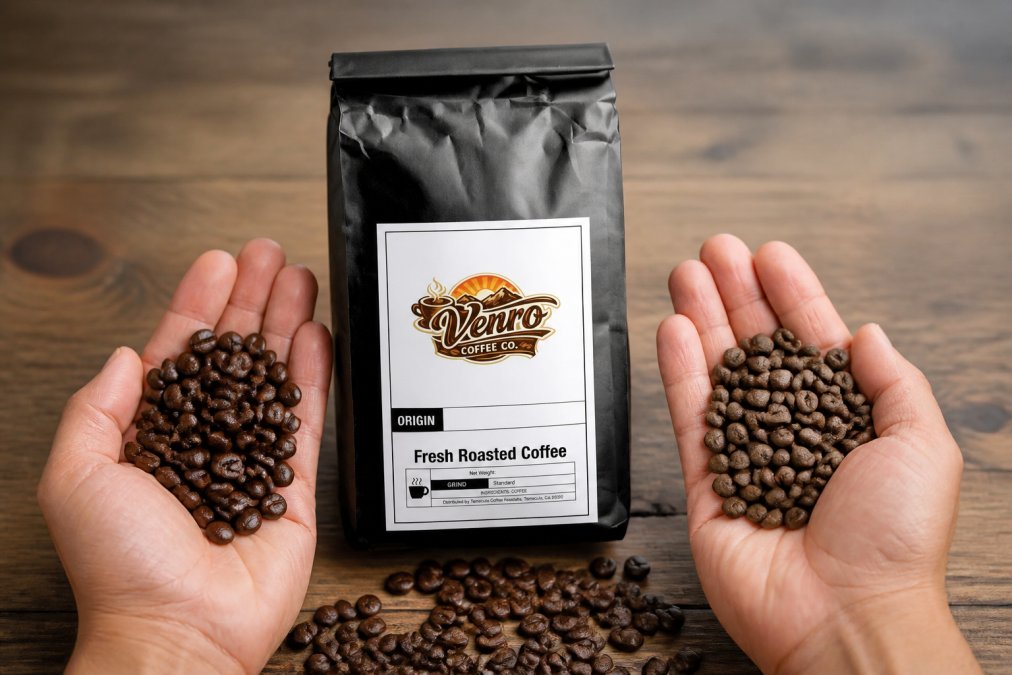
Many coffee drinkers don't know what to look for. Supermarket bags don't always display roast dates, and online retailers sometimes ship beans past their peak window. This guide covers practical tests you can perform at home, from the bloom test to visual inspection, that reveal whether your coffee beans are truly fresh or past their prime.
Check the Roast Date vs. Expiration Date
The roast date is the most straightforward indicator of freshness. Fresh coffee beans are typically at their peak between 3 and 14 days after roasting (peer-reviewed research). During this window, the beans have released enough carbon dioxide to avoid over-extraction while retaining the aromatic oils and volatile compounds that create complexity. After two weeks, the flavor profile begins to flatten noticeably.
If a bag doesn't show a roast date, treat it with skepticism. Reputable roasters always print this information. When you order from Venro Coffee Co., every bag displays the exact roast date, so you know precisely how old your beans are when they arrive.
Expiration dates are often set 6 to 12 months after roasting as a conservative safety measure. An expiration date doesn't indicate peak flavor, it means the beans are still technically safe to consume. For flavor, you want beans within the first three weeks of roasting. When shopping, calculate backward from today: beans roasted 5 days ago are in their sweet spot; beans roasted 30 days ago are past their peak, regardless of the expiration date.
The Bloom Test: How to Check for CO2 Release
The bloom test is the most reliable sensory method for assessing freshness. Freshly roasted coffee beans release carbon dioxide through degassing. The more vigorous the bloom, the fresher the beans.
Here's how to perform the bloom test:
- Grind your beans to a medium consistency, similar to sea salt
- Place the grounds in a pour-over or brewing device
- Pour just enough hot water (around 200°F) to saturate the grounds (peer-reviewed research)
- Observe what happens in the first 30 seconds
Fresh beans will bloom dramatically, you'll see the grounds rise and bubble as CO2 escapes. Stale beans produce little to no bloom. The grounds may absorb water without visible movement. The lack of bubbling is a red flag that the beans have already lost most of their CO2 and flavor potential.
The bloom test mimics the actual brewing process. Fresh beans need this step; stale beans don't bloom enough to require it. One limitation: the bloom test tells you about CO2 levels, not the full picture of freshness. Combine it with other assessment methods for the most complete understanding.
Visual Inspection: Oil and Surface Appearance
What you see on the bean's surface reveals a lot about its age. Freshly roasted beans often appear slightly oily or glossy, particularly if they're a medium or dark roast. The color is vibrant and deep, with visible variation across individual beans.
As beans age, the surface becomes dull and matte rather than glossy. The color fades and becomes more uniform. Some beans may develop a slightly papery or wrinkled appearance.
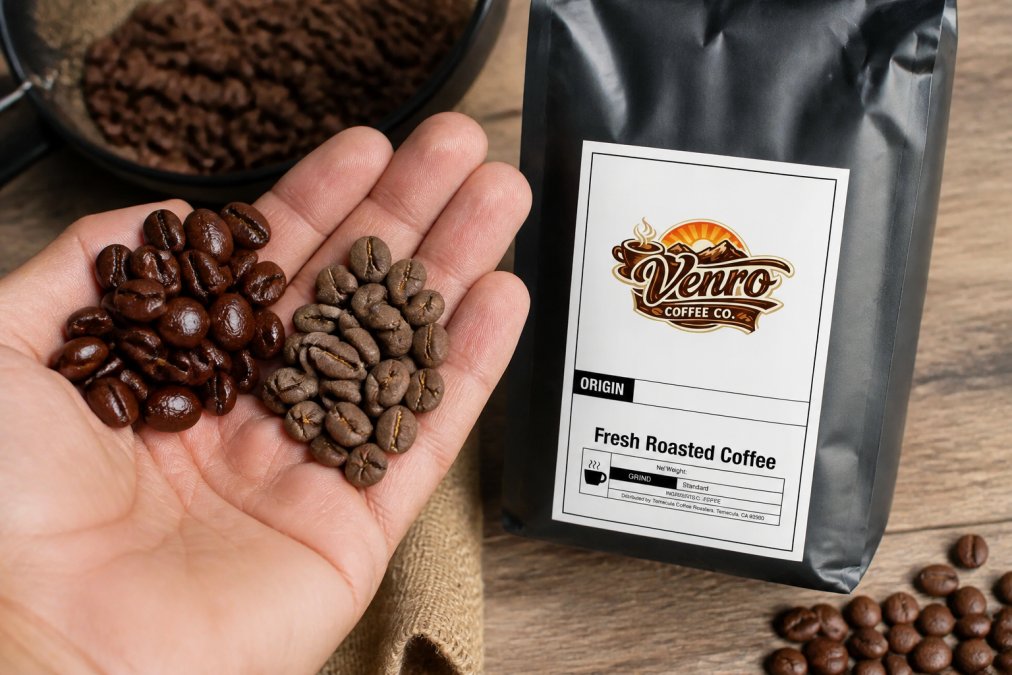
Look at your beans in good natural light. Fresh beans should appear alive, with depth and dimension to their color. If the beans look flat, dull, or uniformly colored, they're likely past their peak freshness.
The Difference Between Oily and Rancid Beans
Not all oiliness is a sign of freshness. Understanding the difference between fresh bean oils and rancid beans is crucial.
Fresh bean oils are natural lipids that migrate to the bean's surface during roasting. These oils are chemically stable and contribute desirable flavor compounds. When you smell fresh oily beans, you detect chocolate, nuts, fruit, or floral notes. The smell is inviting and complex.
Rancid or oxidized oils result from lipid oxidation, a chemical breakdown that occurs when beans are exposed to oxygen, light, or heat over time. This creates volatile aldehydes and ketones that smell stale, musty, sour, or like old cardboard.
How to Distinguish Fresh Oils from Rancid Oils: A Diagnostic Checklist
Fresh oily beans will show:
- A glossy, wet appearance that looks even across the bean surface
- Oils that feel slightly tacky to the touch
- A pleasant, origin-specific aroma when you smell the bean directly
- Vibrant color with natural variation between individual beans
Rancid or oxidized beans will show:
- A dull, sticky, or varnished appearance with oils looking separated or clumpy
- Beans that feel greasy or overly wet
- An off-putting smell: musty, sour, vinegary, or like stale popcorn
- Faded or uniform color with less vibrancy
- Possible visible mold spots or discoloration
Why Bean Density Affects Oil Appearance
Light roasts and dark roasts degas and oil differently, which affects how fresh they appear. Dark roasts release oils more visibly because the longer roast time pushes more lipids to the surface. A dark roast bean roasted 5 days ago will look noticeably oily. A light roast bean roasted 5 days ago may appear drier, even though it's equally fresh.
You cannot judge freshness by oil appearance alone if comparing beans across roast levels. A "dry-looking" light roast from 4 days ago is fresher than an "oily-looking" dark roast from 25 days ago. Always cross-reference visual inspection with the roast date and the bloom test.
The Smell Test Trumps the Look Test
When in doubt, trust your nose more than your eyes. Fresh oils smell pleasant and specific. Rancid oils smell bad, even if they look glossy. If you detect a smell that's off, sour, musty, or reminiscent of old cardboard, the beans are likely rancid, discard them regardless of appearance.
The Bag Puff Test and Packaging Integrity
Coffee bags are designed with a one-way valve that allows CO2 to escape while preventing oxygen from entering. This valve is essential for maintaining freshness.
The bag puff test is simple: gently squeeze the bag. A freshly roasted bag will feel firm and puffy because it's filled with CO2. If you can easily compress the bag or it feels flat, the beans have likely lost most of their gas, indicating age.
Immediately after roasting, beans release CO2 rapidly, filling a sealed bag with internal pressure. As days pass and degassing slows, the bag gradually becomes less puffy. By two weeks, a bag may feel noticeably softer.
If the valve is damaged or the bag is punctured, oxygen enters and accelerates oxidation. When your coffee arrives from Venro Coffee Co., check that the bag feels firm and the valve is intact. For long-term storage, transfer beans to an airtight container rather than leaving them in the original bag.
Aroma and Fragrance Analysis
Your sense of smell is one of your most reliable tools for assessing freshness. Coffee aroma is complex and changes dramatically as beans age.
The Chemistry Behind Coffee Aroma and Freshness
Coffee aroma comes from hundreds of volatile organic compounds (VOCs) created during roasting and released during grinding and brewing (peer-reviewed research). These include esters (fruity notes), aldehydes (floral notes), ketones (nutty and caramel notes), and sulfur compounds (savory notes). Fresh beans are rich in these volatile compounds. As beans age, these compounds break down through oxidation and evaporate, leaving behind a flatter, less complex aroma.
In the first 24 to 48 hours after roasting, beans release CO2 rapidly and also release many volatile compounds. By day 3 to 5, degassing slows significantly, but VOC loss continues more gradually. By day 14 to 21, most highly volatile compounds have either evaporated or oxidized, leaving only more stable, less aromatic compounds behind.
What Fresh Coffee Beans Smell Like
Fresh coffee beans smell vibrant and specific to their origin. When you open a bag of fresh beans (roasted within 5 to 10 days), the smell should be strong and clear.
Origin-specific aroma notes you should detect in fresh beans:
- Ethiopian beans (light to medium roast): Fruity, floral, tea-like; blueberry, jasmine, or bergamot notes
- Colombian beans (medium roast): Balanced, sweet, nutty; chocolate, caramel, or almond notes
- Brazilian beans (medium to dark roast): Chocolatey, nutty, earthy; cocoa, hazelnut, or tobacco notes
- Central American beans (medium roast): Balanced, sweet, spiced; cinnamon, chocolate, or citrus notes
- Indonesian beans (dark roast): Earthy, full-bodied, herbal; cedar, tobacco, or dark chocolate notes
If you can identify these origin-specific notes, you know the beans are still in their aromatic prime.
What Stale Coffee Beans Smell Like
Stale beans (roasted more than 3 weeks ago) typically smell muted or dull, lacking the brightness of fresh beans. The aroma becomes generic, like "coffee" rather than a specific origin. Truly stale or poorly stored beans may smell musty, sour, or rancid. If a bag smells off in any way, do not use those beans.
How to Properly Assess Aroma: A Step-by-Step Method
Step 1: Open the bag and take a deep breath. Fresh beans release aroma immediately.
Step 2: Grind a small amount. Grinding increases surface area and releases more volatile compounds.
Step 3: Identify specific notes. Can you detect fruit, nuts, chocolate, or floral notes? If yes, the beans are likely fresh.
Step 4: Compare to your baseline. If possible, smell fresh beans from a known recent roast date and compare them to the beans you're evaluating.
Step 5: Trust your instinct. If something smells wrong, trust that instinct.
The Aroma Window and Degassing Rate
Aroma peaks at different times depending on roast level. Light roasts peak around day 3 to 5 after roasting and fade relatively quickly after day 7 to 10. Medium roasts peak around day 5 to 7 and remain strong through day 14. Dark roasts peak around day 7 to 10 and remain relatively stable through day 21.
A light roast from 10 days ago may smell noticeably flatter than a dark roast from 15 days ago, the light roast has already lost most of its volatile compounds, while the dark roast is still in its aromatic window. Understanding this prevents you from incorrectly assuming a light roast is stale when it's simply past its peak aroma window.
Taste Profiles of Stale vs. Fresh Coffee
Ultimately, taste is the final verdict. Fresh coffee tastes clean, bright, and complex. The flavor profile is clear; you can identify the origin characteristics. A fresh Ethiopian bean tastes fruity and floral. A fresh Brazilian bean tastes chocolatey and nutty. The acidity is present but balanced. The body feels full. The finish is clean.
Stale coffee tastes flat and one-dimensional. The origin characteristics fade. The acidity becomes either dull or sharp and unpleasant. The body feels thin. The finish is often bitter or papery. Many people describe stale coffee as tasting like cardboard or old paper.
If your coffee consistently tastes flat or papery, the issue is likely freshness, not brewing technique. Check the roast date and assess the beans using the methods above. If the beans are old, no amount of technique adjustment will fix the problem. Fresh beans are the foundation.
How to Store Coffee Beans for Maximum Freshness
Storage directly impacts how long your beans remain fresh. The enemies of freshness are light, heat, moisture, and oxygen. Store your beans in a cool, dark place, a pantry or cabinet works well. Avoid the refrigerator or freezer; temperature fluctuations and moisture can degrade beans.
Use an airtight container. Glass jars with airtight seals work well. Opaque containers are better than clear ones because they block light. For beans you plan to use within two weeks, the original bag is fine as long as the seal is intact. For longer storage, transfer to an airtight container.
Whole beans last longer than ground beans. Grinding increases surface area and accelerates oxidation. Grind only what you'll use within a few days. The ideal storage temperature is between 60 and 70 degrees Fahrenheit. Room temperature is generally fine.
The Importance of Resting Coffee After Roasting
Freshly roasted beans need time to rest. This resting period, typically 12 to 24 hours after roasting, allows the beans to release excess CO2 and stabilize. If you brew coffee with beans less than 12 hours old, excessive CO2 can interfere with water extraction, resulting in under-extraction and sour, thin coffee.
By 24 hours, the beans are ready to brew. The 3 to 14-day window mentioned earlier assumes the beans have had this initial rest. Reputable roasters don't ship beans immediately after roasting. When you order from Venro Coffee Co., the beans have already completed their resting period, so you can brew them immediately upon arrival.
Troubleshooting Stale Coffee
If your coffee tastes stale despite following good storage practices, here's how to diagnose the issue.
First, check the roast date. If it's more than three weeks old, freshness is the culprit. No storage method can reverse the aging process. If the roast date is recent but the coffee still tastes flat, check your storage. Is the container truly airtight? Is it stored in a cool, dark place?
If you're buying pre-ground coffee, that's likely the issue. Ground beans age much faster than whole beans. Switch to whole beans and grind them at home just before brewing.
If beans smell rancid or musty, they're compromised and should be discarded. The most reliable solution to stale coffee is simple: buy fresher beans more frequently. Ordering smaller quantities more often ensures you're always working with beans near their peak freshness.
Knowing how to tell if coffee beans are fresh transforms your coffee experience. Fresh beans reveal the work of the roaster and the character of the origin in ways stale beans never can. At Venro Coffee Co., we're committed to delivering beans at peak freshness, with roast dates clearly marked so you know exactly what you're getting. Our single-origin options, from Mexico to Tanzania, showcase the complexity that only fresh beans can deliver. Start with the freshness assessment methods in this guide, then experience the difference fresh specialty coffee makes in your daily ritual.


Frequently Asked Questions
How do I know if coffee beans are fresh when I receive them?
Check three things immediately: the roast date (should be within 2-4 weeks), the bag's puffiness (indicates CO2 from fresh roasting), and the aroma (strong, fragrant smell means fresh beans). Fresh coffee beans will have a vibrant appearance and smell noticeably aromatic when you open the bag. If the beans look dull or smell flat, they're past their prime.
What's the difference between a roast date and an expiration date?
The roast date tells you when the beans were roasted and is the most important indicator of freshness. Coffee reaches peak flavor 3-7 days after roasting as CO2 degasses. An expiration date, if listed, is a conservative estimate and doesn't mean the coffee is bad after that date. Prioritize the roast date, beans roasted within 2-4 weeks will taste noticeably better than older stock.
Can I still use 2-year-old coffee beans?
Technically yes, but the flavor will be significantly diminished. Old beans lose their fragrant oils through oxidation and degassing, resulting in flat, hollow taste profiles. The acidity becomes muted, and the body feels thin. For specialty coffee where you're paying a premium, using beans older than 3-4 months defeats the purpose. Fresh beans make a measurable difference in extraction and crema quality.
How long does coffee stay fresh after it's ground?
Ground coffee degasses much faster than whole beans, typically within 15-30 minutes of grinding. This is why grinding just before brewing is essential for the best flavor. If you must grind ahead, use an airtight container and brew within a few hours. Whole beans stay fresh 2-4 weeks from the roast date if stored properly, but ground coffee's shelf life is measured in hours, not weeks.
This article was written using GrandRanker