



Fresh Roasted vs. Supermarket Coffee: What Sets Them Apart
Table of Contents
- Fresh Roasted Coffee vs. Supermarket Brands: The Core Differences
- The Impact of Roast Date on Flavor and Freshness
- Bean Quality and Sourcing: What You're Actually Buying
- Aroma, Acidity, and Sensory Experience
- How to Identify Signs of Stale Coffee Beans
- How to Store Coffee Beans for Freshness
- Cost vs. Value: What Justifies the Premium
- Environmental Impact and Supply Chain Transparency
- Making Your Choice: Fresh Roasted or Supermarket
Last Updated: August 13, 2026
Fresh Roasted Coffee vs. Supermarket Brands: The Core Differences
The difference between fresh roasted coffee and supermarket brands is the gap between a vibrant, nuanced cup and something that tastes flat and stale. When you buy specialty coffee from a roaster who roasts to order, you're getting beans roasted days ago, not months.
The roasting process releases oils and develops flavor compounds. But those compounds start degrading the moment roasting stops. Supermarket coffee is typically roasted weeks or months before reaching the shelf, by the time you open the bag, the peak flavor window has passed. This guide breaks down what separates these categories, how to spot the difference, and whether the premium price justifies the cost.
The core differences come down to four factors: roast date, bean sourcing, the sensory experience in the cup, and what you're actually paying for.
The Impact of Roast Date on Flavor and Freshness
The roast date is the single most important indicator of coffee freshness. A coffee roasted three days ago tastes fundamentally different from one roasted three months ago.
When beans are roasted, heat triggers the Maillard reaction and caramelization, developing hundreds of flavor compounds and aromatic oils. These oils give fresh roasted coffee its complexity and brightness. Immediately after roasting, beans enter a degassing phase where they release carbon dioxide.
By day 3-7, you hit the sweet spot: the beans have stabilized and flavor has fully emerged. This window typically lasts 2-4 weeks if stored properly. After that, oxidation accelerates and the coffee tastes flat, bitter, or stale.
Supermarket brands don't print roast dates on their packaging, intentionally. Many are roasted 3-6 months before hitting shelves, then sit in warehouses and stores for additional months. By the time you brew it, the beans have lost most aromatic compounds and flavor nuance.
Fresh roasted coffee tastes brighter and more complex with cleaner acidity. Supermarket coffee tastes muted and flat, often developing a stale or rancid edge from oxidized oils.
National Coffee Association brewing standards recommend using coffee within 2-4 weeks of roasting for optimal flavor extraction.
Bean Quality and Sourcing: What You're Actually Buying
Fresh roasted coffee typically uses higher-quality beans because sourcing and traceability matter to the roaster's reputation. Supermarket brands use commodity coffee selected primarily for price rather than flavor profile.
Specialty coffee roasters often work directly with growers or import cooperatives. They know where their beans come from: the specific farm, altitude, and processing method. This traceability means the roaster has tested the beans and roasts them accordingly.
Commodity coffee comes from bulk markets selected by price per pound. A supermarket brand might blend beans from five different countries in a single bag, with the blend changing based on whatever's cheapest that month.
Single-origin specialty coffees have distinct flavor characteristics. A coffee from Peru tastes different from one from Ethiopia or Colombia because of soil, altitude, climate, and processing. A skilled roaster highlights those natural flavors through their roast profile.
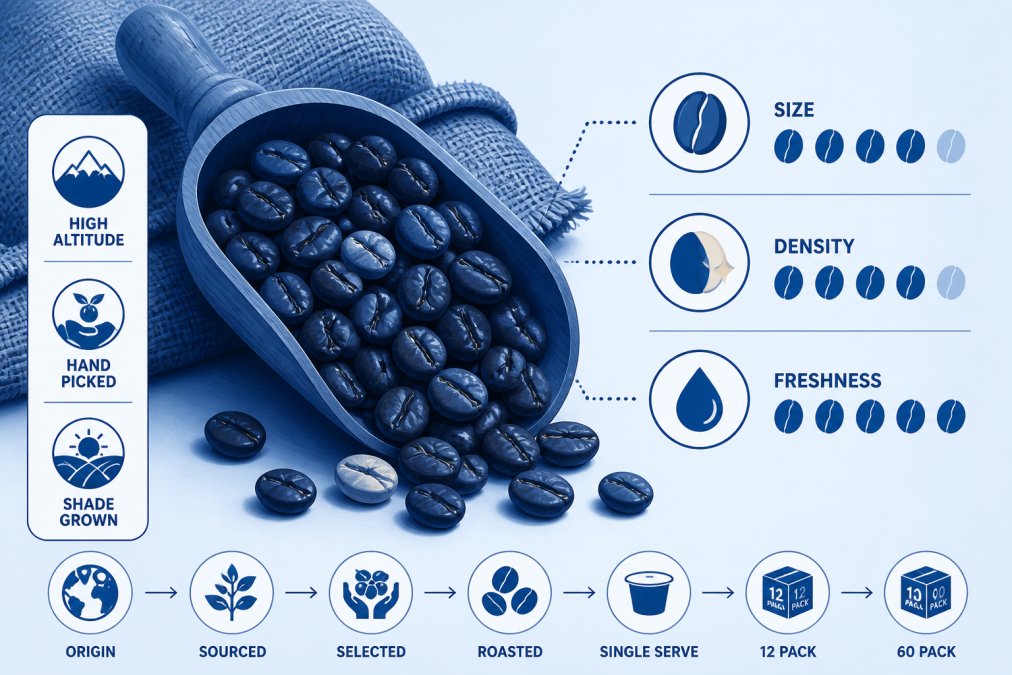
Venro Coffee Co.'s Single Origin Favorites Sample Pack includes beans from various countries, each with documented growers and processing methods. The Peru beans come from Cooperativa Agricola de Servicios Norandino, grown at 1100-1700 meters altitude, and processed through gully washing and sun drying. This specificity lets the roaster optimize the roast for those beans' characteristics.

Supermarket brands don't provide this information because it doesn't exist in their supply chain.
Aroma, Acidity, and Sensory Experience
The sensory experience, what you smell when you open the bag and what you taste in the cup, is where the freshness difference becomes immediately obvious.
Fresh roasted coffee has pronounced aroma because volatile aromatic compounds are still present. When you open a bag roasted a week ago, you get a strong, complex smell: fruity notes, chocolate, nuts, spice, or floral tones depending on origin. This aroma is the first indicator of flavor.
Supermarket coffee has minimal aroma because those volatile compounds have already oxidized and dissipated.
In the cup, the difference centers on acidity and brightness. "Acidity" in coffee terminology means the vibrant, lively quality that makes coffee taste clean and complex. Fresh roasted coffee has pronounced acidity because the flavor compounds are still intact. Supermarket coffee tastes flat because those compounds have degraded, leaving a bitter or slightly rancid taste from oxidized oils.
The body, the weight and texture in your mouth, also changes with age. Fresh roasted coffee has a clean, smooth body with balanced sweetness. Older coffee develops a thin or papery body, or a heavy, bitter body from over-oxidation.
How to Identify Signs of Stale Coffee Beans
Learning to spot stale coffee beans protects you from wasting money on old stock. The most reliable way to assess freshness is to taste it systematically.
Visual and aroma indicators: Fresh roasted beans have a glossy, oily sheen on the surface, especially medium and dark roasts. If beans look dull, dry, or chalky, oxidation has begun. Faded or grayish color indicates months of storage. When you open fresh roasted coffee, you should smell strong, complex aroma. If you smell very little or generic and flat aroma, the beans are stale. A slightly rancid or cardboard-like smell indicates significant oxidation.
The roast date check: Specialty roasters always print the roast date on the bag. If it's more than 4-6 weeks old, the coffee is past its sensory peak. Supermarket coffee rarely lists a roast date, without one, you have no way to know how old it is.
The at-home blind taste test: Obtain two samples of similar roast level, one fresh roasted (within 2 weeks) and one supermarket coffee. Brew identically using the same method, water temperature (195-205°F), brew time, and 1:16 coffee-to-water ratio. Have someone label the cups A and B without telling you which is which. Evaluate on aroma (pronounced vs. muted), flavor clarity (bright and defined vs. muddy), and finish (clean vs. bitter or rancid). Most people conducting this test for the first time are surprised by how pronounced the difference is.
Degassing and packaging clues: Listen for a slight hiss when opening whole beans from a specialty roaster. Fresh roasted beans are still releasing CO₂ during the first few weeks. Specialty roasters often use bags with one-way valves that let CO₂ escape but prevent oxygen from entering. Supermarket coffee typically uses standard vacuum-sealed bags without valves.
The grind test: Ask to grind a small sample at a coffee shop or specialty store. Fresh roasted grounds release intense, complex aroma immediately. Stale grounds smell muted or flat.
Specialty Coffee Association cupping standards define the sensory evaluation methodology used by professional tasters. Freshness differences are measurable and consistent, not subjective.
How to Store Coffee Beans for Freshness
How you store coffee after purchase determines whether you get full value from fresh roasted beans or watch them degrade. Storage directly impacts how long coffee remains in its flavor window.
The enemies of fresh coffee are oxygen, light, heat, and moisture. Each accelerates oxidation and flavor degradation.
Container type: Store whole beans in an airtight container, not the original bag unless it has a valve preventing oxygen from entering. Glass jars with airtight seals work well. Avoid clear glass because light degrades beans. Opaque containers are better. Some specialty roasters sell beans in bags with one-way valves that let CO₂ out but don't let oxygen in, ideal for original-bag storage.
Temperature: Keep beans in a cool, dry place. Room temperature is fine, but avoid heat sources like ovens, direct sunlight, or above the refrigerator. Fluctuating temperatures accelerate oxidation.
Humidity: Coffee is hygroscopic and absorbs moisture from the air. High humidity speeds up staling. Keep beans away from steam and in dry storage areas.
Freezer storage: Freezing slows oxidation dramatically. If you buy more coffee than you'll use in 4 weeks, freeze whole beans in an airtight container to extend the flavor window by weeks or months. Thaw once when ready to use, then grind and brew.
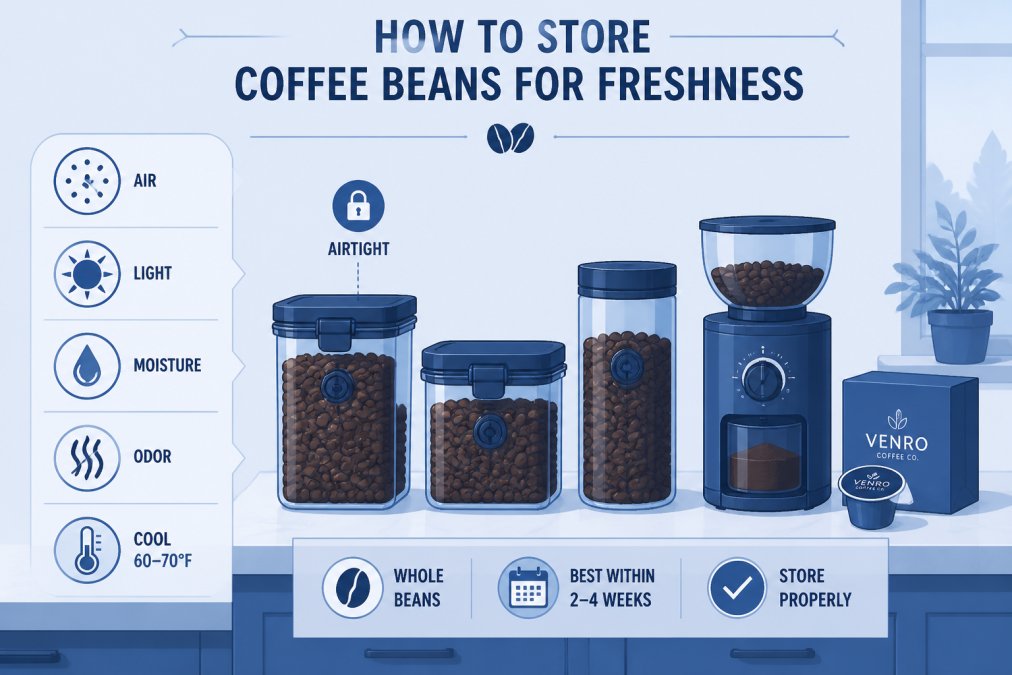
Grinding timing: Grind immediately before brewing. Ground coffee stales much faster than whole beans due to exponentially more surface area exposed to oxygen.
Cost vs. Value: What Justifies the Premium
Fresh roasted specialty coffee costs 2-3 times more per pound than supermarket brands. Three distinct price tiers now exist:
Conventional supermarket coffee ($0.50-0.75 per ounce): Commodity blends, no roast date, roasted months before purchase, minimal sourcing information.
Supermarket specialty coffee ($0.90-1.40 per ounce): Premium lines with roast dates, single-origin options, and sourcing transparency. Roasted by specialty roasters but distributed through supermarket channels.
Direct-from-roaster specialty coffee ($1.50-2.50 per ounce): Fresh roasted to order, shipped directly, full sourcing transparency, highest freshness guarantee.
Supermarket specialty coffee changes the value calculation. You can buy beans roasted within 2-3 weeks at a grocery store for significantly less than direct-order specialty coffee.
What you're paying for at each tier:
Conventional supermarket coffee offers lower cost and convenience but stale beans and minimal flavor complexity. Supermarket specialty coffee provides roast dates, single-origin options, and noticeably fresher beans at moderate premium. Direct-from-roaster specialty coffee delivers peak freshness, full sourcing transparency, rare single-origins, and roasting expertise at the highest price.
The practical math:
Assuming 8-10 cups per 12-ounce bag:
- Conventional supermarket coffee: $0.06-0.09 per cup
- Supermarket specialty coffee: $0.11-0.17 per cup
- Direct-order specialty coffee: $0.18-0.30 per cup
Which tier makes sense:
Choose conventional supermarket coffee if you drink coffee primarily for caffeine, are on a tight budget, or don't notice flavor differences.
Choose supermarket specialty coffee if you brew daily and notice flavor differences but don't want the direct-order premium, or prefer local grocery store convenience.
Choose direct-from-roaster specialty coffee if you brew daily and flavor complexity matters, want maximum freshness, care about sourcing transparency, or are interested in understanding how roast date affects your cup.
One often-overlooked consideration is waste. If you buy supermarket coffee and it sits for two months, you're paying for stale coffee you don't enjoy. Fresh roasted coffee encourages consumption while good, meaning less waste and better value per cup actually consumed.
Sample packs offer a low-commitment entry point. A typical sample pack costs $20-30 and includes 4-6 small (2-ounce) varieties, roughly $0.15-0.25 per cup for premium coffee, competitive with supermarket specialty while giving you direct-roaster quality and freshness.

National Coffee Association consumer research shows that flavor perception and willingness to pay for premium coffee correlates strongly with brewing frequency. Daily coffee drinkers are significantly more likely to notice and value freshness differences.
Environmental Impact and Supply Chain Transparency
The environmental story differs significantly between fresh roasted specialty coffee and supermarket brands.
Many specialty roasters work with farms practicing sustainable agriculture, shade-grown coffee, water conservation, and reduced pesticide use. Direct relationships and traceability mean roasters can choose environmentally responsible growers. However, specialty coffee has a counterbalancing cost: shipping creates additional carbon emissions.
Commodity coffee sourcing often prioritizes price over sustainability, potentially meaning less environmentally responsible farming. However, supermarket coffee has lower per-unit shipping emissions through bulk consolidation.
Specialty roasters often win on packaging, using recyclable or compostable materials designed to preserve freshness while minimizing waste. Supermarket coffee typically uses plastic-lined or vacuum-sealed bags that are harder to recycle.
The net environmental impact depends on your priorities. Supporting sustainable farming practices with higher shipping carbon costs versus minimizing shipping emissions with potentially less sustainable sourcing.
Sustainable Coffee Alliance certification standards provide third-party verification for farms meeting environmental and social standards. Many specialty roasters source from certified farms, which you can verify by checking the bag or asking the roaster directly.
Making Your Choice: Fresh Roasted or Supermarket
The choice ultimately depends on three factors: how much you value flavor, how much you're willing to spend, and how seriously you take the brewing experience.
Choose fresh roasted coffee if:
- You brew coffee daily and notice flavor differences
- You're willing to pay a premium for noticeably better taste
- You want to explore different origins and flavor profiles
- You care about sourcing transparency and sustainability practices
Fresh roasted coffee from a specialty roaster like Venro Coffee Co. delivers measurably better flavor and freshness. The Breakfast Blend ($19.99) offers a smooth, consistent cup, something you won't find in supermarket blends.
Choose supermarket coffee if:
- You drink coffee primarily for caffeine, not flavor
- You're on a tight budget and the price difference matters
- You want maximum convenience and availability
- You drink coffee inconsistently and don't want to worry about freshness windows
Supermarket coffee is adequate for these scenarios.
The middle ground: Sample packs offer a low-commitment way to experience fresh roasted coffee. Venro Coffee Co.'s Best Sellers Sample Pack ($24.99) includes six 2-ounce varieties, 6Bean Blend, Cowboy Blend, Breakfast Blend, Peru, Mexico, and Bali, letting you try different origins and roasts without large upfront investment.
The roast date matters. The origin matters. The freshness matters. But ultimately, the best coffee is the one you actually enjoy drinking. If supermarket coffee tastes fine to you, there's no obligation to upgrade. If you've tried fresh roasted coffee and noticed the difference, the premium makes sense.
The gap between fresh roasted and supermarket coffee is the difference between a vibrant, complex cup and something that tastes flat and stale. Venro Coffee Co. specializes in fresh roasted specialty beans roasted to order and shipped directly to your door, offering single-origin coffees, signature blends like the House Blend and Breakfast Blend, and convenient single-serve capsule options. Whether you're exploring single origins through the Single Origin Favorites Sample Pack or simplifying your mornings with the 12 Pack Single Serve Capsules, fresh roasted coffee delivers the flavor and freshness that make your daily ritual worth savoring. Shop Coffee today and experience the difference roast date actually makes.

Frequently Asked Questions
Is fresh roasted coffee actually better than store-bought supermarket coffee?
Yes, fresh roasted coffee typically delivers superior flavor because it retains the nuance and vibrancy lost during the long shelf life of supermarket brands. Supermarket coffee often sits in warehouses and on shelves for months, allowing oxidation to degrade the flavor profile. Fresh roasted coffee, roasted within days of shipment, preserves the acidity, aroma, and sensory complexity that define specialty coffee. The difference is most noticeable in the first 2-3 weeks after roasting.
What is the coffee roast date importance, and how do I find it?
The roast date is critical because coffee begins losing flavor immediately after roasting through oxidation and degassing. Coffee is best consumed within 2-4 weeks of the roast date. Supermarket brands rarely display roast dates, making it impossible to know how long the beans have been sitting. Specialty roasters like Venro Coffee Co. prominently display the roast date on packaging, ensuring you know exactly how fresh your beans are when they arrive.
What are the signs of stale coffee beans I should watch for?
Stale coffee beans appear dull and lack the glossy sheen of fresh beans. They produce little to no crema when brewed, taste flat or bitter, and lack the vibrant aroma of fresh roasted coffee. The sensory experience becomes muted, you'll notice less complexity in the flavor profile and fewer tasting notes. If beans were roasted more than 4-6 weeks ago, they've likely undergone significant oxidation and degradation, especially if stored improperly.
How much fresher is specialty coffee when it arrives at my door?
Specialty roasters ship coffee within days of roasting, so it typically arrives 5-10 days after the roast date. Supermarket coffee may have been roasted 3-6 months before purchase. This means fresh roasted coffee delivered to your home is often 10-20 times fresher than what's on store shelves. When you order from Venro Coffee Co., each order is roasted to order, ensuring maximum freshness upon arrival.
This article was written using GrandRanker