



What Happens If You Steep Loose Leaf Tea Too Long?
Table of Contents
- What Happens When You Steep Loose Leaf Tea Too Long?
- Why Does Tea Get Bitter and Astringent?
- Does Over-Steeping Increase Caffeine and Health Risks?
- Ideal Tea Steeping Times by Type
- How to Fix Bitter Tea: Rescue Methods That Work
- Common Brewing Mistakes That Ruin a Cup
- Brewing Loose Leaf Tea the Right Way
- Conclusion: Respect the Steep Time
- Frequently Asked Questions
Last Updated: September 4, 2026
What Happens When You Steep Loose Leaf Tea Too Long?
Over-steeping loose leaf tea transforms a delicate, aromatic cup into a bitter, astringent liquid that masks the tea's true flavor profile. This guide from Venro Coffee Co. explains the science behind that shift and, more importantly, how to prevent and fix it. If you routinely set a timer and walk away, only to return to a dark, harsh brew, you are fighting the extraction process rather than working with it.
The problem is over-extraction. When you steep loose leaf tea beyond its recommended time, you force the leaves to release compounds that ruin the balance of the cup. The result is a flavor that is sharp, drying, and unpleasant, a shadow of what the same leaves can produce with proper timing.
Below, we will cover exactly what happens at the chemical level, how to spot trouble before you pour, and the precise rescue methods that can save an over-steeped pot. We will also break down ideal steeping times by tea type so you can brew with confidence every time.
The Chemical Shift: Tannins and Catechins
When you steep loose leaf tea too long, the primary culprits behind the bitter taste are tannins and catechins. Tannins, which are polyphenols naturally present in tea leaves, are released gradually into the hot water. Early in the steep, they contribute structure and a pleasant depth. As time passes, their concentration spikes, and the flavor tips from balanced to harsh and drying.
Catechins, another group of polyphenols especially prevalent in green and white teas, behave similarly. They are responsible for the tea's antioxidant properties, but in excess, they create a pronounced bitterness and astringency. Astringency is that dry, puckering sensation on your palate, distinct from simple bitterness, and it is a direct sign that the infusion has gone too far.
The brewing technique matters because the rate of extraction is not constant. Delicate teas like green and white release these bitter compounds faster, while more oxidized black teas and strong blends can tolerate a longer steep before they turn. This is why a one-size-fits-all brewing approach fails.
Visual and Aroma Clues of Over-Extraction
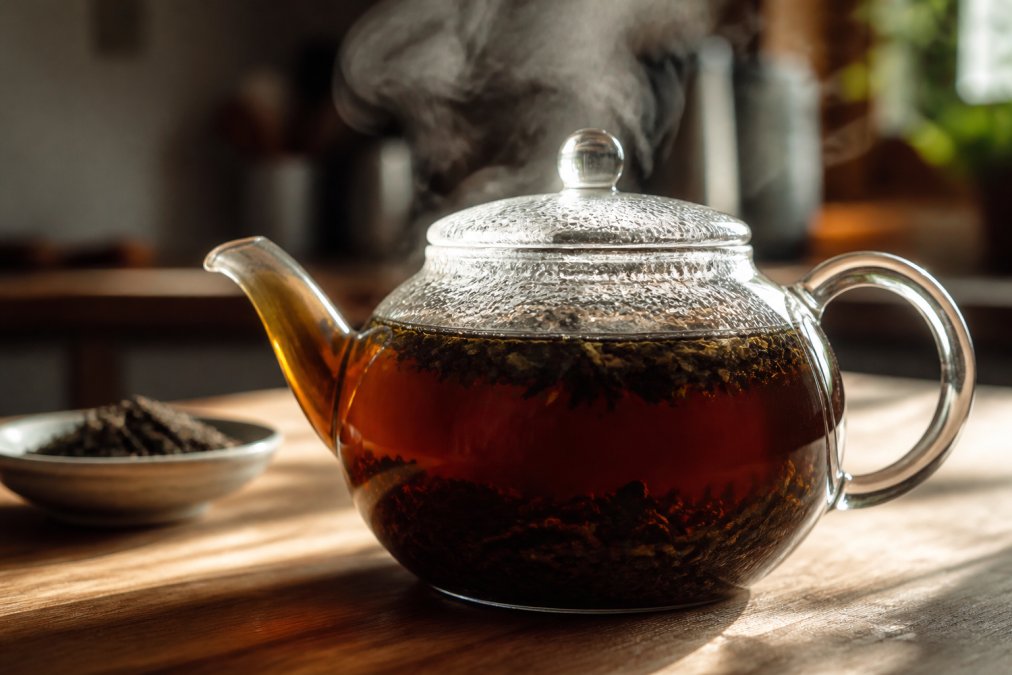
You do not need a stopwatch to know you have over-steeped loose leaf tea; your eyes and nose give it away. A properly brewed cup of black tea has a clear, bright amber or copper color. An over-steeped cup turns murky, dark, and almost muddy, sometimes developing a cloudy appearance as the liquid cools.

The aroma is equally telling. A fresh, correctly steeped tea smells floral, malty, or vegetal depending on the variety. When over-extraction occurs, that inviting scent is replaced by a sharp, acrid, or stewed quality. If the steam rising from your cup smells more like a bitter herb tonic than a fragrant tea, the damage is already done.
Why Does Tea Get Bitter and Astringent?
Tea gets bitter and astringent when the steeping duration exceeds what the specific leaf type can handle, forcing bitter compounds and alkaloids out of the leaves at an accelerated rate. Understanding this mechanism is the key to fixing your brew.
Extraction is a race between the desirable flavor compounds and the undesirable ones. Early in the infusion, you pull out the bright, aromatic molecules that define the tea's character. As time goes on, the water continues to draw out heavier compounds, including more tannins and caffeine. The longer the steep, the more the balance shifts toward the bitter end of the spectrum.
Water temperature accelerates this process significantly. Steeping a delicate green tea in water that is too hot, near boiling, is like fast-forwarding the extraction. You get the bitterness of a long steep in a fraction of the time. This is why controlling both time and temperature is essential for a balanced cup.

Does Over-Steeping Increase Caffeine and Health Risks?
Yes, over-steeping does extract more caffeine into your cup, but the increase follows a diminishing curve. Caffeine is highly water-soluble, and roughly 70-80% of the total available caffeine in the leaf is released within the first 1-2 minutes of steeping (PubMed). Extending the steep from 3 minutes to 10 minutes might raise the caffeine content from approximately 40 mg to 55 mg per 8-ounce cup (depending on leaf grade and water temperature), a noticeable but not dramatic jump. The bigger shift is in the ratio of caffeine to L-theanine, which is where the real health story lies.
L-theanine, the amino acid responsible for tea's calming, focused effect, extracts more slowly than caffeine. In a normal 3-minute steep, you get a balanced ratio of caffeine to theanine that promotes alertness without jitter. As you push past 5-6 minutes, the extraction curve flatters for theanine while caffeine continues to leach out. The result is a cup that is disproportionately stimulating and more likely to cause anxiety, restlessness, or a racing heart in sensitive individuals, not because the caffeine dose is toxic, but because the protective, moderating effect of theanine is proportionally weaker.
For most healthy adults, the FDA cites up to 400 mg of caffeine per day as a safe limit, and even a severely over-steeped 12-ounce mug of black tea will only deliver 60-80 mg (the FDA). The more pressing concern is tannin concentration. Tannins are a class of polyphenols that bind to proteins and minerals. In a heavily over-steeped cup, tannin levels can rise. For people with iron deficiency or anemia, regular consumption of highly tannic tea can inhibit non-heme iron absorption when consumed with meals. This is why dietitians commonly recommend waiting at least one hour after eating before drinking strong tea if you are managing iron levels.
Tannins also stimulate gastric acid secretion. A mildly over-steeped cup might cause slight heartburn, but a pot left for 15-20 minutes produces a tannin concentration that can trigger nausea, stomach cramping, or acid reflux in people with sensitive gastrointestinal tracts. The astringent, mouth-drying sensation you feel is the tannins binding to the mucoproteins in your saliva, the same mechanism that makes unripe fruit pucker your mouth.
There is also a common misconception that longer steeping extracts more antioxidants, making the tea "healthier." This is false. The catechins, particularly EGCG (epigallocatechin gallate), the most studied antioxidant in tea, are largely extracted within the first 2-3 minutes. After 5 minutes, the additional catechin yield is negligible, while the extraction of bitter flavonols and tannins accelerates. You are not gaining health benefits; you are gaining bitterness and potential digestive irritation.
One overlooked nuance: the health impact depends on the tea grade. High-quality whole-leaf teas, like those sold by specialty vendors, have intact cell structures that release compounds more slowly and predictably. Dust-grade tea bags, commonly found in mass-market grocery brands, have broken cell walls that release tannins and caffeine almost instantly. If you are prone to stomach issues, this difference matters more than the specific tea variety.
The practical takeaway: over-steeping does not create a toxic beverage, but it does create a cup that is disproportionately high in tannins and caffeine relative to theanine. For most people, the health risk is limited to digestive discomfort or mild overstimulation. For those with specific conditions, iron deficiency, acid reflux, or anxiety disorders, the risk is more meaningful and worth respecting.
Ideal Tea Steeping Times by Type
Every tea type has a sweet spot, a steeping duration that balances flavor, aroma, and body without crossing into bitterness. The table below summarizes the general guidelines we recommend for loose leaf tea.
| Tea Type | Water Temperature | Steep Time | Flavor Profile Goal |
|---|---|---|---|
| White Tea | 160-175°F | 2-3 minutes | Delicate, subtly sweet |
| Green Tea | 170-180°F | 1-3 minutes | Vegetal, fresh, light |
| Oolong Tea | 185-205°F | 3-5 minutes | Floral, creamy, complex |
| Black Tea | 195-210°F | 3-5 minutes | Malty, bold, full-bodied |
| Herbal / Tisane | 210°F | 5-7 minutes | strong, aromatic, caffeine-free |
These are starting points, not rigid rules. A high-quality loose leaf tea, like the ones we source at Venro Coffee Co., can often handle multiple infusions. Subsequent steeps may require slightly more time as the leaves have already released their initial burst of flavor.
Water Temperature and Leaf-to-Water Ratio
Getting the steep time right is only half the battle; the water temperature and the amount of tea you use are just as critical. Using water that is too hot will scorch delicate leaves, producing a bitter cup even with a short steep time. Using too little water for the amount of leaves creates an overly concentrated, intense brew that can taste harsh.
A general rule of thumb for loose leaf tea is one teaspoon of leaves per 8-ounce cup of water. For larger leaf styles that take up more space, you may need to adjust by weight. A kitchen scale is the most accurate tool, and we generally recommend about 2.5 grams of tea for a 12-ounce serving.
If you are brewing a bold black tea like our English Breakfast Tea Loose Leaf - Bold & Classic, you can push toward the longer end of the steep time for a strong morning cup. For a more delicate option like our Jasmine Green Tea Loose Leaf - Floral & Sweet, err on the side of shorter steeps and cooler water to preserve its floral character.
How to Fix Bitter Tea: Rescue Methods That Work
If you have already over-steeped your loose leaf tea, the pot is not necessarily a loss. A few quick rescue methods can soften the bitterness and make the tea drinkable, though it will not taste identical to a perfectly brewed cup.
The first and most effective fix is dilution. Pour the over-steeped tea into a larger pot or directly into cups and top off with hot water from your kettle. This reduces the concentration of bitter compounds and brings the flavor back into balance. You lose some intensity, but you gain a palatable cup.
Another option is to add a pinch of salt. A tiny amount, just a few grains, can suppress the perception of bitterness on your palate without making the tea taste salty. This is a classic trick used by cooks and baristas to balance bitter flavors.
Common Brewing Mistakes That Ruin a Cup
Beyond simply leaving the tea in the pot, several common brewing mistakes lead to the same bitter outcome. Recognizing these errors, and understanding why they happen, is the first step toward a better cup of loose leaf tea.
Using boiling water for green or white tea. This is the fastest way to destroy a delicate tea. The high heat denatures the chlorophyll and accelerates the extraction of catechins and flavonols, producing a stewed, vegetal bitterness almost instantly. If you do not have a variable-temperature kettle, boil the water and let it sit uncovered for 2-3 minutes before pouring. For green tea, the water should feel hot but not scalding when you touch the side of the kettle, roughly 170-180°F.
Squeezing the tea bag or leaves. When you squeeze the leaves to get the last drop, you are mechanically pressing out the tannin-rich liquid that has settled at the bottom of the infuser. This liquid is the most concentrated, most astringent fraction of the brew. Let the leaves drain naturally for a few seconds, then discard them. The same principle applies to pressing a French press plunger too aggressively, gentle pressure is fine, but forcing the plunger down with effort pushes bitter sediment into the cup.
Judging strength by color alone. A darker cup does not necessarily mean a stronger, better cup. It often means an over-extracted one. The color of tea comes primarily from the oxidation level of the leaf and the extraction of theaflavins and thearubigins, compounds that contribute color but not necessarily flavor balance. A green tea that has steeped too long turns a murky yellow-brown, while a properly steeped green tea is a pale, clear chartreuse. A black tea that has gone too far becomes almost opaque and muddy. Rely on your timer, not the color of the liquid. If you want to train your eye, brew the same tea at 2, 4, and 6 minutes side by side and note the color difference, it is dramatic and instructive.
Ignoring the tea-to-water ratio. Using too many leaves for the amount of water creates an overpowering brew that can be bitter even with a short steep. The standard ratio is 1 teaspoon (about 2.5 grams) of loose leaf tea per 8 ounces of water. But this varies by leaf shape: tightly rolled oolongs like Tieguanyin expand dramatically and need less volume, while large, fluffy white teas like Silver Needle take up more space and need more by volume. A kitchen scale eliminates the guesswork. If you are using a scale, aim for 2.5-3 grams per 8 ounces for most teas, and adjust from there based on taste.
Re-steeping spent leaves. After a proper first steep, the leaves have released most of their desirable compounds. A second steep can work for high-quality whole-leaf teas, but only if you extend the time by 30-60 seconds. Re-steeping leaves that have already been over-steeped is pointless, they have nothing left to give except bitter residue. If your first steep went too long, discard the leaves and start fresh.
Using stale or improperly stored tea. This is a mistake that no amount of steeping precision can fix. Tea leaves are hygroscopic, they absorb moisture and odors from the air. Loose leaf tea stored in an open container near your stove or spice rack will pick up cooking odors and lose volatile aromatic compounds within weeks. Proper storage means an airtight, opaque container kept away from heat, light, and moisture. Whole-leaf black teas can last 12-18 months under ideal conditions; green teas are more fragile and are best consumed within 6-8 months of harvest. If your tea smells flat or musty before you brew it, no steeping technique will save the cup.
Failing to account for altitude. Water boils at lower temperatures at higher elevations. In Denver (5,280 feet), water boils at approximately 202°F instead of 212°F (usgs.gov). If you are brewing at altitude and using a thermometer, adjust your target temperatures accordingly. If you are not using a thermometer, the practical impact is that your water may not be hot enough for black teas or herbal tisanes, leading to under-extraction rather than bitterness, a different problem, but one that also ruins a cup.
A common pattern among home brewers is to blame the tea when the real culprit is one of these errors. Quality loose leaf tea is forgiving within a reasonable window, but it cannot compensate for boiling water, squeezed leaves, or a 1:1 tea-to-water ratio. Master these fundamentals, and the "bitter tea problem" largely disappears.
Brewing Loose Leaf Tea the Right Way
Brewing loose leaf tea correctly is a simple process that rewards attention to detail. The goal is to extract the flavor and aroma without pulling out the bitter compounds that ruin the experience.
First, start with fresh, cold water and heat it to the appropriate temperature for your tea type. If you do not have a variable-temperature kettle, bring the water to a boil and let it sit for a minute or two to cool before pouring it over delicate leaves.
Next, measure your tea. Use the recommended leaf-to-water ratio as your baseline. Place the leaves in your steeping vessel, whether that is an infuser basket, a teapot, or a French press.
Pour the hot water over the leaves and start your timer. Once the time is up, immediately remove the leaves from the water. Pour the entire pot through a strainer into a separate serving vessel if you are using a teapot, or remove the infuser basket. Do not let the leaves sit in the water while you finish preparing your breakfast.
Conclusion: Respect the Steep Time
Steeping loose leaf tea too long is the single most common reason a potentially excellent cup turns bitter and undrinkable. The chemistry is clear: over-extraction pulls too many tannins and catechins into the water, overwhelming the delicate flavor balance that defines quality tea. The fix is a combination of respect for the process and a few practical techniques.
Mastering the steep time transforms your daily ritual. A properly brewed cup of loose leaf tea is a completely different experience from the bitter, astringent liquid that results from neglect. It is smoother, more aromatic, and reveals the nuanced tasting notes that make specialty tea worth seeking out.
At Venro Coffee Co., we believe the ritual matters as much as the leaf. Our selection of artisan loose leaf teas, from the malty depth of English Breakfast to the floral elegance of Jasmine Green, is crafted to reward careful brewing. Shop Coffee and find a new favorite to brew with precision.
Frequently Asked Questions
Can I drink tea if it was steeping too long?
Yes, it is safe to drink, though the flavor will be intensely bitter and astringent. Over-steeped tea is not toxic, but it may upset sensitive stomachs due to the high concentration of tannins. The main downside is the ruined flavor profile. If you let it steep for 20 minutes or more, the tea is generally undrinkable without heavy dilution. Your best option is to brew a fresh cup with the correct steep time and water temperature.
Does over-steeping tea increase caffeine content?
Yes, but the increase is modest. Most of the caffeine in loose leaf tea extracts within the first 1 to 2 minutes of steeping. Leaving the leaves in for 10 or 15 minutes does pull out more caffeine, but the dramatic flavor change comes from the release of bitter compounds like tannins and catechins. The intense bitterness you taste is mostly over-extraction of these polyphenols, not a massive caffeine spike.
How long should I let loose leaf tea steep?
Ideal tea steeping times vary by type. Delicate green teas like our Jasmine Green Tea need only 2 to 3 minutes. Black teas, such as our English Breakfast or Earl Grey, steep well for 3 to 5 minutes. Spiced blends like Masala Chai can handle 4 to 5 minutes for a full-bodied cup. For all types, use the correct water temperature and remove the leaves when the timer ends to prevent bitterness.
Can steeping tea for too long cause toxins?
No. There is no scientific evidence that over-steeping loose leaf tea releases toxins that are dangerous to your health. The concern with very long steeps, such as 20 minutes or more, is purely about taste and mouthfeel. The tea becomes over-extracted, releasing high levels of astringent tannins. While this is not harmful, it can cause stomach discomfort in some people when consumed on an empty stomach.
This article was written using GrandRanker