



How to Host a Tea Tasting Party at Home
Table of Contents
- What You'll Need to Host a Tea Tasting Party
- Choosing Tea Varieties and Tea Tasting Flight Ideas
- Essential Tea Tasting Tools and Equipment
- How to Properly Steep Tea for a Tasting
- Step-by-Step Tea Tasting Process: Observe, Smell, Sip
- Tea and Food Pairing Guide for Your Tasting
- Setting the Table and Creating the Right Atmosphere
- How to Clean a Stainless Steel Tea Kettle and Care for Equipment
- Troubleshooting Common Tea Tasting Issues
- Frequently Asked Questions
Last Updated: September 2, 2026
What You'll Need to Host a Tea Tasting Party
Hosting a tea tasting party requires surprisingly little equipment, but the right tools transform the experience from casual to memorable. At Venro Coffee Co., we've curated a selection of premium artisan teas that work beautifully for tastings.
Start with the basics: a gaiwan (a traditional lidded brewing vessel), infusers for loose leaf tea, and teacups or small tasting bowls. A simple notebook or printed scorecard helps guests track observations. An electric kettle with temperature settings removes guesswork, and a tea towel, small spoons, and water pitcher complete the setup.
The atmosphere counts as much as the equipment. Gather guests in a space with natural light, minimal competing aromas, and comfortable seating. A small plate of neutral snacks, crackers, plain bread, or unsalted nuts, helps cleanse the palate between varieties. Fresh water and palate cleansers like apple slices prevent flavor fatigue.
Don't overthink this. The best tea tasting parties prioritize the tea and conversation over elaborate staging.
Choosing Tea Varieties and Tea Tasting Flight Ideas
A tea tasting flight is a curated selection of 3-5 different teas arranged to build flavor understanding progressively. Start light and move toward bold: open with a delicate white or green tea, progress to oolongs, then finish with strong black teas or spiced blends. This prevents flavor fatigue and lets guests appreciate subtle differences.
The Classic Breakfast Flight: English Breakfast, Earl Grey, and Masala Chai. Each has a distinct character, and the progression from malty to floral to spiced feels natural. Venro Coffee Co.'s English Breakfast Tea pairs perfectly with their Earl Grey and Masala Chai for a complete traditional experience.


The Mint Exploration: Moroccan Mint as the centerpiece, paired with a plain green tea and a peppermint herbal blend. Moroccan Mint Tea from Venro Coffee Co. offers that authentic gunpowder green tea base with vibrant spearmint, ideal for showing how the herb transforms the drinking experience.
The Bergamot Deep Dive: Start with a standard black tea, move to Earl Grey, then finish with a bergamot oolong if you can source one. This isolates how bergamot essential oil changes across different tea types.
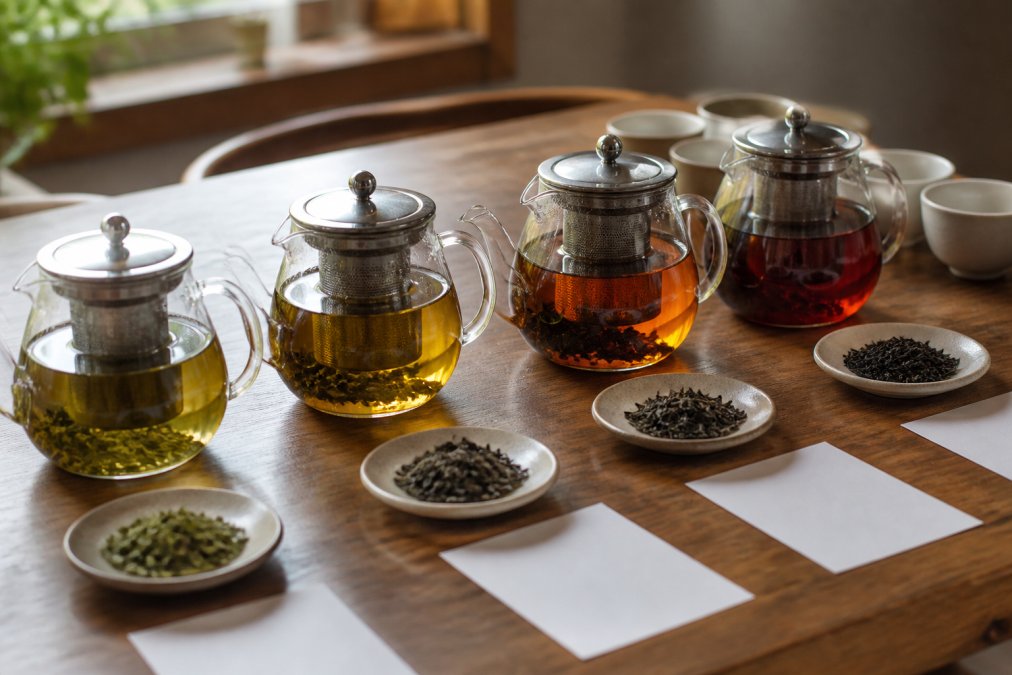
Limit yourself to 3-5 teas per tasting. Each tea should spend 15-20 minutes in focus, allowing guests to observe, smell, sip, and discuss before moving forward.
Essential Tea Tasting Tools and Equipment
A gaiwan is the gold standard for brewing during tastings. This lidded cup with saucer lets you control steeping time precisely and observe the tea's color easily. If you don't have one, a small teapot works, though you lose the visibility advantage.
Infusers matter more than most realize. Mesh ball infusers work adequately, but flat basket infusers give loose leaf tea room to expand fully, which affects flavor extraction.
Invest in small tasting cups or bowls, ideally white or clear ceramic so you can see the tea's color clearly. Standard mugs are too large for proper tasting; you want 2-4 ounces per sample.
A tasting mat (a simple cloth or paper mat with circles marked for each sample) keeps the station organized and prevents spills.
Water temperature control is non-negotiable for consistent results. Different teas require different temperatures: white and green teas around 160-180°F, oolongs around 190-200°F, and black teas at 200-212°F (peer-reviewed research). An electric kettle with temperature presets eliminates guesswork.
Keep small spoons for stirring and tasting, and a timer to ensure consistent steeping. Even 30 seconds of difference affects flavor perception.
How to Properly Steep Tea for a Tasting
Steeping is where precision separates a good tasting from a mediocre one. Small variations in water temperature, steeping time, or leaf-to-water ratio create noticeable differences.
Use approximately 2.5-3 grams of loose leaf per 8-12 ounces of water, though this varies by tea type (peer-reviewed research). Denser, tightly rolled teas need slightly less; fluffy white teas need slightly more. When in doubt, err toward slightly less, you can always brew a second infusion.
Water temperature is critical. Heat water to the appropriate temperature based on your tea type. Pouring boiling water over delicate white or green teas will scald the leaves and create harsh, bitter flavors. Conversely, water that's too cool won't extract flavor properly from strong black teas.
Pour water slowly and deliberately to help saturate the leaves evenly. Watch the color develop immediately in the cup.
Steeping time varies significantly by tea type:
- White tea: 3-5 minutes
- Green tea: 2-4 minutes
- Oolong: 3-7 minutes
- Black tea: 4-6 minutes
- Herbal infusions: 5-10 minutes (peer-reviewed research)
Use a timer. When time is up, pour the tea into tasting cups immediately. Leaving tea in the brewing vessel continues extraction and creates over-steeped, bitter results.
For tastings with multiple guests, brew each tea once and divide it among small cups rather than brewing individual cups. This ensures everyone tastes the same infusion and can compare notes directly.
Step-by-Step Tea Tasting Process: Observe, Smell, Sip
A structured tasting process helps guests notice details they'd otherwise miss. Walk through this sequence with each tea, taking 3-5 minutes per step.
Step 1: Observe the Liquor
Look at the brewed tea in your cup. Notice the color, is it pale and translucent, golden, amber, or deep brown? Does it have clarity or cloudiness? Swirl the cup gently and watch how the liquid moves. The visual experience sets expectations for what you're about to taste.
Different teas show distinct colors. A white tea appears nearly colorless or pale yellow. Green teas range from pale jade to golden. Oolongs vary dramatically by oxidation level. Black teas are deep amber to brown. Ask your guests what they observe.
Step 2: Smell the Aroma
Bring the cup to your nose and inhale gently. What's your first impression? Is the aroma profile floral, fruity, earthy, sweet, or spiced? Does it smell fresh or aged?
Smell is where much of tea's flavor actually lives. Try this technique: hold the cup with both hands and inhale deeply, then pull back and inhale again. The second inhale often reveals secondary aromas you missed the first time. For Venro Coffee Co.'s Masala Chai, you'll immediately notice cardamom and cinnamon, but a second inhale reveals ginger and black pepper complexity.
Encourage guests to describe what they smell without worrying about being "right."
Step 3: Sip and Taste
Take a small sip, about a teaspoon. Let the tea coat your mouth and tongue. Notice the mouthfeel first, is the tea light and delicate or full and coating? Does it feel smooth or slightly astringent?
Now focus on flavor. What tastes do you detect? Sweetness, bitterness, fruitiness, earthiness, spice? Try to identify specific flavor notes. Is there a floral quality? A hint of stone fruit or dried fruit? Honey or caramel sweetness?
Swallow slowly and notice the aftertaste. The finish, what remains after swallowing, is often where subtle teas show their quality.
Step 4: Compare and Discuss
After tasting, pause before moving to the next sample. Ask your guests what they noticed. Differences in perception are normal and interesting, they show how individual palate sensitivity varies.
This is also when you can discuss origin, processing method, or oxidation level if your guests are interested. Read your audience and adjust accordingly.
Tea and Food Pairing Guide for Your Tasting
Pairing tea with food elevates both. The right snack complements a tea's flavor profile and prevents palate fatigue during extended tastings.
Light, Delicate Teas (White and Green)
Pair with fresh fruit, mild cheeses, light pastries, unsalted nuts, or vegetables. Avoid heavy sauces, strong cheeses, or spiced foods that compete with delicate aromas.
Medium-Bodied Teas (Lightly Oxidized Oolongs)
Pair with semi-hard cheeses, roasted nuts, whole grain crackers, light chocolate, or dried fruit.
Full-Bodied, Strong Teas (Black Teas)
Pair with hard cheeses, dark chocolate, pastries with jam or honey, roasted nuts with sea salt, or cured meats in moderation.
Spiced Teas (Masala Chai, Flavored Blends)
Venro Coffee Co.'s Masala Chai works beautifully with spiced cookies, honey-sweetened pastries, nuts with warm spice notes, dried fruit with warming spices, or mild cheese.
Floral Teas (Earl Grey, Bergamot Blends)
The bergamot in Earl Grey pairs well with lemon or citrus-flavored pastries, light fruit, honey-sweetened foods, mild cheese, or lavender or rose-flavored treats.
Universal Palate Cleansers
Between tea samples, offer plain water (essential), apple or pear slices, cucumber slices, plain crackers, or plain bread. These reset the palate without introducing competing flavors.
Setting the Table and Creating the Right Atmosphere
The environment shapes how guests experience tea. Arrange your tasting station on a clean, uncluttered table. Position the teas in order, light to dark, delicate to bold. Label each sample clearly with the tea name and relevant information.
Include a small glass of water at each place setting. Water is essential for rinsing the palate between samples. Keep a pitcher nearby for refills.
Arrange snacks on small plates or a shared board positioned where guests can reach them easily. Offer small spoons or forks for serving.
Lighting matters significantly. Natural daylight is ideal for observing tea color and creating a pleasant atmosphere. Avoid strong scents in the room, perfume, cooking aromas, or scented candles will interfere with tea aroma perception.
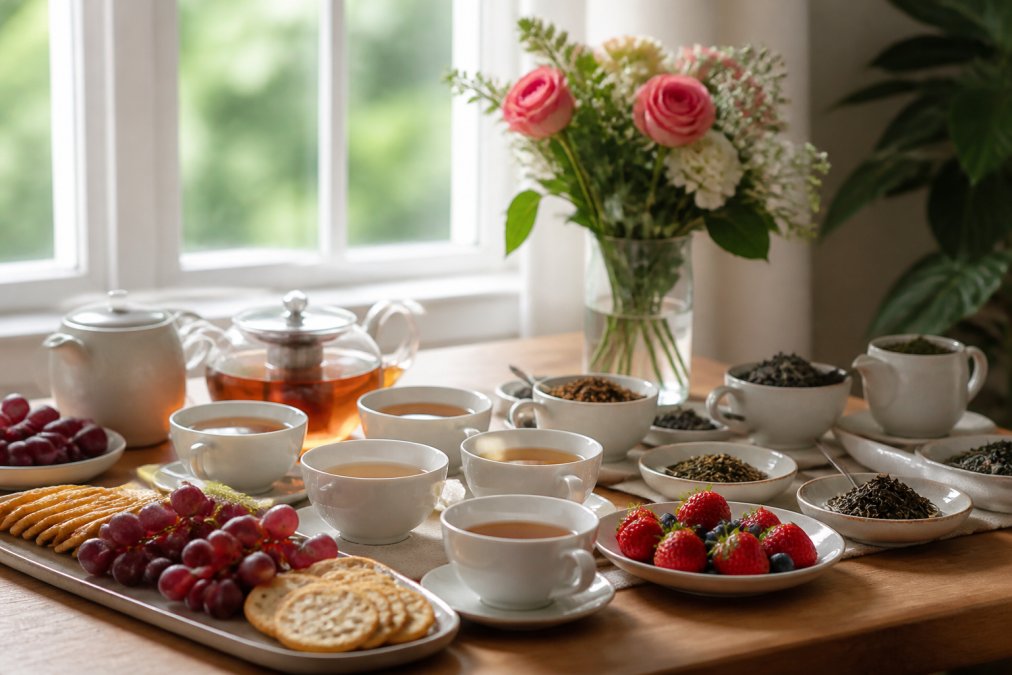
Music can enhance the experience if kept soft and unobtrusive. Choose instrumental pieces without lyrics. Keep the volume low enough that conversation flows naturally.
Seating should be comfortable and arranged so guests can see each other and discuss observations. Create a judgment-free space where guests share observations without worrying about being "right" or "wrong."
How to Clean a Stainless Steel Tea Kettle and Care for Equipment
Proper equipment care extends the life of your tasting tools and ensures clean flavor in every cup.
Cleaning Your Stainless Steel Tea Kettle
After each use, empty the kettle completely and rinse with cool water. Don't let water sit inside; mineral deposits build up quickly, especially in hard water areas.
For daily cleaning, fill the kettle halfway with equal parts white vinegar and water. Heat until steaming, then let it sit for 15-20 minutes. The vinegar dissolves mineral buildup naturally. Empty the solution and rinse thoroughly with fresh water. Fill with clean water and heat once more to rinse the interior completely.
For stubborn mineral deposits, use a kettle descaling product designed for stainless steel, following the product instructions.
Dry the exterior with a soft cloth after each use to prevent water spots. Never use abrasive scrubbers or bleach on stainless steel.
Caring for Infusers and Gaiwans
Rinse infusers immediately after use while tea leaves are still wet. Use a soft brush to gently clean mesh infusers, working from the outside in.
For ceramic gaiwans, rinse with hot water and dry thoroughly. Never put a gaiwan in the dishwasher; thermal shock can crack the ceramic. If tea stains develop, soak in equal parts white vinegar and water for 30 minutes, then scrub gently with a soft brush.
Storing Equipment
Store infusers and gaiwans in a clean, dry place away from strong odors. Tea equipment absorbs smells easily. Store your kettle with the lid off to allow air circulation.
Troubleshooting Common Tea Tasting Issues
Problem: Tea Tastes Bitter or Over-Steeped
Fix: Reduce steeping time by 30-60 seconds, lower water temperature by 10-15°F, or use slightly less tea.
Problem: Tea Tastes Weak or Under-Extracted
Fix: Increase steeping time by 30-60 seconds, raise water temperature by 10°F, or add a bit more tea.
Problem: Guests Can't Taste Flavor Differences Between Teas
Fix: Offer longer breaks between samples and ensure water and palate cleansers are available. If teas are too similar, swap one out for a more contrasting variety.
Problem: Strong Competing Aromas Interfere with Tea Aroma
Fix: Open windows for fresh air, ask guests to minimize perfume if possible, and avoid cooking aromatic foods immediately before the tasting.
Problem: Mineral Buildup in Kettle Affects Water Quality
Fix: Descale the kettle using the vinegar method. For ongoing issues, consider using filtered water for brewing.
Problem: Guests Arrive with Strongly Flavored Snacks or Gum
Fix: Politely mention they can rinse with water before starting. Offer water and a few minutes before beginning the tasting.
Hosting a tea tasting party transforms tea from a casual beverage into an intentional experience. The process of observing, smelling, and sipping mindfully reveals flavors and nuances that rush past in everyday drinking. At Venro Coffee Co., we believe that premium artisan teas, like our Masala Chai, Earl Grey, and Moroccan Mint, deserve this kind of attention. Start your tea tasting party with carefully sourced, freshly steeped teas delivered directly to your door, and watch how your guests discover flavors they never knew existed.
Frequently Asked Questions
How many different types of tea should you serve at a tea tasting party?
A flight of 3-5 teas works best for most home tastings. Start with lighter oxidation levels (white or green tea) and progress to darker teas (oolong, black tea). This order prevents palate fatigue and allows guests to appreciate each tea's unique flavor notes without previous teas interfering. For a smaller group, three teas is ideal; larger gatherings can handle five if you include palate cleansers between tastings.
What water temperature and steeping time do I use for a tea tasting?
Water temperature depends on tea type: white and green teas need 160-180°F and 3-5 minutes; oolong requires 195-205°F and 5-7 minutes; black tea and herbal infusions need 200-212°F and 5-10 minutes. Use an infuser or gaiwan to control steeping precisely. Consistent brewing is critical for accurate tasting notes, even 30 seconds can change the mouthfeel and aftertaste. Check product instructions for specific guidance.
What food pairs well with tea for a tasting party?
Light snacks complement the sensory experience without overwhelming the palate. White and green teas pair with fresh fruit, light pastries, and nuts. Oolong works with cheese, shortbread, and roasted snacks. Black tea matches scones, chocolate, and spiced biscuits. Herbal infusions pair with desserts and dried fruit. Serve small portions and include palate cleansers like plain crackers or water between tastings to reset your guests' taste buds.
Should I use digital or physical tasting notes during the party?
Physical tasting mats or scorecards create a more engaging, tactile experience and work well for group tastings where guests enjoy writing notes together. Digital notes on tablets or phones work best for serious tea enthusiasts who want to archive and compare notes later. For a home party focused on enjoyment, printed scorecards with prompts for aroma profile, color, flavor notes, and mouthfeel encourage participation and make a memorable keepsake.
This article was written using GrandRanker