



Is Artisan Tea Worth the Extra Cost?
Table of Contents
- What Defines Artisan Tea vs. Conventional Tea
- The Sensory Experience: Flavor, Aroma, and Nuance
- Benefits of Loose Leaf Tea for Daily Rituals
- Cost Per Cup of Premium Tea: Breaking Down the Numbers
- How to Brew Artisan Tea Properly
- The Mindfulness and Wellness Connection
- Storage and Freshness: Longevity of Premium Tea
- The Diminishing Returns Threshold
- Is Artisan Tea Worth It for Your Daily Ritual?
Last Updated: August 27, 2026
What Defines Artisan Tea vs. Conventional Tea
Artisan tea represents a fundamentally different approach to tea production than what you'll find in mass-market options. The distinction goes beyond marketing language, it reflects choices made at every stage, from harvest through packaging.
Artisan tea is tea produced in small batches with intentional attention to quality control, single-origin sourcing, and traditional or specialized processing methods. Conventional tea, by contrast, prioritizes volume and consistency through standardized industrial processes. Artisan producers often work directly with tea gardens, controlling variables like harvest timing, oxidation levels, and storage conditions. Conventional producers typically blend teas from multiple sources to achieve a consistent flavor profile year-round.
The sourcing difference matters significantly. Artisan teas frequently come from specific regions or even individual estates, terroir influences the final cup the way it does wine. You'll see labels mentioning harvest dates, altitude, and processing style. Conventional tea bags often contain fannings and dust, the byproducts of processing, which brew faster but deliver less nuance. Loose leaf artisan teas retain whole leaves or larger pieces, allowing for multiple steepings and revealing different flavor notes with each infusion.

Processing methods separate the categories too. Artisan producers might hand-roll leaves, use traditional withering techniques, or employ minimal oxidation to preserve delicate characteristics. Industrial tea facilities use mechanical rolling, temperature-controlled oxidation chambers, and rapid drying to standardize output. Neither approach is inherently wrong, they're optimized for different goals. One prioritizes consistency and efficiency; the other prioritizes complexity and distinctiveness.
The handcrafted element extends to blending as well. Artisan blends like Venro Coffee Co.'s Masala Chai Loose Leaf Tea combine quality black tea with carefully sourced spices, cardamom, ginger, cinnamon, cloves, and black pepper, in proportions designed for balance. Industrial chai blends often use lower-grade tea dust with synthetic or lower-quality spice extracts, prioritizing shelf stability over sensory experience.
The Sensory Experience: Flavor, Aroma, and Nuance
The most immediate reason people notice the difference between artisan and conventional tea is what happens in the cup. Artisan tea delivers complexity that conventional options rarely match.
When you steep artisan loose leaf tea, you're working with whole leaves or large pieces designed to unfurl and release their compounds gradually. This controlled infusion creates layered flavors, initial notes that hit first, then secondary flavors that emerge as steeping continues. A single artisan tea often tastes noticeably different between the first and third steeping, revealing new dimensions as the leaf continues to release compounds. Conventional tea bags, filled with dust and fannings, over-extract quickly, often tasting bitter or flat by the second cup.
Aroma tells a similar story. Open a container of artisan loose leaf tea and you experience the full aromatic profile, the actual scent of the tea itself, not just what clings to packaging. Conventional tea bags often smell like paper and dust. The aroma of artisan tea provides sensory information about what you're about to drink: the floral notes in a quality jasmine, the spice warmth in chai, the bergamot brightness in Earl Grey. This olfactory component is inseparable from taste, roughly 80% of what we perceive as flavor actually comes through smell (peer-reviewed research).
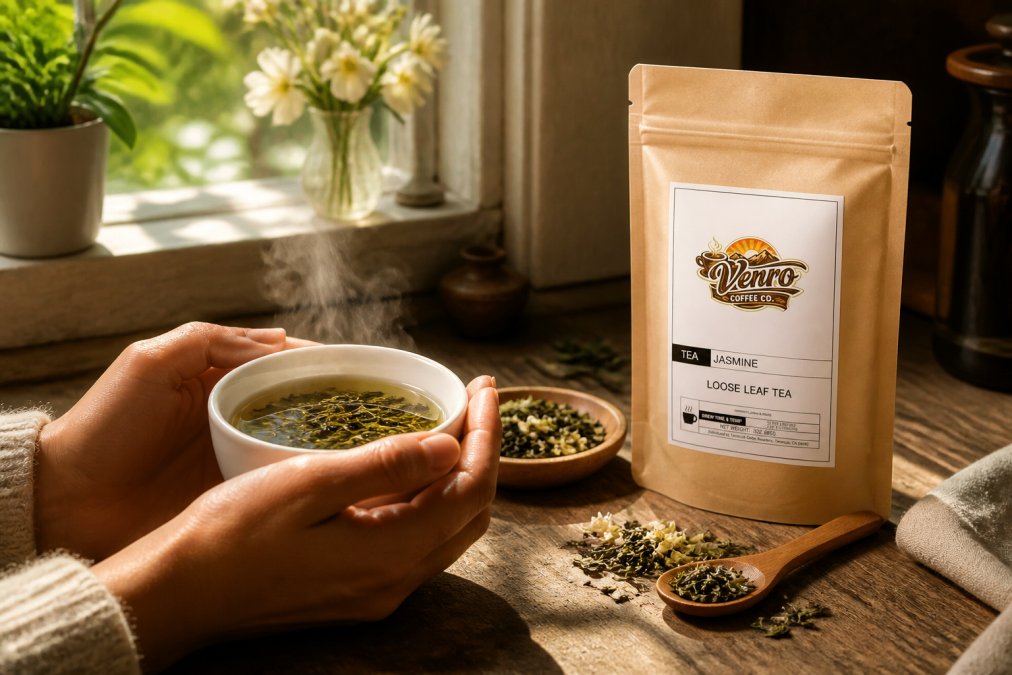
The flavor profile of artisan tea reflects its origin and processing. A premium green tea like Venro Coffee Co.'s Jasmine Green Tea Loose Leaf combines hand-picked green tea with fresh jasmine blossoms timed for peak bloom, the result is delicate floral sweetness balanced against a medium-bodied green tea base. The nuance comes from the interaction of these components, something impossible to replicate with artificial flavoring or lower-grade leaves.

Taste receptors respond differently to whole leaf infusions versus dust. Whole leaves release tannins, polyphenols, and aromatic compounds in a measured way. Fannings and dust release everything at once, creating harsh, astringent notes that people often mask with sugar or milk. This is why artisan tea frequently tastes good without additions, the inherent flavor is complete enough to stand alone.
The repeatability of artisan tea also matters. Each steep of the same leaves produces a distinct experience. Conventional tea offers little variation, once you've had one cup, the rest taste identical. Artisan tea invites exploration and attention, which aligns with the ritualistic aspect that draws many people to premium tea in the first place.
Benefits of Loose Leaf Tea for Daily Rituals
Loose leaf tea, particularly artisan varieties, transforms how you experience your daily tea ritual. The shift from bags to loose leaf changes the entire practice, not just the tea itself, but the intentionality around preparing it.
The first practical benefit is freshness. Loose leaf tea retains its aromatic compounds and flavor characteristics longer than bagged tea. Whole leaves oxidize more slowly than broken pieces, meaning a container of artisan loose leaf tea stays vibrant for months when stored properly. The surface area exposure is lower, which slows degradation. Conventional tea bags, with their higher proportion of dust and broken leaves, lose potency faster, often within weeks of opening.
Steeping loose leaf tea requires slightly more attention than dropping a bag in hot water. You measure the tea, heat water to the appropriate temperature, steep for a specific duration, and strain. This deliberate process creates a natural pause in your day. Rather than a quick caffeine grab, loose leaf tea becomes a moment of intentionality. Research from American Psychological Association on mindfulness practices demonstrates that deliberate, focused activities reduce stress and improve mental clarity. The ritual itself, the sensory engagement of measuring, smelling the dry leaf, watching the infusion color the water, tasting the result, creates a grounding experience.
The cost-per-cup calculation for loose leaf often surprises people. A single serving of artisan loose leaf tea typically uses 2-3 grams of tea, roughly a teaspoon. A standard loose leaf container holds 2-4 ounces, which translates to 20-40 cups depending on the tea and your brewing preference. At that volume, the cost per cup becomes reasonable, often comparable to or cheaper than specialty coffee shop visits when you account for the full experience.
Multiple steepings extend the value further. Artisan loose leaf teas, particularly oolongs and pu-erhs, improve with successive steepings. Some people get 4-5 cups from a single serving of leaves. This isn't possible with conventional tea bags, which are designed for a single use.
The sensory engagement of loose leaf tea also supports wellness routines. The warmth of the cup in your hands, the aroma rising from the pot, the intentional pause, these elements work together to create a calming ritual. For people building daily practices around mindfulness or stress reduction, loose leaf tea becomes a tangible anchor point.
Cost Per Cup of Premium Tea: Breaking Down the Numbers
Understanding the actual cost of artisan tea requires looking beyond the price tag on the container.
A typical artisan loose leaf tea from Venro Coffee Co., such as the Earl Grey Loose Leaf Tea or English Breakfast Tea, costs $20.99 for a standard serving size. That container yields approximately 25-30 cups of tea, depending on how much leaf you use per steep and whether you do multiple infusions.

The math: $20.99 divided by 25 cups equals roughly $0.84 per cup for a single steep. If you do two steepings from the same leaves, a common practice with quality loose leaf, that drops to approximately $0.42 per cup. For three steepings, you're looking at roughly $0.28 per cup.
Compare that to conventional options. A box of 20 standard tea bags typically costs $3-5, which puts each bag at $0.15-0.25 before considering that most people don't get multiple steepings. However, the experience and flavor profile are dramatically different. A conventional tea bag delivers a functional cup; artisan tea delivers a ritual and sensory experience.
The comparison to coffee shop tea is more striking. A specialty tea service at a café typically charges $4-7 per cup. Even at the high end of artisan loose leaf cost, say $1.00 per cup, you're saving 75-85% by brewing at home. For someone drinking tea daily, the annual savings accumulate quickly. A person drinking one cup daily at café prices ($5 average) spends roughly $1,825 per year. The same person brewing artisan loose leaf at home spends approximately $300-400 annually.
There's also the matter of what you're paying for. With artisan tea, you're paying for quality leaf, careful sourcing, proper storage, and often direct relationships between producers and retailers. Venro Coffee Co.'s artisan teas reflect this, they're carefully sourced, freshly packaged, and delivered directly to ensure you receive them at peak freshness. The Premium Grade Matcha Green Tea Powder at $22.99 represents ceremonial-grade matcha, which commands higher prices because of the specific growing and processing requirements that create the vibrant color and smooth umami character.
With conventional tea, you're largely paying for packaging, distribution infrastructure, and brand marketing. The actual tea itself represents a smaller portion of the retail price.
How to Brew Artisan Tea Properly
Brewing artisan tea correctly is the difference between an excellent cup and a disappointing one. The variables matter more with quality leaf because you have more to preserve.
Water temperature is the first critical variable. Different teas require different temperatures. Black teas like Venro Coffee Co.'s Masala Chai or English Breakfast brew best at 195-212°F (90-100°C). Green teas, including Jasmine Green Tea, require cooler water, around 160-180°F (70-80°C), to avoid over-extracting and creating bitterness. Matcha and other powdered teas need water around 160-175°F (70-80°C). Using water that's too hot damages delicate leaves and compounds, resulting in harsh, astringent flavors.
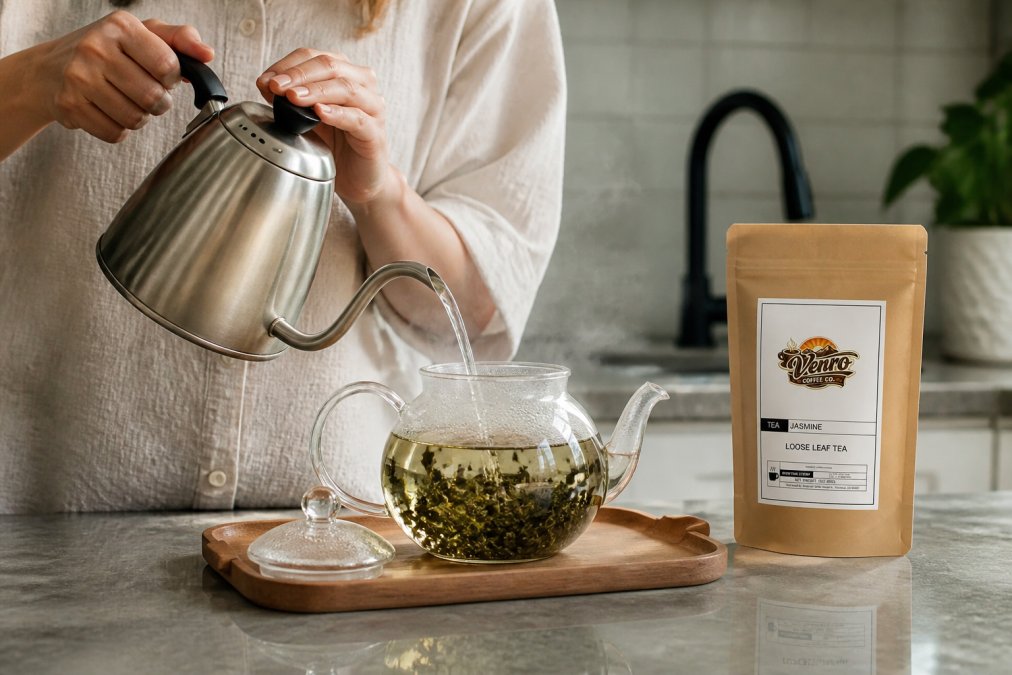
Steeping time depends on the tea type and your preference. Most black teas steep 3-5 minutes. Green teas typically steep 2-4 minutes. The Earl Grey from Venro Coffee Co. recommends 5-10 minutes at 195°F. Start at the lower end of the range and adjust upward if you prefer stronger flavor. Many people make the mistake of assuming longer steeping equals better tea, it actually produces over-extraction and bitterness.
Leaf-to-water ratio matters. A common starting point is one teaspoon (roughly 2-3 grams) per 8 ounces of water. Adjust based on how strong you like your tea and the specific tea's characteristics. Some teas are more strong and need less leaf; others are delicate and benefit from slightly more.
Use filtered or fresh water. Chlorinated tap water can interfere with the tea's flavor. If your tap water is heavily chlorinated, filtering makes a noticeable difference.
Invest in proper brewing equipment. You don't need expensive gadgets, but the right tools matter. A small strainer basket or infuser that allows leaves to expand freely produces better results than cramped brewing. A gooseneck kettle gives you better control over water temperature and pour. A simple thermometer ensures you're hitting the right temperature range.
Don't over-brew as a default. The instinct to steep longer to "get your money's worth" backfires. Under-brewed tea tastes weak but clean. Over-brewed tea tastes harsh and bitter, and no amount of steeping time will fix that. Start with recommended times and adjust from there.
Multiple steepings extend the value. After your first steep, pour off the tea and add fresh hot water to the same leaves. Most artisan teas improve with the second steep as the leaves continue to open. You'll often get 2-4 quality steepings from a single serving of premium loose leaf before the flavor noticeably diminishes.
The Mindfulness and Wellness Connection
The relationship between artisan tea and mindfulness isn't coincidental, it's structural. The practice of brewing and drinking artisan tea creates conditions that support mental clarity and stress reduction.
Mindfulness, in its simplest form, is sustained attention on the present moment without judgment. Brewing loose leaf tea naturally creates this state. You're focused on specific tasks: measuring the leaf, heating water to the right temperature, watching the infusion color the water, listening to the kettle, smelling the aroma. Each of these elements anchors your attention to what's happening now, not what happened earlier or what's coming next.
The sensory richness of artisan tea supports this further. Unlike conventional tea, which offers minimal sensory variation, artisan tea engages multiple senses simultaneously. The aroma as you open the container, the visual appeal of whole leaves, the warmth of the cup in your hands, the taste complexity that unfolds across multiple steepings, these sensory inputs create a multi-layered experience that naturally holds attention.
Research from Journal of Clinical Psychology on tea and stress reduction indicates that ritualistic practices involving warm beverages correlate with reduced cortisol levels and improved mood. The warmth itself has a calming effect, holding a warm cup activates parasympathetic nervous system responses. The ritual provides structure and predictability, which many people find grounding.
The intentionality required to brew artisan tea properly also matters. You can't rush it. You can't multitask effectively while measuring leaf, monitoring water temperature, and timing steeps. This enforced presence creates a natural break in your day. For people managing stress or anxiety, these deliberate pauses become protective moments.
Many people describe their tea ritual as meditative. The practice becomes a form of moving meditation, not sitting silently, but engaging in purposeful, mindful action. The repetition of the ritual itself becomes comforting. The same steps, the same teapot, the same tea each morning creates a sense of continuity and control in an otherwise unpredictable day.
Storage and Freshness: Longevity of Premium Tea
How you store artisan tea determines whether it maintains its quality or degrades into something mediocre. The investment in premium tea only pays off if the tea stays fresh.
Light degrades tea. Exposure to light accelerates oxidation and breaks down aromatic compounds. Store artisan tea in opaque containers, not clear glass jars where you can see the leaves. Many quality tea retailers, including Venro Coffee Co., package loose leaf tea in kraft paper or other light-blocking materials for this reason. Transfer to opaque, airtight containers if you're storing for extended periods.
Oxygen exposure causes staling. Loose leaf tea oxidizes when exposed to air, losing flavor and aroma over time. Airtight containers are essential. Vacuum-sealed bags work well for long-term storage. Once you open a container, try to use the tea within a few months for optimal freshness.
Temperature fluctuations accelerate degradation. Store tea in a cool, stable location, not above the stove or near a window where temperature swings. A pantry or cupboard away from heat sources is ideal. Room temperature storage (around 65-70°F) is generally acceptable for most teas.
Humidity is the enemy. Moisture causes mold and accelerates flavor loss. Keep tea away from steamy kitchens or humid bathrooms. Silica gel packets in storage containers can help manage humidity in damp environments.
Freshness longevity varies by tea type. Black teas like English Breakfast and Masala Chai stay fresh for 6-12 months when stored properly. Green teas like Jasmine Green Tea have a shorter window, typically 3-6 months, because they oxidize less during processing and therefore degrade faster. Pu-erhs and aged teas actually improve with age when stored correctly, sometimes for years.
Conventional tea bags, with their higher surface area exposure, lose freshness faster. A box of tea bags opened and stored loosely can taste noticeably stale within weeks. Artisan loose leaf tea, properly stored, maintains quality significantly longer.
The freshness advantage compounds when you consider how artisan teas are typically sold. Retailers like Venro Coffee Co. package tea in small quantities designed for relatively quick consumption, and ship directly to customers to minimize storage time before it reaches your hands. This contrasts with conventional tea, which often sits in warehouses and retail shelves for extended periods before purchase.
The Diminishing Returns Threshold
At some point, spending more on tea stops delivering proportional increases in quality. Understanding where that threshold sits helps you make informed decisions about your tea budget.
The quality improvement from conventional tea to mid-range artisan tea is dramatic. The difference in flavor, aroma, and experience is immediately noticeable. A cup of quality loose leaf tea tastes objectively better than a conventional tea bag. This jump represents excellent value, you're getting substantially more for a modest price increase.
Moving from mid-range artisan tea to ultra-premium, rare, or vintage teas shows diminishing returns. A $25 loose leaf tea is noticeably better than a $10 option. A $50 rare pu-erh compared to the $25 tea? The improvement is real but less dramatic. The sensory gains become more subtle, more about nuance than fundamental quality.
The practical threshold for most people sits somewhere in the $15-30 range for regular drinking tea. At that price point, you're getting genuine quality, carefully sourced leaf, proper processing, good storage, without paying premiums for rarity or extreme scarcity. Venro Coffee Co.'s artisan teas at $20.99-$22.99 sit right in this sweet spot. You're getting quality that's noticeably superior to conventional options, without entering the realm of diminishing returns.
Beyond that threshold, you're increasingly paying for:
- Rarity or limited availability
- Vintage or aged characteristics
- Specific microlots or single-estate designations
- Collector's value
- Prestige or brand reputation
These factors matter if you're genuinely interested in tea as a hobby or collecting pursuit. For someone building a daily ritual around quality tea, they're often not necessary. The improvement in your daily experience plateaus somewhere in the $15-30 range.
This is where intentionality about your tea practice matters. If you're drinking tea once or twice daily and genuinely enjoying the experience, investing in quality artisan tea in this price range makes sense. If you're someone who drinks tea occasionally or primarily for caffeine, the value proposition shifts. Conventional tea might be sufficient.
The cost-per-cup calculation also changes at the diminishing returns threshold. A rare, expensive tea might cost $1.50-2.00 per cup even with multiple steepings. At that price, you're crossing into territory where you're paying more per cup than you would at a café. That's fine if the tea is genuinely exceptional and you're committed to the ritual. But if you're looking for value, staying in the $0.50-1.00 per cup range (which artisan teas at $20-25 deliver) offers better economics.
Is Artisan Tea Worth It for Your Daily Ritual?
The answer depends on what you actually value in your tea practice.
If you drink tea primarily for caffeine and don't care about flavor or experience, artisan tea isn't worth the extra cost. A conventional tea bag delivers caffeine efficiently and cheaply. There's no shame in that, it's a pragmatic choice.
If you drink tea as part of a daily ritual and you want that ritual to feel intentional and rewarding, artisan tea is worth the investment. The quality difference is real. The flavor is noticeably better. The aroma is more complex. The experience of brewing and drinking becomes genuinely pleasurable rather than functional. For someone drinking one to three cups daily, the annual cost of quality artisan tea ($300-500) is modest compared to the improvement in daily experience. That's roughly the cost of two specialty coffee shop visits per month, a reasonable trade for a daily ritual you'll actually look forward to.
The wellness and mindfulness benefits are real, though they're secondary to the actual quality of the tea itself. The ritual creates space for presence and intentionality in your day. If that matters to you, if you're someone who values these moments of deliberate pause, then artisan tea becomes an enabler of something you already want to do.
The storage and freshness advantages also matter. Artisan tea stays vibrant longer than conventional options. If you're someone who buys tea and then forgets about it for months, conventional tea might actually be the better choice because you'll use it before it goes stale. But if you're actively drinking tea as part of your routine, artisan tea's superior longevity means you're getting better flavor throughout the container's life.
The practical answer: artisan tea is worth the extra cost if you're committed to a daily tea ritual and you want that ritual to be genuinely enjoyable. It's not worth it if tea is incidental to your day or if you're looking for the absolute cheapest way to get caffeine.
For people exploring artisan tea for the first time, starting with Venro Coffee Co.'s collection makes sense. The English Breakfast is a classic entry point, bold, reliable, and noticeably better than conventional breakfast teas. The Jasmine Green Tea offers a different experience, delicate, floral, and rewarding with multiple steepings. The Masala Chai works beautifully with milk for those who prefer a richer, spiced profile. Each represents quality artisan tea at a price point that doesn't require a significant commitment.
The key is recognizing what you're actually buying. You're not just buying tea leaves. You're buying a daily ritual, a moment of intentionality, a sensory experience that's noticeably better than the alternative. For most people who drink tea regularly, that's worth the extra cost.
The difference between grabbing a conventional tea bag and brewing artisan loose leaf tea is the difference between consuming a beverage and experiencing a ritual. If you're someone who values quality in the things you use daily, artisan tea delivers that. At Venro Coffee Co., we've curated a collection of carefully sourced, freshly packaged artisan teas designed for people who want their daily ritual to reflect their values, quality, intentionality, and genuine flavor. Shop artisan tea and discover what a difference real tea makes.
Frequently Asked Questions
What defines artisan tea compared to commercial tea?
Artisan tea emphasizes handcrafted sourcing, small-batch preparation, and premium ingredients selected for flavor complexity and quality. Commercial tea prioritizes volume and consistency, often using lower-grade leaves and standardized blending. Artisan producers focus on terroir, harvest timing, and intentional steeping profiles. The difference shows in flavor nuance, aroma intensity, and the ability to steep multiple infusions while maintaining character. Premium loose leaf options like our Jasmine Green Tea showcase this distinction through careful blending of fresh blossoms with hand-picked leaves.
How much does a daily artisan tea ritual cost per cup?
Premium loose leaf tea typically costs $0.50 to $1.50 per cup depending on leaf quality and steeping count. A 2-ounce package at $20.99 yields approximately 20-25 cups, or roughly $0.84 per serving. Most artisan teas deliver 2-3 quality infusions from the same leaves, effectively reducing cost-per-cup. Compare this to café tea at $3-5 per cup, and the premium becomes economical for daily drinkers. The value multiplies when you factor in freshness, customization, and the meditative ritual itself.
Does loose leaf tea provide more health and wellness benefits than tea bags?
Loose leaf tea offers superior health potential due to larger leaf surface area and minimal processing. Whole leaves retain more antioxidants, polyphenols, and beneficial compounds compared to broken fannings in tea bags. The brewing flexibility of loose leaf allows you to control steeping time and water temperature, optimizing extraction of wellness compounds. Additionally, artisan teas sourced from sustainable, organic farms often contain fewer additives. The mindfulness practice of preparing loose leaf tea intentionally also enhances stress reduction and calm, a wellness benefit beyond chemistry.
Is there a noticeable difference in flavor between mass-produced and artisan tea?
Yes, the difference is significant. Artisan tea delivers complex flavor profiles with distinct aroma, body, and finish. Mass-produced tea often tastes flat, one-dimensional, or bitter due to lower-grade leaves and extended storage. Handcrafted blends like our Masala Chai showcase intentionality, bold spice, aromatic depth, and warming character that commercial versions struggle to replicate. Once you experience artisan quality, the sensory gap becomes obvious. Flavor repeatability across multiple steepings is another marker: artisan tea maintains nuance through 2-3 infusions, while commercial tea fades quickly.
This article was written using GrandRanker