



How to Brew Specialty Tea Properly: A Step-by-Step Guide
Table of Contents
- What Makes Specialty Tea Different
- Water Quality and Temperature: The Foundation of Brewing
- Best Water Temperature for Green Tea and Other Varieties
- Tea-to-Water Ratios That Deliver Flavor
- Loose Leaf Tea Steeping Times by Type
- Choosing the Right Equipment for Brewing
- How to Clean a Stainless Steel Tea Kettle
- Troubleshooting Bitter and Weak Tea
- Cold Brewing and Advanced Techniques
- Conclusion
Last Updated: August 23, 2026
What Makes Specialty Tea Different
Specialty tea differs fundamentally in how the leaves are grown, harvested, processed, and brewed. When you purchase specialty tea from Venro Coffee Co., you're getting leaves carefully sourced from specific regions and handled with precision at every stage. Specialty tea requires intentional technique: a standard tea bag contains fannings and dust, while loose leaf specialty tea contains whole leaves that need room to expand, proper water temperature, and the right steeping time to unlock their full potential without turning bitter.

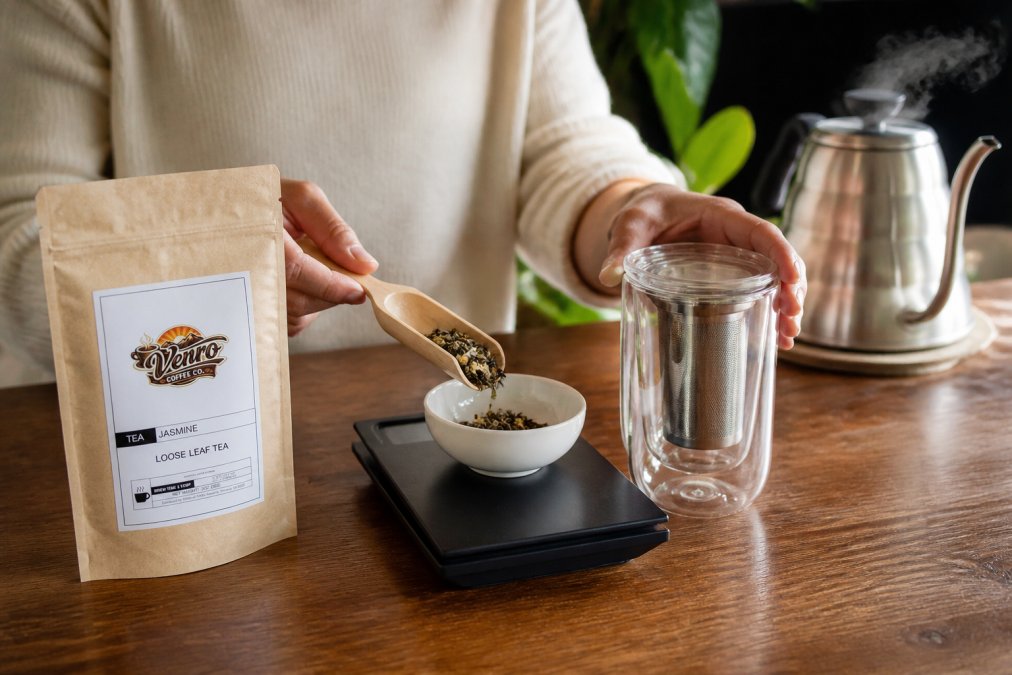
Once you brew specialty tea properly, the difference becomes impossible to ignore. You'll taste individual flavor notes instead of generic "tea" taste. That transformation starts with understanding water quality and temperature.
Water Quality and Temperature: The Foundation of Brewing
Water makes up 99% of your finished cup. If that water is poor quality, no amount of premium tea leaves will save the result.
Understanding Water Chemistry and Its Impact on Extraction
Tap water contains dissolved minerals, chlorine, and other compounds that directly interfere with how tea leaves release their flavor compounds.
Mineral content and hardness are measured in Total Dissolved Solids (TDS), typically expressed in parts per million (ppm). Hard water (above 150 ppm) creates several problems: (usgs.gov)
- Tannin precipitation: Minerals bind to tannins, causing them to precipitate out of solution rather than remain suspended in your cup. This mutes flavor complexity and feels flat.
- Catechin extraction interference: Catechins are beneficial compounds linked to antioxidant properties (peer-reviewed research). High mineral content slows catechin extraction, meaning you get fewer of these compounds even if you steep longer.
- Visual cloudiness: Mineral-tannin complexes create visible haze in your cup, a sign that extraction isn't happening optimally.
Soft water (below 50 ppm) presents the opposite problem: it extracts too aggressively, resulting in excessive astringency and bitterness.
Optimal water for tea brewing falls between 75-150 ppm TDS, with a pH between 6.5 and 7.5. This range allows balanced extraction without over-precipitation or over-extraction.
Chlorine and chloramines are added to municipal water for disinfection. Chlorine dissipates when heated but masks delicate floral and fruity notes. Chloramines require active removal through filtration.
Practical Water Preparation
Use filtered water treated to remove chlorine, chloramines, and excess minerals. A basic activated carbon filter removes chlorine and chloramines effectively. For hard water, a more comprehensive filter or reverse osmosis system may be necessary; if using reverse osmosis, blend treated water with unfiltered water to restore minerals to the 75-150 ppm range.
Draw water fresh immediately before heating. Water that sits in a kettle or has been boiled multiple times loses dissolved oxygen, which facilitates flavor compound dissolution and helps tannins remain in suspension. Reboiled water tastes flat.
Temperature Control and Extraction Kinetics
Temperature directly governs the rate of extraction. Different tea types require different temperatures because they have different levels of oxidation and leaf delicacy.
Green tea leaves are unoxidized and fragile. Boiling water causes thermal shock, releasing excessive tannins rapidly and creating astringency before desirable flavor compounds dissolve. Black tea, fully oxidized, has a robust cell structure that withstands higher temperatures.
The relationship between water temperature and extraction time is exponential: hotter water extracts different compounds at different rates. At lower temperatures (160-170°F), you preferentially extract sweet, floral, and fruity compounds. As temperature rises, tannin extraction dominates. This is why you cannot dump boiling water on every tea type and expect good results.
Best Water Temperature for Green Tea and Other Varieties
Green tea: 160°F to 180°F extracts delicate grassy, floral, and slightly sweet notes without harsh tannins. If your kettle lacks a temperature gauge, let boiling water cool for 3-5 minutes before pouring.
Black tea: 195°F to 212°F (full boil is acceptable). Fully oxidized leaves handle the heat, and aggressive extraction brings out bold, malty character. English Breakfast and similar black teas from Venro Coffee Co. are designed to shine at these temperatures.

White tea: 160°F to 170°F. Minimally processed leaves are delicate, and excessive heat destroys the subtle, naturally sweet flavor profile.
Oolong tea: 190°F to 205°F. Lighter, less oxidized oolongs benefit from slightly lower temperatures, while darker oolongs can handle full boil.
Herbal infusions and chai: 200°F to 212°F. Masala Chai from Venro Coffee Co. needs hot water to fully infuse and release its warming character.
Invest in a simple digital thermometer or a kettle with a built-in temperature display. This single tool removes guesswork and guarantees consistent results.
Tea-to-Water Ratios That Deliver Flavor
The standard starting point is one teaspoon of loose leaf tea per 8 ounces of water. However, specialty teas often call for adjustment based on leaf size and density. Larger, fluffier leaves need more volume; use one and a half teaspoons per 8 ounces. Tightly rolled leaves may need only three-quarters of a teaspoon.
The most reliable method is by weight: use a kitchen scale and aim for 2.5 to 3 grams of tea per 8 ounces of water. This removes variables of leaf size and shape. Venro Coffee Co.'s specialty teas come with brewing recommendations that often specify the exact gram amount.

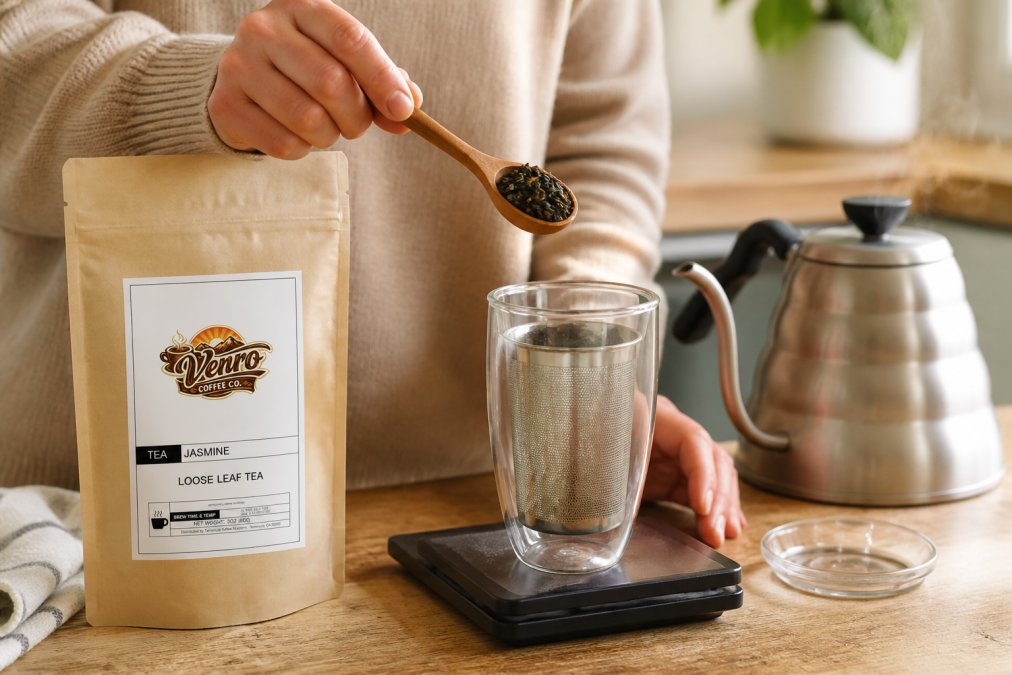
Personal preference plays a role. If you like a stronger cup, use the higher end of the ratio. The key is consistency: measure the same way each time so you can replicate results you enjoy.
Loose Leaf Tea Steeping Times by Type
Steeping time directly controls extraction. Too short produces weak, underdeveloped flavor. Too long creates excessive astringency and bitterness.
Green tea: 2 to 4 minutes depending on variety. Delicate green teas like Jasmine Green Tea from Venro Coffee Co. do best at 2-3 minutes. Start at the lower end and adjust based on taste.
Black tea: 4 to 5 minutes. English Breakfast and similar black teas need time to fully infuse. Five minutes is standard.
White tea: 3 to 5 minutes. White tea infuses slowly; a full 5 minutes often produces the best results.
Oolong tea: 3 to 7 minutes depending on oxidation level. Lightly oxidized oolongs steep faster (3-4 minutes); heavily oxidized oolongs need 5-7 minutes.
Herbal tea and chai: 5 to 10 minutes. Masala Chai from Venro Coffee Co. benefits from longer steeping to fully extract the spices.
A simple timer removes guesswork and prevents accidental over-steeping.
Choosing the Right Equipment for Brewing
Your brewing vessel affects temperature retention, water circulation, and ultimately flavor.
Mesh infusers and strainers: Fine mesh infusers hold loose leaf tea while allowing water to circulate freely. Look for stainless steel mesh with holes small enough to catch fine particles. Avoid plastic infusers, which retain flavors.
Gaiwan (Chinese brewing vessel): A small lidded bowl used in traditional gongfu style brewing. It allows precise steep time control and is ideal for tasting multiple infusions from the same leaves.
Teapot: Ceramic or glass teapots work well for larger quantities. Ceramic retains heat; glass allows you to watch the infusion process. Avoid metal teapots unless specifically designed for tea.
French press: Works for loose leaf tea, though the metal mesh doesn't filter as finely as dedicated tea infusers.
Material matters. Porcelain and glass are inert and don't absorb flavors. Ceramic works well if high-quality and food-safe. Stainless steel is excellent for infusers and kettles. Avoid aluminum and low-quality metals.
How to Clean a Stainless Steel Tea Kettle
Rinse the kettle daily after use with hot water. For weekly deep cleaning, fill halfway with equal parts white vinegar and water. Bring to a boil, let sit for 15 minutes, then rinse thoroughly several times with fresh water and boil fresh water once more to ensure no vinegar taste remains.
For stubborn mineral buildup, use a soft cloth with a paste of baking soda and water. Scrub gently; avoid abrasive materials that scratch the surface. Never use bleach or harsh chemicals on a kettle used for drinking water.
Dry the kettle after cleaning to prevent water spots. Shake out excess water and leave the lid off while it air-dries.
Troubleshooting Bitter and Weak Tea
When your tea doesn't taste right, the problem almost always traces back to one of five variables: water temperature, steeping time, tea-to-water ratio, water quality, or leaf freshness.
Understanding the Difference Between Bitterness and Astringency
- Bitterness is a sharp, unpleasant taste that lingers. It's caused by over-extraction of tannins and caffeine. Bitterness tastes wrong; it's a flaw.
- Astringency is a drying sensation on your gums and tongue. It's caused by tannins binding to proteins in your mouth. Astringency is normal in tea but becomes unpleasant when excessive.
Diagnostic Troubleshooting Table
| Symptom | Most Likely Cause | Fix |
|---|---|---|
| Bitter + harsh taste | Water too hot | Reduce water temperature by 10-15°F; reduce steep time by 30-60 seconds |
| Astringent (drying mouth) | Over-extraction | Reduce steep time by 30-45 seconds; check water temperature |
| Weak, pale, flat taste | Under-extraction | Increase steep time by 45-60 seconds; use fresh tea; verify water temperature |
| Cloudy appearance + muted flavor | Hard water | Use filtered water; consider a water softener or reverse osmosis filter |
| Flat, one-dimensional taste | Stale tea; reboiled water | Use fresh tea within 2-3 months of opening; draw fresh water before each brew |
Step-by-Step Troubleshooting Process
Step 1: Verify water temperature. Use a digital thermometer or kettle with built-in temperature display. If your water is 10-15°F hotter than recommended, that alone will cause bitterness. Let boiling water cool for the appropriate time:
- Green tea: 5-7 minutes (target 160-180°F)
- White tea: 5-7 minutes (target 160-170°F)
- Oolong tea: 2-3 minutes (target 190-205°F)
- Black tea: Use immediately (target 195-212°F)
Step 2: Check your steep time. Set a timer and stick to it. Start at the lower end of the recommended range and add 15-30 seconds at a time until you find your preference.
Step 3: Verify your tea-to-water ratio. Use a kitchen scale and measure by weight (2.5-3 grams per 8 ounces). Volume measurements are unreliable.
Step 4: Assess water quality. If steps 1-3 don't solve the problem, brew the same tea using bottled filtered water. If it tastes noticeably better, your tap water is the culprit. Switch to filtered water or invest in a water treatment system.
Step 5: Check tea freshness. Specialty tea loses flavor quickly once opened (the FDA). If your tea has been sitting for more than 3 months, the leaves have oxidized and lost aromatic compounds. Buy smaller quantities more frequently, or store opened tea in an airtight container away from light and strong odors.
Common Scenario Fixes
Green tea tastes bitter and harsh: Your water is almost certainly too hot. Let boiling water cool for a full 5-7 minutes, or use a thermometer to confirm you're hitting 160-180°F. Reduce steep time to 2-3 minutes.
Black tea tastes weak and flat: Black tea needs hot water and longer steeping. Verify your water is at least 195°F (ideally 200-212°F). Increase steep time to 4-5 minutes. Ensure leaves have room to expand fully in your infuser.
Oolong tastes bitter one day and weak the next: Oolong is sensitive to both temperature and steep time. Invest in a thermometer and timer. Oolong typically needs 3-7 minutes depending on oxidation level.
White tea tastes weak despite long steeping: White tea infuses slowly because leaves are minimally processed. Steep for the full 5 minutes recommended. If still weak, increase the tea amount slightly rather than steeping longer.
Tea tastes good the first day, then worse from the same package: The tea is staling after opening. Specialty tea is best within 2-3 weeks of opening. Store in an airtight container, away from light, heat, and strong odors.
Cold Brewing and Advanced Techniques
Cold brewing produces a naturally smooth, sweet cup with low astringency because cold water extracts slowly and selectively, pulling out sweet and floral compounds while leaving harsh tannins behind.
Place loose leaf tea in a jar or pitcher, add cold filtered water at the standard ratio (one teaspoon per 8 ounces), and refrigerate for 6-12 hours. Strain and serve over ice.
Cold brew concentrate uses double the normal amount of tea and the same amount of water, steeped for 12-24 hours. Dilute the concentrate with water or milk to taste.
Gongfu style brewing is a traditional Chinese technique using a small vessel, multiple short steeps, and precise temperature and timing control. A gongfu session might involve 5-7 infusions of the same leaves, each lasting 15-45 seconds. This method reveals different flavor layers with each infusion and is ideal for appreciating high-quality oolong or pu-erh tea.
Rinsing tea leaves before brewing is optional but common with oolong and pu-erh teas. Pour hot water over the leaves, let it sit for 5-10 seconds, then discard the water. This removes dust and slightly opens the leaves. For delicate white and green teas, skip rinsing unless the tea is visibly dusty.
Conclusion
Brewing specialty tea properly transforms a simple beverage into an experience. Water quality, temperature, ratio, steeping time, and equipment work together to extract the best flavors from premium leaves. Start with the fundamentals: filtered water at the right temperature, the correct ratio, and precise timing. Adjust from there based on your taste preferences.
At Venro Coffee Co., we've curated specialty teas like our Jasmine Green Tea, Masala Chai, English Breakfast, and Earl Grey specifically for brewing excellence. Each comes with brewing guidance tailored to unlock its unique flavor profile. Shop Coffee and discover how proper brewing technique transforms the tea you drink every morning into something genuinely exceptional.
Frequently Asked Questions
What are the most common tea steeping mistakes?
The biggest mistakes are using water that's too hot for delicate leaves (causing astringency and bitterness), steeping too long, and using incorrect tea-to-water ratios. Many people also reuse old water or skip rinsing loose leaf tea before brewing. Starting with fresh, filtered water and following steep times specific to your tea type prevents 90% of brewing problems.
How does water quality affect specialty tea flavor?
Water hardness and mineral content directly impact extraction and flavor profile. Chlorinated tap water masks delicate notes in green and white teas. Filtered water allows the tea's true character, floral notes, sweetness, and aroma, to shine through. Water temperature also matters: too hot over-extracts tannins and catechins, creating harsh bitterness; too cool leaves tea weak and flat.
What's the difference between loose leaf and tea bags?
Loose leaf tea allows full expansion and oxygenation during steeping, delivering richer flavor and better extraction. Tea bags contain broken leaves and dust that steep faster but produce thinner flavor. For specialty tea, loose leaf is always superior. Our Jasmine Green Tea and Masala Chai are available as loose leaf to give you the full brewing experience and maximum flavor development.
Can I reuse tea leaves for a second steep?
Yes, quality loose leaf tea can be steeped multiple times. Rinse leaves briefly after the first brew, then steep again with slightly hotter water and a bit longer (add 30-60 seconds to your original time). Subsequent infusions often reveal new flavor notes. This practice also reduces waste and extends the value of premium specialty tea.
This article was written using GrandRanker