



Best Manual Brewing Methods for Single Origin Coffee
Table of Contents
- Why Manual Brewing Methods Matter for Single Origin Coffee
- Immersion vs Percolation Coffee: Which Extracts More Flavor?
- The Best Grind Size for Single Origin Coffee by Method
- A Practical Coffee Brewing Water Temperature Guide
- Matching Brew Methods to Single Origin Flavor Profiles
- Budget-to-Performance: Essential Gear vs. Nice-to-Have Upgrades
- Common Mistakes That Mute Single Origin Tasting Notes
- Final Verdict: Choose Your Manual Brewing Method
- Frequently Asked Questions
Last Updated: September 6, 2026
Why Manual Brewing Methods Matter for Single Origin Coffee
Specialty coffee roasters invest heavily in sourcing beans from a single farm or cooperative because those beans carry a distinct sense of place. The best manual brewing methods for single origin coffee preserve that character, letting you taste the specific terroir, processing style, and variety that make each origin unique. An automatic drip machine applies a one-size-fits-all extraction that often flattens these nuances into a generic cup. Manual brewers hand you control over every variable that shapes flavor.
At Venro Coffee Co., we roast to order specifically so that the delicate aromatics in origins like Ethiopia Natural or Costa Rica survive the journey to your grinder. 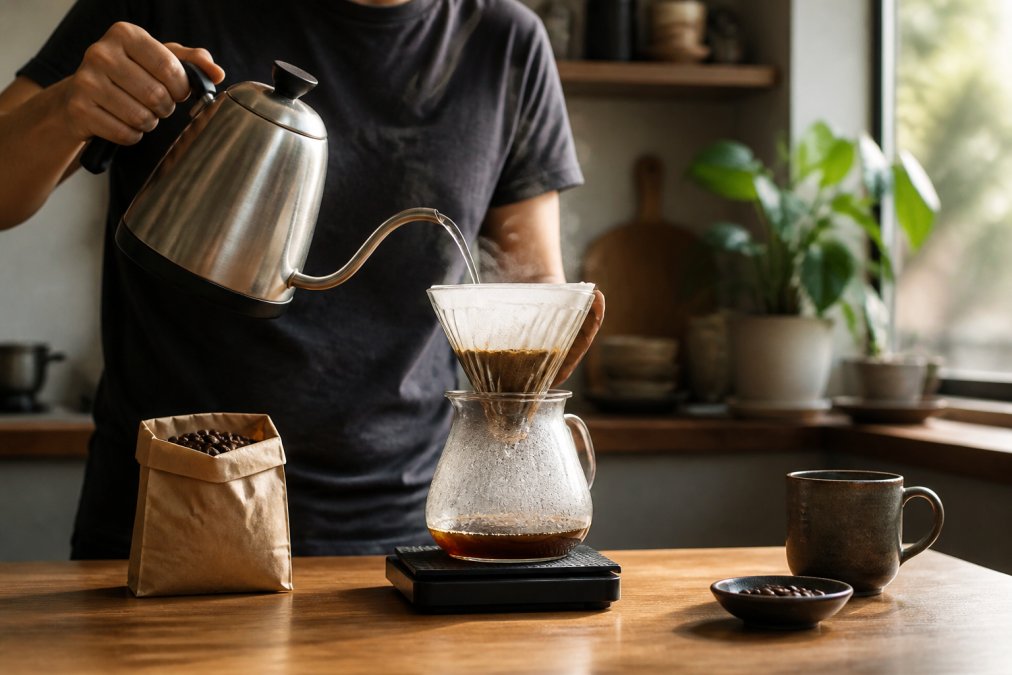
Manual brewing methods rely on human control over water temperature, pour rate, and brew time rather than automated machine cycles. This matters because single origin beans have distinct densities and flavor compounds that respond differently to extraction variables. A light roast Ethiopian natural needs a different approach than a wet-hulled Bali Blue.

Below, we'll walk through the two core extraction families, the grind sizes that suit each, the water temperatures that protect delicate flavors, and the gear that delivers the highest return. We'll also match specific origins to the methods that flatter them most.
Immersion vs Percolation Coffee: Which Extracts More Flavor?
The single biggest decision in manual brewing is choosing between immersion and percolation. Immersion brewing steeps coffee grounds in water for a set duration, while percolation passes water through a bed of grounds once, driven by gravity. Neither is objectively superior; each extracts flavor differently.
Immersion methods tend to produce a fuller body and deeper sweetness because water contact is constant and uniform. Percolation methods deliver a cleaner cup with more clarity and pronounced acidity, since the filter captures more oils and fine particles.
Immersion Brewers: French Press and Aeropress
French press brewing uses a metal mesh filter that lets natural oils and fine sediment pass through, producing a rich, heavy mouthfeel that flatters earthy origins. Aeropress offers a hybrid experience: it immerses grounds briefly, then forces the coffee through a paper filter with air pressure. The result is a smooth, concentrated cup with less sediment than a French press.
Both methods are forgiving of technique, making them strong candidates for beginners. You control the brew time directly with a timer, and neither requires a gooseneck kettle or a precise pouring pattern. For a Bali Blue with its dark chocolate and herbal profile, the full-bodied extraction from a French press is hard to beat.
Percolation Brewers: Pour-Over and Chemex
Pour-over brewers like the V60 and Chemex rely on a gooseneck kettle, a scale, and a steady hand. Water flows through the grounds in a controlled spiral, extracting soluble compounds as it drains. The paper filter strips out oils and fines, yielding a bright, tea-like clarity that showcases high-altitude origins.
The difference between V60 and Chemex comes down to filter thickness and brewer shape. A V60's thin paper and conical design allow faster flow and more pronounced acidity. The Chemex uses a thicker filter that absorbs more oils, producing an exceptionally clean, delicate cup. For Costa Rica's honey-sweet peach notes or an Ethiopia Natural's blueberry brightness, these methods let the tasting notes shine without heaviness.

| Method | Extraction Style | Body | Clarity | Best For |
|---|---|---|---|---|
| French Press | Immersion | Heavy | Low | Earthy, full-bodied origins |
| Aeropress | Immersion + pressure | Medium | Medium | Versatile daily brewing |
| Pour-Over V60 | Percolation | Light | High | Bright, fruity origins |
| Chemex | Percolation | Light | Very high | Delicate, floral origins |
The Best Grind Size for Single Origin Coffee by Method
Grind size determines how quickly water extracts flavor compounds from the coffee. Get it wrong and you'll taste it immediately: too fine brings bitterness, too coarse brings sour, weak coffee. The best grind size for single origin coffee depends entirely on your chosen method and its contact time.
A burr grinder is non-negotiable. Blade grinders produce uneven particles that lead to simultaneous over-extraction and under-extraction in the same brew. Consistent particle size ensures that water hits every ground at a similar rate.
For French press, aim for a coarse grind resembling sea salt, with a brew time of four minutes. Aeropress works best with a medium-fine grind similar to table salt, brewed for one to two minutes. Pour-over methods need a medium grind, and the Chemex performs best slightly coarser than a V60 grind to account for its thicker filter. A good starting ratio across all methods is 60 grams of coffee per 1,000 grams of water, adjusted to taste.
A Practical Coffee Brewing Water Temperature Guide
Water temperature drives extraction rate, but the water itself is just as important. Most guides stop at "heat to 200°F," but the mineral content of your water determines how efficiently flavor compounds are pulled from single origin beans. This is the single most underrated variable in manual brewing.
The Temperature Baseline: Start at 200°F, Adjust by Roast
Heat water to 212°F and let it rest 30 to 45 seconds before pouring. That brings the slurry temperature to roughly 200°F, the standard starting point for most manual methods. From there, adjust based on roast level and bean density:
- Light roasts (Ethiopia Natural, Kenya AA): Target 204-206°F. Dense beans require more thermal energy to extract soluble compounds fully. Below 198°F, you will leave sweetness and acidity locked in the grounds.
- Medium roasts (Guatemala, Costa Rica): Target 198-202°F. The cellular structure has degraded enough that slightly cooler water prevents over-extraction of bitter compounds.
- Dark roasts: Target 195-198°F. These beans are porous and extract quickly; hotter water produces ashiness and hollow bitterness.
A common mistake is measuring water temperature at the kettle rather than at the slurry. When you pour into a room-temperature brewer, the slurry temperature drops 5-8°F immediately. Pre-heating your brewer with hot water, and discarding the rinse, closes most of that gap.
Water Chemistry: The Missing Variable
The Specialty Coffee Association's brewing water guidelines recommend a specific mineral profile for optimal extraction. The two minerals that matter most are magnesium and calcium. Magnesium extracts fruity and acidic flavor compounds more efficiently, while calcium contributes body and carries sweeter notes. Alkalinity, meanwhile, buffers acidity, too much and your cup goes flat; too little and it turns sharp and sour.
Most municipal tap water in the United States falls outside the ideal range. If your water has a strong chlorine smell or leaves scale on your kettle, it is working against your single origin beans. A simple activated carbon filter (like a Brita pitcher) removes chlorine and chloramine, which is a meaningful first step. For the prosumer audience, however, the bigger upgrade is building your own brewing water from distilled water plus mineral concentrates.
The Third Wave Water Approach
Third Wave Water sachets are pre-measured mineral packets designed to be added to one gallon of distilled water. They are formulated to hit the Specialty Coffee Association's target ranges for magnesium, calcium, and alkalinity. At roughly $1.50 per gallon of brewing water, the cost-per-cup is about $0.08, negligible compared to the price of specialty single origin beans, which typically run $18-$30 per 12-ounce bag.
A cheaper DIY alternative is to add 0.5 grams of Epsom salt (magnesium sulfate) and 0.5 grams of baking soda (sodium bicarbonate) to one gallon of distilled water. This approximates a balanced profile: the magnesium sulfate brightens acidity and fruit notes, while the baking soda provides enough alkalinity to prevent sharpness. This recipe is not identical to Third Wave Water, but it is a proven starting point that many home brewers use successfully.
Why Water Chemistry Matters More for Single Origins
Single origin coffees are prized for their distinctive tasting notes, blueberry in an Ethiopia Natural, peach in a Costa Rica honey process, dark chocolate in a Bali Blue. Those volatile compounds are extracted at different rates depending on the mineral content of your water. Hard water with high calcium will mute delicate florals; soft water with low mineral content will produce a flat, under-extracted cup.

Practical Water Testing
A TDS (total dissolved solids) meter costs $15-$25 on Amazon and gives you a baseline reading of your tap water. Municipal water in the United States typically reads between 150-400 ppm. The Specialty Coffee Association's target range for brewing water is 150 ppm, but the composition matters more than the number. If your tap water reads above 250 ppm, you are likely dealing with hardness that will dull single origin clarity. Filtered water or distilled-plus-minerals is the fix.
Water temperature and chemistry are not separate variables, they interact. Higher mineral content increases extraction efficiency, meaning you may need to drop your brew temperature slightly when using mineral-enhanced water. Soft water may require hotter temperatures to achieve the same yield. Dialing in both together is the fastest path to a cup that tastes like the farm it came from.
Matching Brew Methods to Single Origin Flavor Profiles
Matching a method to an origin is about understanding the extraction mechanics that either highlight or suppress specific flavor compounds. Single origin coffees differ in bean density, processing method, and roast development, all of which change how they respond to immersion versus percolation. The goal is to hit a target extraction yield that showcases the origin's signature notes.
The Science: What You Are Actually Extracting
Coffee solubles extract in a predictable sequence: acids and fruit esters first, then sugars and caramelized compounds, then bitter phenolics and plant fibers last. A light roast Ethiopia Natural is packed with volatile fruit esters that extract quickly and are easily lost to over-extraction. A wet-hulled Bali Blue has fewer volatile aromatics and more insoluble plant material; it needs longer contact time to pull out its deep chocolate and herbal notes.
This is why extraction yield matters. The Specialty Coffee Association's golden cup standard targets 18-22% extraction yield. Most home brewers are actually extracting at 16-19%, which leaves sweetness and origin character locked in the grounds. The fix is understanding which method gets you to the right yield for a given bean.
Bright and Fruity Origins: Ethiopia and Costa Rica
Ethiopian natural process coffees are legendary for berry, blueberry, and wine-like flavors. These volatile aromatics are best preserved with a percolation method using a paper filter. A V60 pour-over with a medium grind and water near 205°F will highlight the bright acidity and floral aromatics while keeping the cup clean.
Costa Rica's honey-processed beans share this preference for clarity. The medium-light roast we carry at Venro Coffee Co. delivers honey and peach notes that a Chemex captures beautifully. The thick filter removes lingering oils that would otherwise muddy the finish. If you prefer a slightly fuller body, an Aeropress with a paper filter offers a middle ground between clarity and mouthfeel.
Earthy and Full-Bodied Origins: Bali and Guatemala
Wet-hulled Indonesian coffees like Bali Blue develop earthy, herbal, and dark chocolate flavors with a heavy body. Immersion brewing suits these beans best. A French press with a coarse grind and a four-minute steep extracts the deep sweetness without introducing the bitterness that over-agitation can cause.
Guatemalan coffees, with their milk chocolate and brown sugar profile, also respond well to immersion. The French press preserves the smooth, coating mouthfeel that makes these beans so approachable. You can also brew Guatemala as a pour-over for a cleaner, more tea-like version, but you will trade away some of the body that defines the origin.
Extraction Yield Targets by Origin Type
The measurable difference between these origin families comes down to target extraction yield. Here is a practical framework based on how these beans behave in manual brewing:
| Origin Type | Target Extraction Yield | Best Method Family | Why |
|---|---|---|---|
| Light roast African naturals | 19-21% | Percolation (V60, Chemex) | Paper filter removes oils; fast flow preserves volatile fruit esters |
| Medium roast Central American honey | 20-22% | Percolation or hybrid (Aeropress) | Balanced acidity and sugar development need clean extraction |
| Wet-hulled Indonesian | 21-23% | Immersion (French press) | Longer contact time pulls deep chocolate and herbal compounds |
| Washed South American | 19-22% | Either, depending on body preference | Versatile beans; method choice controls mouthfeel |
These ranges are not arbitrary. Light roast naturals have lower density and extract faster; pushing past 21% brings out bitter phenolics that mask the blueberry. Wet-hulled Indonesians are denser and slower to extract; stopping at 20% leaves the signature dark chocolate character underexposed.
Measuring Your Extraction Yield at Home
A refractometer, the tool coffee shops use to measure TDS, costs $300-$500, which is out of reach for most home brewers. But you do not need one to hit your target. The practical proxy is taste:
- Sour, salty, or thin: You are under-extracting (below 18%). Grind finer, raise water temperature, or extend brew time.
- Balanced sweetness with origin character: You are in the 19-22% zone. Keep your recipe.
- Bitter, hollow, or astringent: You are over-extracting (above 23%). Grind coarser, lower temperature, or shorten contact time.
Roast Development and Bean Density: The Hidden Variables
Two bags of Ethiopia Natural from different roasters will behave differently because roast development changes bean density. A lighter roast retains more moisture and density, requiring hotter water and a slightly finer grind. A roast developed further into first crack is more porous and extracts faster. Always start with the origin-specific baseline above, then adjust based on how your specific bag behaves.
Aeropress is uniquely suited to single origin experimentation because it offers both immersion and pressure-assisted percolation. You can brew the same Ethiopia Natural with a 90-second steep for a brighter cup, or extend to 3 minutes for more body and sweetness. The Aeropress official brewing guide includes multiple recipe variations that demonstrate this flexibility. For home brewers who want to taste how extraction yield changes flavor without buying new gear, the Aeropress is the most educational tool available.
Budget-to-Performance: Essential Gear vs. Nice-to-Have Upgrades
A common mistake is buying an expensive brewer before upgrading the grinder. The grinder is the single most impactful piece of equipment you own. A reliable burr grinder delivers more flavor improvement per dollar than any brewer upgrade, because consistent particle size is the prerequisite for even extraction.
Essential gear for any manual brewing method includes a burr grinder, a digital scale with a timer, and fresh, properly roasted beans. The scale matters because coffee-to-water ratio is the lever you'll adjust most often. A gooseneck kettle is essential for pour-over but optional for immersion methods.
Where you source beans matters as much as the gear. A 2026 consumer report on specialty coffee purchasing shows that freshness and origin transparency are the top factors driving specialty coffee buyers. Roasted-to-order beans, like those Venro Coffee Co. ships directly, retain the volatile aromatics that pre-ground supermarket coffee has already lost. Every bag in our single origin lineup is roasted in small batches and sent at peak freshness, so your manual brewing efforts start from the best possible raw material.
Common Mistakes That Mute Single Origin Tasting Notes
The most frequent error is using stale or pre-ground coffee. Grinding whole beans immediately before brewing preserves the aromatic compounds that paper filters and hot water release. If your beans arrived weeks ago and lack aroma, no brewing method will rescue them.
Another mistake is inconsistent pouring technique. Pour-over brewers punish erratic water flow by creating channeling, where water rushes through parts of the brew bed and leaves others dry. The fix is a steady, circular pour that saturates the grounds evenly, followed by a 30-second bloom phase to let trapped CO2 escape.
Under-extraction is also common with light roasts. Many home brewers treat all beans the same and pull a light roast too quickly, leaving it sour and thin. Light roasts need hotter water and a slightly finer grind than dark roasts. Conversely, over-extraction with medium roasts produces a hollow, bitter cup that masks the origin's sweetness. Dial in your grind size first, then adjust water temperature in small increments. The National Coffee Association's brewing fundamentals offer a solid baseline for ratios and temperatures to start from.
Final Verdict: Choose Your Manual Brewing Method
Choosing the best manual brewing method for single origin coffee comes down to the flavor profile you want to highlight. For bright, fruity, and floral origins like Ethiopia Natural or Costa Rica, a pour-over brewer with a paper filter delivers the clarity those beans deserve. For earthy, full-bodied origins like Bali Blue or Guatemala, a French press preserves the heavy mouthfeel and deep sweetness.
Start with one method and master it. The learning curve is shorter than you think, and the payoff is immediate: you'll taste the difference between origins in a way that no automated machine can reveal. A burr grinder, a scale, and fresh beans are the only non-negotiables.
At Venro Coffee Co., we roast each single origin to order and ship it at peak freshness, so your technique has the best possible material to work with. Whether you're brewing a bright Ethiopia Natural for pour-over or a full-bodied Bali Blue for French press, our beans are crafted to reward careful manual brewing. Explore our current single origin selection
Choosing the right manual brewing method is about matching extraction style to the flavors in your bag. Once you understand immersion versus percolation, grind size, and water temperature, you can brew any single origin to its full potential. Venro Coffee Co. makes this easier with freshly roasted, carefully sourced single origin beans delivered to your door. Our lineup spans bright African naturals to earthy Indonesian wet-hulled coffees, each roasted to order for peak flavor. Get started with Venro Coffee Co. and taste what your brewer can really do.
Frequently Asked Questions
What is the difference between immersion and percolation brewing?
Immersion brewing steeps coffee grounds in water for the entire brew time, like a French press or Aeropress. Percolation brewing passes water through the grounds once, like a pour-over or Chemex. Immersion tends to produce a fuller body and more even extraction, while percolation offers a cleaner cup with more clarity and brighter acidity.
What is the best grind size for single origin coffee?
The best grind size depends on your manual brewing method. For pour-over, aim for a medium-fine grind, similar to table salt. For French press, use a coarse grind. Aeropress works well with a fine to medium grind. A quality burr grinder is essential for consistency, as uneven particles cause channeling and off flavors.
What water temperature should I use for pour-over coffee?
For most single origin coffees, heat water to 200-205°F (93-96°C). If you don't have a kettle with temperature control, bring water to a boil and let it sit for 30 seconds. For lighter roasts, the higher end of that range extracts more sweetness. For darker roasts, cooler water around 195°F prevents bitterness.