



Best Single Origin Coffee for Beginners: 8 Top Picks
Table of Contents
- What Is Single Origin Coffee? A Beginner's Foundation
- Single Origin Coffee vs. Blends: Why Beginners Should Start Here
- Single Origin Coffee Flavor Profiles Explained
-
8 Best Single Origin Coffees for Beginners (With Tasting Profiles)
- 1. Colombia: The Balanced Gateway Coffee
- 2. Brazil Santos: Smooth, Chocolatey, Low-Acidity
- 3. Costa Rica: Bright, Clean, and Approachable
- 4. Ethiopia Natural: Fruity and Floral for Adventurous Beginners
- 5. Guatemala: Chocolate, Brown Sugar, Smooth
- 6. Mexico: Nutty, Spiced, and Balanced
- 7. Nicaragua: Cocoa and Floral Complexity
- 8. Peru: Silky Sweet with Citrus Notes
- Coffee Origins Explained: Where Your Beans Come From
- How to Brew Single Origin Coffee: Methods for Beginners
- How to Choose Your First Single Origin: A Beginner's Roadmap
- Conclusion: Your Single Origin Coffee Journey Starts Here
Best Single Origin Coffee for Beginners: 8 Top Picks
Last Updated: July 29, 2026
When starting your specialty coffee journey, single origin coffees offer a gateway into understanding how geography, altitude, and processing methods shape flavor. This guide from Venro Coffee Co. explores the best single origin coffee for beginners, breaking down what makes certain origins more approachable and how to choose your first bag with confidence.
Below, we'll walk you through eight exceptional single origin coffees that work beautifully for beginners, explain the flavor profiles you'll encounter, and show you exactly how to brew them well.
What Is Single Origin Coffee? A Beginner's Foundation
Single origin coffee is sourced from one specific geographic location, a single country, region, or even a specific farm. Unlike blends that combine beans from multiple origins, single origin coffees let you taste the distinct characteristics of their terroir: the soil, altitude, climate, and farming practices that shape the final cup.
For beginners, single origin coffees are ideal. You taste what the coffee actually is, without a blend masking weaker characteristics. This makes it easier to develop your palate because you're learning from clear, unambiguous flavors.
Single Origin Coffee vs. Blends: Why Beginners Should Start Here
Blends exist primarily because they're profitable, they let roasters use lower-grade beans from different origins to create a consistent product. Single origins showcase what a specific coffee can be without masking.
When you drink a blend, you're tasting a roaster's interpretation of multiple origins combined. Early on, you need clarity. Single origin coffees give you that. You learn what Ethiopian coffees taste like, what Colombian coffees taste like, what Costa Rican coffees taste like. That knowledge compounds.
Single origins are also often fresher. Specialty roasters focus on single origins because that's where the quality signal lives. With single origins, you're buying something roasted specifically for you, usually within days of your order.
Single Origin Coffee Flavor Profiles Explained
Every coffee origin has a flavor signature shaped by its environment.
Acidity doesn't mean sour, it means brightness and complexity. High-altitude coffees grown in volcanic soil tend toward higher acidity. This is a feature, not a flaw. Acidity is what makes coffee taste alive on your palate.
Body refers to how the coffee feels in your mouth. Light body feels clean and delicate. Full body feels rich and heavy. Body comes from how the beans were processed and roasted.
Flavor notes describe what you taste: chocolate, fruit, nuts, flowers. These aren't added, they're natural compounds that develop during growth and roasting.
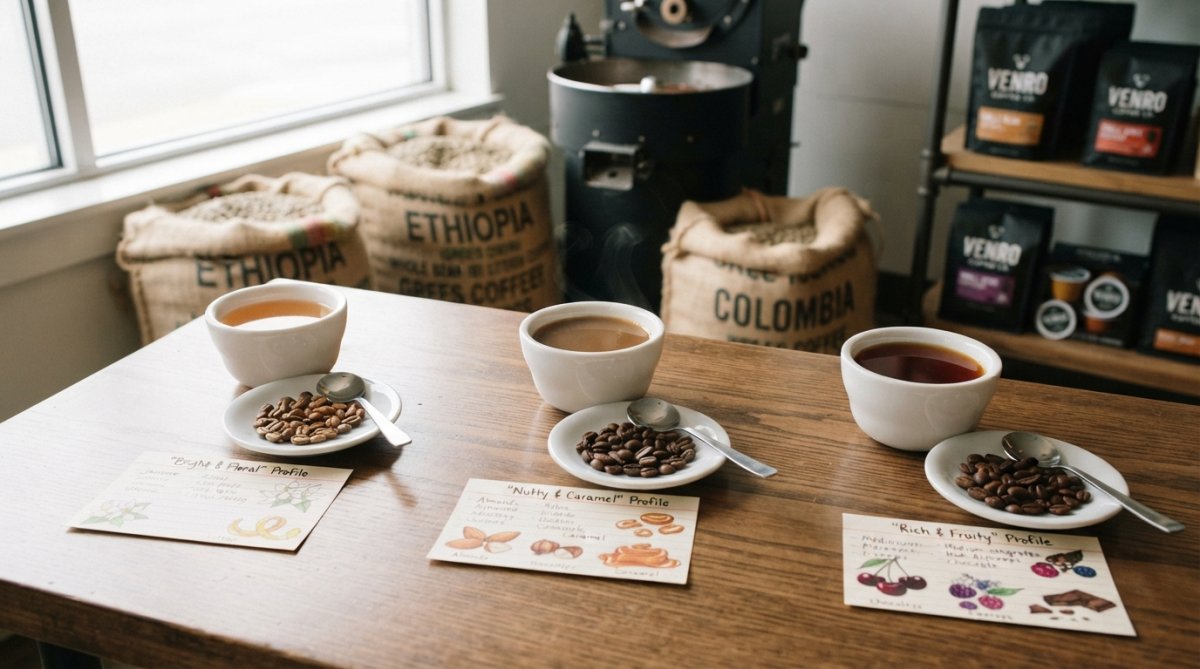
Tasting Notes: Understanding What You're Reading
When you buy specialty coffee, the bag usually lists tasting notes. These come from cupping, a standardized coffee evaluation process where professionals taste coffee systematically and note what they experience. They're not invented, they're the result of trained sensory evaluation.
For beginners, tasting notes work like a roadmap. If a coffee lists "chocolate and hazelnut," you know it's going to taste rich and nutty, not bright and fruity. If it lists "citrus and floral," you know to expect something more lively and aromatic. Match the tasting notes to your preferences, and you'll find coffees you love.
Sensory Training for Beginners: Developing Your Palate
Your palate develops through exposure and intentional tasting.
Taste actively. Slow down. Notice the aroma before you sip. Pay attention to how it tastes on different parts of your tongue. Does it taste different as it cools? This active attention is how your brain learns to recognize flavors.
Compare side by side. Brew two different single origins on the same day using the same method. Taste them back to back. The differences become obvious when you compare directly.
Take notes. Write down three things after tasting: what you smell, what you taste, how it feels. Over time, your notes will become more specific and useful.
Repeat your favorites. You learn flavor through repetition. If you find a coffee you love, buy it again. Your brain will anchor that flavor profile, making it easier to recognize similar characteristics in new coffees.
Most specialty roasters include tasting guides with their beans. Use them, they're designed to help you notice what's actually in the cup.
8 Best Single Origin Coffees for Beginners (With Tasting Profiles)
1. Colombia: The Balanced Gateway Coffee
Colombia is the world's largest producer of washed arabica coffee. Colombian coffees are consistently excellent, approachable, and forgiving.
Flavor Profile: Caramel, mild citrus, hazelnut, balanced acidity
Colombian coffees are grown at high altitude in volcanic soil, creating complexity without harshness. They're usually washed-process beans, meaning they're clean and bright without being overwhelming. The acidity is present but gentle. The body is medium.
This is why Colombia works so well for beginners. There's nothing intimidating here. The flavors are familiar. If you've only had commercial coffee before, Colombian single origin will feel like a revelation.
Why it works for beginners: No surprises. Consistent quality. Works with any brewing method. Doesn't require perfect technique to taste good. [Shop Colombia](https://ci1ksc-ck.myshopify.com/products/colombia)
2. Brazil Santos: Smooth, Chocolatey, Low-Acidity
Brazil is the world's largest coffee producer, and Brazilian coffees have a reputation for smoothness. If you're coming from commercial coffee and want something that feels luxurious but isn't jarring, Brazil Santos is your answer.
Flavor Profile: Milk chocolate, nutty, low acidity, smooth mouthfeel
Brazilian coffees are typically grown at lower altitudes than Colombian or Ethiopian coffees, resulting in lower acidity and heavier body. Santos, a specific region in Brazil, produces some of the country's most refined beans. The natural processing method used for many Brazilian coffees adds sweetness and body.
What makes Brazil Santos special for beginners is how forgiving it is. Low acidity means it won't shock your palate. The chocolate and nut notes are comforting. This coffee feels like a hug in a cup.
Why it works for beginners: Forgiving. Smooth. Doesn't require perfect extraction. Works well with French press and espresso. Shop Brazil Santos
3. Costa Rica: Bright, Clean, and Approachable
Costa Rica produces some of Central America's finest coffees, known for their cleanliness and brightness.
Flavor Profile: Honey, peach, bright citrus, clean finish
Costa Rican coffees are typically washed-process, grown at high altitude, and processed with meticulous attention to detail. The result is a coffee that tastes alive without being aggressive. The citrus is bright but not sour. The body is light to medium. The finish is clean.
For beginners who want to explore brightness without diving into the deep end, Costa Rica is perfect. It's more interesting than Colombia but more approachable than Ethiopia. It teaches you what "clean" means in coffee terminology.
Why it works for beginners: Bright enough to be interesting. Clean enough to be accessible. Works beautifully with pour-over and AeroPress. Shop Costa Rica
4. Ethiopia Natural: Fruity and Floral for Adventurous Beginners
Ethiopia is coffee's birthplace. Ethiopian coffees, especially those processed using the natural method, are where specialty coffee gets exciting.
Flavor Profile: Berry, blueberry, wine-like, floral, complex acidity
Natural-process Ethiopian coffees are dried with the fruit still attached to the bean. This extended contact with the fruit creates intense sweetness and fruity flavors. The acidity is higher than washed coffees, but it's bright rather than harsh. The body is light to medium.
Ethiopian coffees challenge your palate in the best way. They taste nothing like commercial coffee. Some people find them revelatory. Others find them too different. This is how you learn what you like.
Why it works for adventurous beginners: Teaches you what specialty coffee can be. Shows you how processing shapes flavor. Affordable entry point to natural-process coffees. Shop Ethiopia Natural
5. Guatemala: Chocolate, Brown Sugar, Smooth
Guatemala produces coffees with distinctive character. Guatemalan beans grow in volcanic soil at high altitude, creating a coffee that's rich, complex, and deeply satisfying.
Flavor Profile: Milk chocolate, brown sugar, mild spice, smooth body
Guatemalan coffees sit in an interesting middle ground. They have more body than Costa Rican coffees but more brightness than Brazilian coffees. The chocolate notes are prominent but not overwhelming. The brown sugar sweetness is natural. The spice notes are subtle and sophisticated.
This coffee teaches beginners about balance. It shows you how a single origin can be complex without being difficult.
Why it works for beginners: Complex but balanced. Works well with most brewing methods. Shows you what "spice notes" actually taste like. Shop Guatemala
6. Mexico: Nutty, Spiced, and Balanced
Mexican coffees are underrated. Mexican beans, typically grown in the Chiapas and Oaxaca regions, offer excellent value and distinctive character.
Flavor Profile: Chocolate, mild spice, nutty, smooth, balanced
Mexican coffees share characteristics with Guatemalan coffees but tend toward slightly more chocolate and less brightness. The spice notes are gentle. The nuttiness is pronounced. The body is medium to full.
For beginners seeking value, Mexico is exceptional. You get a genuinely good coffee at a fair price. The flavor profile is comforting without being boring.
Why it works for beginners: Excellent value. Consistent quality. Approachable flavor profile. Works well with drip and French press. Shop Mexico
7. Nicaragua: Cocoa and Floral Complexity
Nicaragua produces coffees with surprising depth. Nicaraguan beans, grown at high altitude in volcanic soil, develop complex flavor profiles that punch above their price point.
Flavor Profile: Cocoa, floral notes, citrus tones, balanced body
Nicaraguan coffees occupy a fascinating middle ground between chocolate-forward Brazilian coffees and fruit-forward Ethiopian coffees. You get cocoa richness with floral complexity. The citrus is present but subtle. The body is medium. The finish is clean and slightly sweet.
This coffee teaches beginners that complexity doesn't require extremes. Subtle layering of flavors creates interest and depth.
Why it works for beginners: Complex but balanced. Shows you what "floral" means in coffee. Good value. Works well with pour-over. Shop Nicaragua
8. Peru: Silky Sweet with Citrus Notes
Peru produces some of South America's most underappreciated coffees. Peruvian beans, grown in the Andes at high altitude, develop a distinctive silky texture and sweet character.
Flavor Profile: Salted caramel, silky sweet, citrus, smooth finish
Peruvian coffees are remarkably smooth. The body is full but not heavy. The sweetness is natural and pronounced. The citrus is bright but balanced by the sweetness. The finish is clean and slightly lingering.
For beginners who want something that feels luxurious and tastes delicious without requiring technical precision, Peru is ideal.
Why it works for beginners: Silky smooth texture. Natural sweetness. Works well with any brewing method. Forgiving of slight brewing imperfections. Shop Peru
| Origin | Roast Level | Flavor Profile | Acidity | Body | Best Brewing Method |
|---|---|---|---|---|---|
| Colombia | Medium | Caramel, hazelnut, citrus | Balanced | Medium | Pour-over, drip, espresso |
| Brazil Santos | Medium | Chocolate, nutty | Low | Full | French press, espresso |
| Costa Rica | Medium-Light | Honey, peach, citrus | Bright | Light-Medium | Pour-over, AeroPress |
| Ethiopia Natural | Medium-Light | Berry, floral, wine-like | Bright | Light-Medium | Pour-over, AeroPress |
| Guatemala | Medium | Chocolate, brown sugar, spice | Balanced | Medium-Full | Drip, French press |
| Mexico | Medium | Chocolate, nutty, spice | Balanced | Medium | Drip, French press |
| Nicaragua | Medium | Cocoa, floral, citrus | Balanced | Medium | Pour-over, drip |
| Peru | Medium | Caramel, citrus, silky | Mild | Full | Any method |
Coffee Origins Explained: Where Your Beans Come From
Understanding where your coffee comes from helps you make intentional choices. Origin matters because it determines everything about how the coffee will taste.
How Origin Affects Flavor
Altitude is the primary factor. Coffee grows best between 600 and 2,200 meters above sea level. Higher altitude means slower ripening, which allows more complex sugars to develop in the bean. High-altitude coffees taste more complex.
Soil composition matters enormously. Volcanic soil, common in Central America and parts of East Africa, produces bright, complex coffees. Rich soil in Brazil produces smooth, balanced coffees. The minerals in the soil literally become part of the bean.
Climate shapes everything. Consistent rainfall, moderate temperatures, and seasonal variation all influence flavor development. Farming practices matter too. Shade-grown coffee develops differently than sun-grown coffee. Shade-grown tends toward more complexity.
Processing Methods: Washed vs. Natural Process
How coffee is processed after harvest dramatically affects flavor. The two primary methods are washed and natural.
Washed process removes the fruit from the bean immediately after harvest, then dries just the bean. This produces clean, bright, consistent coffees. Most Colombian, Central American, and East African coffees use washed processing.
Natural process dries the entire cherry, fruit and all, before removing the bean. This extended contact with the fruit creates sweetness and fruitiness. Natural-process coffees taste more complex and fruity but are less consistent batch to batch.
Washed = clean, bright, consistent Natural = fruity, sweet, complex, variable
How to Brew Single Origin Coffee: Methods for Beginners
The best brewing method depends on your lifestyle and preferences.
Pour-over (Chemex, V60, Melitta) gives you maximum control and produces the cleanest cup. Pour-over is ideal for appreciating the nuances of single origin coffee.
Drip machine (automatic coffee maker) is convenient and consistent. Automatic drip produces a solid cup without fuss.
French press produces a full-bodied cup with more sediment. The immersion method extracts oils and fine particles, creating richness. French press works beautifully with fuller-bodied coffees like Brazil and Guatemala.
AeroPress is a hybrid method that combines immersion and pressure. It's forgiving, versatile, and produces an excellent cup.
Espresso requires an espresso machine and grinder. If you have an espresso setup, single origin beans shine.
Grind Size and Extraction Basics
Grind size controls how fast water moves through coffee. Finer grinds slow water down, allowing more extraction. Coarser grinds speed water up, allowing less extraction.
Coarse grind (French press, cold brew): lighter cup Medium grind (drip, AeroPress): balanced extraction Fine grind (espresso, pour-over): stronger cup
The goal is balanced extraction, pulling out the good flavors without pulling out the bitter ones. Under-extracted coffee tastes sour and thin. Over-extracted coffee tastes bitter and harsh.
For beginners, use medium grind, brew for 3-4 minutes, taste. If it tastes sour, use a finer grind or longer brew time. If it tastes bitter, use a coarser grind or shorter brew time.
Troubleshooting Extraction: Common Brewing Mistakes
Problem: Coffee tastes sour or thin This signals under-extraction. Fix: use a finer grind, brew longer, or use hotter water.
Problem: Coffee tastes bitter or harsh This signals over-extraction. Fix: use a coarser grind, brew shorter, or use cooler water.
Problem: Coffee tastes flat or one-dimensional This usually means the water temperature is too low. Coffee needs water between 195-205°F to extract properly. Fix: use hotter water or preheat your brewing vessel.
Problem: Coffee tastes inconsistent batch to batch This usually means your grind size isn't consistent. A burr grinder (not a blade grinder) solves this. Fix: invest in a burr grinder.
How to Choose Your First Single Origin: A Beginner's Roadmap
Start by asking yourself: what flavors do you naturally gravitate toward?
If you love chocolate, caramel, and nuts, start with Brazil Santos or Guatemala. These coffees are comforting and familiar.
If you like bright, clean flavors, start with Costa Rica or Colombia. These coffees teach you what "clean" means.
If you're adventurous and want to explore something genuinely different, start with Ethiopia Natural. This coffee will surprise you.
If you want something balanced that works with any brewing method, start with Colombia. It's the safest choice and an excellent foundation.
Once you've tried your first single origin, you'll know more about what you like. Buy it again, or try the next one on the list.
Budget-Friendly Starter Options
All eight coffees recommended above are priced at $19.99 per bag at Venro Coffee Co., making them equally accessible. A single 12-ounce bag makes roughly 12-15 cups of coffee, depending on your brewing method. That's about $1.30-1.70 per cup. For specialty coffee, that's exceptional value.
If you're new to single origin coffee, buying one bag at a time makes sense. Brew it multiple ways if you can. Taste it as it cools, flavors change as temperature drops. Take notes. Then buy your next origin.
Subscription vs. One-Off Purchase: What Makes Sense for You
One-off purchases work best if you're still exploring. Buy one bag, taste it thoroughly, decide if you want more or want to try something new. This approach gives you maximum flexibility.
Subscriptions make sense once you've found a coffee you love and want to drink regularly. Many roasters offer subscription discounts, usually 10-15% off. If you're going to drink a specific coffee every month, a subscription saves money and guarantees freshness.
For beginners, start with one-off purchases. You're learning. You need flexibility. Once you've found your favorites, subscriptions make financial sense.
Venro Coffee Co. allows both approaches. Buy single bags to explore, or set up a subscription once you've found your go-to coffee. The brand prioritizes freshness, all coffee is roasted to order.
Starting your single origin coffee journey doesn't require expert knowledge or expensive equipment. It requires curiosity and willingness to taste carefully. The eight coffees in this guide represent the best entry points into specialty coffee, each one teaches you something different about how geography, processing, and altitude shape flavor.
Venro Coffee Co. specializes in freshly roasted, carefully sourced single origin coffees delivered directly to your door. All eight origins mentioned above are available at $19.99 per bag, roasted to order for maximum freshness. The brand's commitment to quality and accessibility removes barriers to exploring specialty coffee. Whether you're starting with Colombia or jumping to Ethiopia Natural, you're getting genuinely excellent coffee at a fair price. Shop Coffee
Frequently Asked Questions
What does single origin coffee mean for beginners?
Single origin coffee comes from one specific country, region, or farm, unlike blends that mix beans from multiple origins. For beginners, this matters because single origin coffees showcase distinct flavor profiles tied to their geography, altitude, and processing method. This makes it easier to understand how origin affects taste and develop your palate. Venro Coffee Co.'s single origin selections like Colombia and Ethiopia Natural help you explore these differences clearly.
Is single origin coffee better than a blend for beginners?
Single origin coffee is ideal for beginners learning to taste and identify flavors, while blends offer consistency and balanced flavor. Since single origin coffees highlight specific characteristics, fruity notes from Ethiopia, chocolatey smoothness from Brazil, they're excellent for sensory training. However, some blends are beginner-friendly too. Starting with single origin helps you understand flavor profiles, then you can explore blends with more confidence and appreciation.
What roast level is best for beginner single origin coffee?
Medium and medium-light roasts are ideal for beginners exploring single origin coffee. Medium roasts (like Venro's Colombia and Guatemala) balance origin flavors with approachable chocolate and nut notes, while medium-light roasts (like Costa Rica) showcase brighter, fruity characteristics. Dark roasts can mask origin flavors, making them less ideal for learning. Start with medium roast to experience your coffee's origin clearly without overwhelming acidity.
How do I avoid common extraction mistakes when brewing single origin coffee?
The most common mistakes are using water that's too hot (over 205°F), grinding too fine, or steeping too long, all lead to bitter, over-extracted coffee. For single origin beans, use water around 195-205°F, match your grind size to your brew method (coarse for French press, medium for drip, fine for espresso), and follow timing guidelines. Under-extraction (weak, sour taste) usually means coarser grounds or shorter brew time. Experiment with small adjustments to dial in your perfect cup.
Should I buy a single origin coffee subscription or one-time bags?
One-time purchases are best for beginners exploring flavors without commitment. Buy a few bags from different origins (like Venro's $19.99 single origins) to discover your preferences before committing to a subscription. Once you identify your favorite origins and brewing style, subscriptions offer convenience and often better pricing. Subscriptions work well if you have consistent consumption habits; one-time purchases suit experimenters or those with variable coffee intake.
This article was written using GrandRanker