



Best Coffee Beans for Cold Brew: How to Choose
Table of Contents
- What Makes a Coffee Bean Ideal for Cold Brew?
- The Best Roast for Cold Brew: Dark vs. Medium vs. Light
- Single Origin vs. Blends: Which Should You Pick?
- Cold Brew Coffee Bean Grind Size: Why Coarse Wins
- How Long to Steep Cold Brew for the Best Flavor
- How Processing Methods Change Your Cup
- Flavor Profiles and Tasting Notes to Look For
- Troubleshooting Muddy or Bitter Cold Brew
- Our Top Picks for Cold Brew Beans at Home
- Conclusion: Your Next Bag of Cold Brew Beans
- Frequently Asked Questions
Last Updated: September 9, 2026
Choosing the right coffee beans for cold brew at home comes down to one core principle: cold extraction changes everything you know about roast and origin. The best coffee beans for cold brew are those that shine at low temperatures over long steeping times, which means prioritizing smoothness, low acidity, and a rich body over bright, high-altitude character. Most guides tell you to grab any dark roast and call it a day, but the reality is more nuanced, and getting it right transforms your concentrate from bitter and muddy to sweet, chocolatey, and effortlessly drinkable. In this guide from Venro Coffee Co., we break down the technical decisions behind roast level, processing method, and grind size so your next batch tastes like it came from a specialty café.

What Makes a Coffee Bean Ideal for Cold Brew?
Cold brew is an immersion brewing method that relies on time rather than heat to extract flavor. Because water at cold temperatures extracts slowly, certain compounds that normally dissolve in hot water, like the oils and acids that create bitterness, stay locked in the bean. This means the coffee beans for cold brew you select should prioritize density, sweetness, and a flavor profile that survives dilution without turning sour or hollow.

The ideal bean for cold extraction has a few defining traits. A dense, hard bean, often grown at high altitude, extracts more evenly and produces a cleaner cup with less sediment. Beans with chocolatey undertones, nutty notes, or caramel sweetness translate beautifully into cold brew because those flavors are naturally low-acid and full-bodied. Beans with bright, floral aromatics can work, but they often need a medium roast to avoid tasting thin or overly fruity after 18 hours of steeping.
The Best Roast for Cold Brew: Dark vs. Medium vs. Light
The best roast for cold brew is a medium to medium-dark roast for most drinkers, with dark roasts as a close second for those who want maximum body and minimal brightness. Light roasts are the hardest to get right in cold brew because their high acidity and delicate floral aromatics often get muted or turn sour during long, cold extraction.
Dark roasts have historically been the default recommendation, and for good reason. The roasting process breaks down chlorogenic acids, which are the primary source of perceived acidity and bitterness in coffee (PubMed). A dark French roast delivers a full-bodied, low-acid cup with deep chocolate and caramel notes that hold up beautifully against milk or over ice. The tradeoff is that overly dark beans can taste ashy or one-dimensional, especially if they were roasted months ago.
Medium roasts offer the best of both worlds. They preserve enough origin character to keep things interesting while still delivering the smooth, chocolatey sweetness that makes cold brew so drinkable. At Venro Coffee Co., we engineer a dedicated Cold Brew Coffee - Medium Roast with tasting notes of chocolate, toffee, and floral tones, specifically ground coarse for smooth extraction at low temperatures. It produces a concentrate-ready coffee with naturally low bitterness that works for 24-hour cold brew, nitro, or simple iced coffee.
| Roast Level | Body | Acidity | Best Flavor Notes | Ideal For |
|---|---|---|---|---|
| Light | Light | High | Floral, citrus, tea-like | Hot pour-over, not cold brew |
| Medium | Medium | Low-Medium | Chocolate, toffee, nutty | Cold brew concentrate, nitro |
| Dark | Full | Very Low | Dark chocolate, caramel, smoky | Bold, classic cold brew |
Single Origin vs. Blends: Which Should You Pick?
The choice between a single origin and a blend isn't about quality, it's about predictability versus personality. For cold brew, where a long steep can flatten delicate notes, this distinction becomes a practical decision about what you want in your glass.
Blends are the workhorses of cold brew. Roasters create them for consistency, blending beans from different origins to hit a specific flavor target, say, heavy chocolate or nutty sweetness, batch after batch. This is a major advantage for a method that requires a large batch of concentrate. If you find a blend you love, you know the next bag will taste the same. This predictability is why most commercial cold brew programs rely on blends.
Single origins are a gamble with a higher payoff. They showcase a specific farm or region's character, which can be stunning in cold brew if chosen correctly. However, they are also subject to vintage variation and can be more finicky. A washed Ethiopian Yirgacheffe, prized for hot brewing, often tastes thin and tea-like after 18 hours in the fridge. The key is to look for origins known for low acidity and heavy body, not just interesting stories.
Here’s a practical framework for deciding:
- Choose a blend if: You want a consistent, balanced cup every time, you're making large batches for a crowd, or you're new to cold brew and want a forgiving bean.
- Choose a single origin if: You enjoy exploring terroir, you have a specific flavor profile in mind (like the syrupy body of a Sumatra), or you're willing to adjust your steep time to get it right.
A common pattern is to use a blend as your daily driver and a single origin as a weekend experiment. This lets you enjoy the reliability of a blend while still exploring the unique profiles that single origins offer. When you do pick a single origin, look for beans from Brazil, Sumatra, or Guatemala, which are naturally low in acidity and high in body, traits that translate well to cold extraction.
For a more sophisticated approach, consider how the processing method interacts with the origin. A natural-processed single origin from Ethiopia will have a much heavier body and fruit-forward sweetness than a washed one, making it a better candidate for cold brew. This interplay is where the real nuance lies, and it's a more useful consideration than the origin vs. blend debate alone.
Cold Brew Coffee Bean Grind Size: Why Coarse Wins
Cold brew coffee bean grind size is the single most important variable you control, and the answer is always coarse. A coarse grind, similar to breadcrumbs or coarse sea salt, creates the right surface area for a slow, even extraction over 12 to 24 hours. Grind too fine and you risk over-extraction, which pulls out bitter, astringent compounds that no amount of dilution can fix.
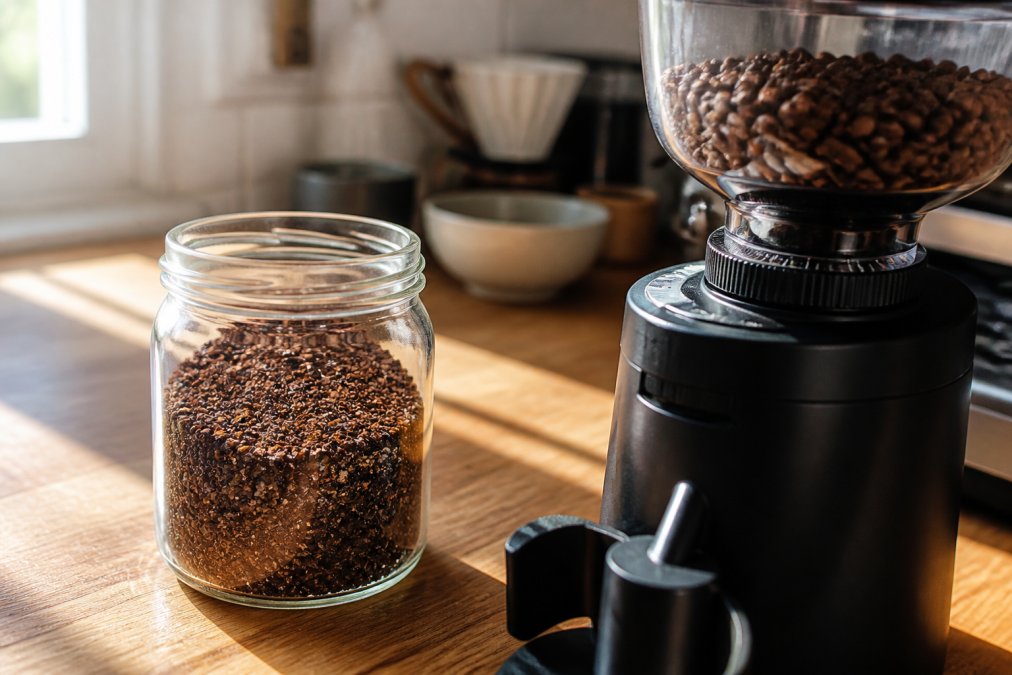
The science is straightforward. Finer particles expose more surface area to water, which speeds up extraction. In a hot brew method like espresso, that is exactly what you want. In cold brew, where steeping time stretches into hours, a fine grind leads to harsh, bitter flavors and a muddy, sludgy texture that is hard to filter. A coarse grind prevents this by slowing extraction and leaving you with a clean, sweet concentrate.
Most specialty roasters, including Venro Coffee Co., offer a cold brew grind option at checkout, so you do not need to own a grinder. If you are grinding at home, set your burr grinder to its coarsest setting and adjust from there. Blade grinders are a common mistake here, as they produce uneven particle sizes that lead to inconsistent extraction and sediment in your final cup.
How Long to Steep Cold Brew for the Best Flavor
The ideal steeping time for cold brew is between 14 and 18 hours at room temperature or in the refrigerator, with 16 hours being a reliable sweet spot for most beans and grinds. This window allows for full extraction of sugars and aromatic compounds without pulling out the bitter, woody notes that emerge after 20-plus hours.
How long to steep cold brew depends on your grind size and desired strength. A coarser grind needs more time, closer to 18 hours, while a slightly finer grind can finish in as little as 12 to 14 hours. The water-to-coffee ratio also plays a role. A standard concentrate ratio is 1 part coffee to 4 parts water, which you then dilute with water or milk before serving (peer-reviewed research). If you prefer a ready-to-drink strength, use a 1:8 ratio and skip the dilution step.
Steeping beyond 20 hours is a common mistake that leads to a hollow, overly bitter cup (PubMed). The cold extraction process does not stop, it just slows down, so leaving your batch for two days will eventually pull out the harsh compounds you worked to avoid. Filter your concentrate promptly after steeping and store it in the refrigerator, where it will stay fresh for up to two weeks in an airtight container.
How Processing Methods Change Your Cup
Processing method is the most overlooked variable in choosing coffee beans for cold brew, and it explains why two beans from the same region can taste completely different. The way a coffee cherry is processed after harvest, whether the fruit is dried around the bean or washed off immediately, directly shapes the sweetness, body, and acidity that survive cold extraction.
Natural or dry-processed coffees, where the whole cherry is dried in the sun, tend to produce heavier, fruitier, and sweeter cups. For cold brew, this translates into a fuller body and pronounced sweetness, often with berry or dried fruit notes. Washed or wet-processed coffees, where the fruit is removed before drying, produce cleaner, brighter cups with more pronounced acidity, which can sometimes taste thin in cold brew.
Wet-hulled coffees, like the Giling Basah process used for our Sumatra single origin, sit in a category of their own. This Indonesian method produces a syrupy, full-bodied cup with dark chocolate, dried fruit, and earthy notes, along with very low acidity. For cold brew drinkers who want a bold, lingering body with complexity, a wet-hulled Sumatra is a standout choice that most guides never mention.
Flavor Profiles and Tasting Notes to Look For
Choosing beans by tasting notes is only useful if you understand why some flavors survive the cold brew process and others don't. The chemistry of cold extraction is different from hot brewing, and that dictates which flavor compounds end up in your cup.
Why chocolate and nutty notes win: The flavors we perceive as chocolate, caramel, and toasted nuts are largely the result of Maillard reactions during roasting. These create large, complex molecules that are slow to dissolve and require significant energy to extract. In hot water, they're pulled out quickly. In cold water, they dissolve slowly and steadily over 14-18 hours, providing a rich, sweet base without the harsh, bitter compounds that also form during roasting. This is why a medium or medium-dark roast with these notes is a safe bet.
Why bright, floral notes are risky: The delicate, fruity, and floral characteristics in coffee come from volatile aromatic compounds and organic acids. These are often the first things to extract, even in cold water. However, without heat to carry them off, they can become muted or, worse, transform into sour or vegetal flavors during a long steep. A light roast with high acidity will often taste sharp and unpleasant in cold brew, not bright and refreshing.
The role of bean density: Denser beans, typically grown at higher altitudes, have more complex sugar structures and a harder cellular matrix. This density means they extract more slowly and evenly, which is ideal for a long cold steep. They are less likely to become over-extracted and bitter. Softer, lower-grown beans can break down more easily, leading to a muddier cup. When you see tasting notes like "brown sugar" or "molasses," it often indicates a denser bean that will perform well.
Here’s a practical guide to decoding tasting notes for cold brew:
- Look for: Chocolate, cocoa, toffee, caramel, hazelnut, almond, brown sugar, molasses, vanilla. These are your safest bets for a smooth, sweet cup.
- Approach with caution: Citrus (lemon, bergamot), florals (jasmine, rose), and tea-like notes. These can work in a blend but are risky as a single origin.
- Seek out for complexity: Dried fruit (raisin, fig), berry, and winey notes. These often come from natural processing and can add a pleasant, sophisticated depth to cold brew that you don't get from chocolate notes alone.
A useful mental model is to think of cold brew as a flavor extractor that favors the 'base notes' of coffee over the 'top notes.' A great cold brew bean is one that offers a symphony of base notes, sweet, rich, and full-bodied, with just a hint of a top note for complexity. If a bag's description is all about bright, high-altitude citrus, it's probably better suited for a pour-over. If it mentions sweetness and body, it's a candidate for your cold brew pitcher.

Troubleshooting Muddy or Bitter Cold Brew
If your cold brew tastes bitter or has a muddy, sludgy texture, the culprit is almost always one of three things: grind too fine, steeping too long, or using beans that are too darkly roasted and past their prime. Fixing these issues is straightforward once you know what to look for.
A bitter, harsh cup means you are over-extracting. Switch to a coarser grind and reduce your steeping time to 14 hours. If the bitterness persists, try a medium roast instead of a dark one, as some very dark roasts develop ashy, burnt notes during long cold extraction regardless of your technique.
Muddy cold brew, where sediment collects at the bottom of your glass, comes from fine particles making it through your filter. Use a coarser grind and consider filtering your concentrate twice, first through a fine mesh strainer and then through a paper filter or cheesecloth. A clean filter paper removes the fine sediment that causes that gritty, cloudy texture.
A hollow or sour cup indicates under-extraction, which happens when your grind is too coarse or your steeping time is too short. Increase your steeping time toward 18 hours or use a slightly finer grind. Also check the roast date on your bag. Coffee beans for cold brew should be freshly roasted, ideally within two to four weeks, as oxidized beans lose their sweetness and develop a flat, papery taste.
Our Top Picks for Cold Brew Beans at Home
For most home brewers, the best coffee beans for cold brew are a dedicated medium roast blend engineered for the method. Our top pick is the Venro Coffee Co. Cold Brew Coffee - Medium Roast, priced at $19.99, which is ground coarse and selected for smooth extraction at low temperatures. It delivers rich chocolate and toffee notes with subtle floral accents and naturally low bitterness, making it ideal for concentrate, nitro, or iced coffee.
For drinkers who want a bolder, more traditional cold brew, the Cold Brew Coffee - Dark Roast is the choice. This dark French roast is specifically blended for cold brew, contains no additives, and is ground very coarse for the most satisfying, full-bodied cup every time. Both options are roasted to order and shipped fresh, ensuring you are brewing with beans at their peak flavor.
If you prefer to explore single origins, our Brazil Santos offers a smooth, nutty profile with milk chocolate sweetness and low acidity, perfect for an approachable everyday cold brew. The Sumatra single origin delivers a syrupy, full-bodied cup with dark chocolate and earthy notes for those who want complexity and a long lingering finish. Each bag is $19.99 and available whole bean or in your preferred grind.
Conclusion: Your Next Bag of Cold Brew Beans
The best coffee beans for cold brew at home balance three things: a medium to dark roast for low acidity, a processing method that promotes sweetness and body, and a coarse grind for clean extraction. Skip the generic advice that says any dark roast will do, and instead look for beans with chocolatey or nutty tasting notes, check the roast date for freshness, and dial in your steeping time to match your grind.
At Venro Coffee Co., we roast to order and ship fresh, so your cold brew starts with beans at their peak. Whether you choose our dedicated Cold Brew Coffee - Medium Roast, the bold Dark Roast, or a single origin like Brazil Santos or Sumatra, you are getting carefully sourced, freshly roasted coffee built for the way you brew. Explore our full selection of cold brew beans and find your new favorite batch today.
Frequently Asked Questions
What type of coffee beans should I use for cold brew?
Choose beans roasted specifically for cold brew or a medium to dark roast with tasting notes like chocolate, toffee, or nuts. These flavors stand up well to the long, cold extraction process. Look for a coarse grind to prevent over-extraction and bitterness. A blend designed for cold brew, such as Venro's Cold Brew Coffee Medium Roast, offers a balanced and consistent cup.
Does roast level matter when choosing beans for cold brew?
Yes, the best roast for cold brew is typically medium to dark. Dark roasts deliver bold, chocolatey, and low-acid results, while medium roasts offer more nuanced flavors like caramel and floral tones. Light roasts can taste overly acidic and sour in cold brew because the slow extraction highlights their bright, delicate characteristics. Experiment to find your preference.
Can I use pre-ground coffee for cold brew at home?
You can, but we recommend buying whole beans and grinding them yourself. The correct cold brew coffee bean grind size is coarse, similar to breadcrumbs. Pre-ground coffee is usually ground fine for drip makers, which can lead to a muddy, bitter brew. Grinding fresh also preserves the bean's aromatic oils for a brighter, more flavorful result.
How long should I steep cold brew coffee?
The standard steeping time for cold brew concentrate is between 12 and 24 hours at room temperature or in the fridge. A 12 to 14-hour steep yields a brighter, more tea-like cup, while 18 to 24 hours produces a bolder, more chocolate-forward concentrate. Steeping longer than 24 hours can pull out bitter, woody flavors you'll want to avoid.
Choosing the right beans is the difference between a bitter, muddy experiment and a smooth, chocolatey concentrate you look forward to every morning. Venro Coffee Co. makes that choice easy with a dedicated cold brew lineup, freshly roasted and shipped directly to your door. Shop our cold brew coffee beans and start brewing a better batch this week.