



Why Your Coffee Tastes Burnt: 7 Fixes
Table of Contents
- Why Your Coffee Tastes Burnt
- Check Your Water Temperature for Brewing Coffee
- Adjust Your Grind Size and Extraction Time
- How to Tell If Coffee Beans Are Fresh
- Clean Your Coffee Maker Properly
- Inspect Your Equipment for Oil Buildup
- Store Your Beans Correctly to Prevent Oxidation
- Diagnose Over-Extraction vs. Under-Extraction
- Common Mistakes That Create Burnt Flavor
- Conclusion
Last Updated: August 18, 2026
Why Your Coffee Tastes Burnt
A burnt taste in your coffee typically means something in your process has pushed extraction too far, scorched the beans, or allowed oxidation to degrade the flavor profile. It almost always comes down to a handful of controllable factors: water temperature, grind size, stale beans, dirty equipment, or over-extraction.
Below, we'll walk you through the most common causes of burnt-tasting coffee and show you how to diagnose which one is affecting your brew.
Check Your Water Temperature for Brewing Coffee
Water temperature is one of the most overlooked variables in home brewing, yet one of the easiest to control. When water is too hot, it over-extracts the coffee grounds, pulling out bitter compounds and scorched flavors.
The ideal water temperature for brewing coffee falls between 195°F and 205°F. If your water is boiling at 212°F and you're pouring it directly onto grounds, you're almost certainly scorching them. Higher temperatures increase the solubility of coffee compounds, meaning more gets extracted faster, including harsh, bitter compounds you don't want.
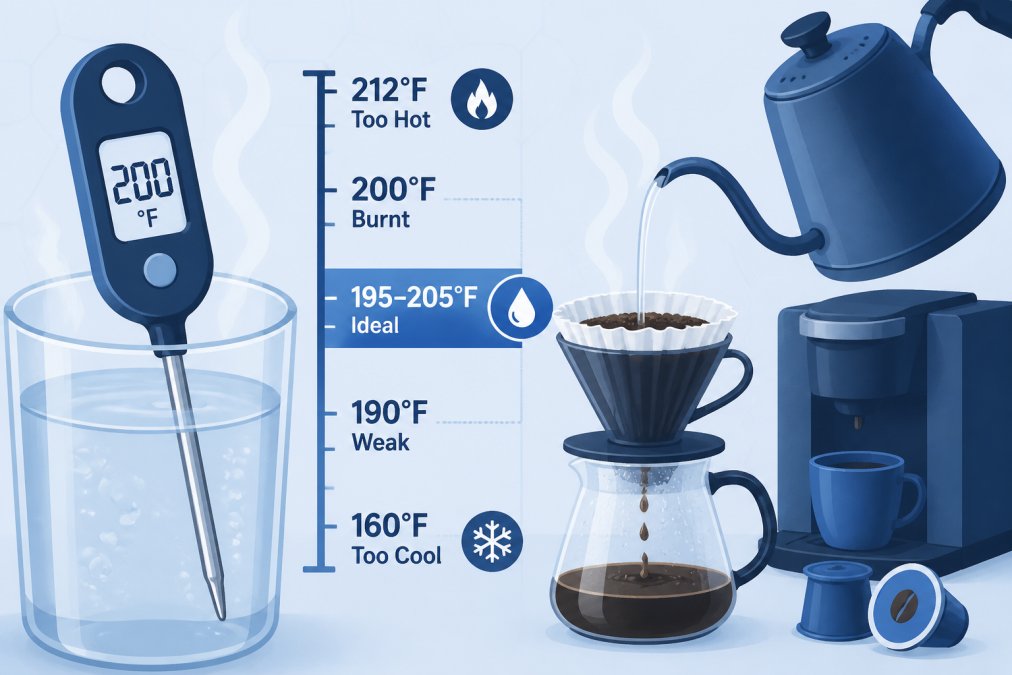
Here's the practical fix: Let your water cool for 30 seconds after boiling before pouring. If you're serious about dialing in your brew, invest in a simple kitchen thermometer or a variable-temperature kettle. Many home baristas find that dropping their brewing temperature by just 5°F eliminates the burnt taste entirely.
Adjust Your Grind Size and Extraction Time
Grind size controls how quickly water moves through the coffee grounds. A finer grind means more surface area for water to interact with, increasing extraction time. A coarser grind means faster water movement and shorter contact time. Get this wrong, and you'll either under-extract (weak, sour coffee) or over-extract (burnt, harsh coffee).
Over-extraction happens when water spends too much time in contact with the grounds, pulling out excessive bitter compounds and creating that scorched flavor. If your coffee tastes burnt and you've already checked your water temperature, grind size is the next place to look.
For drip machines, try a medium grind. For French press, go coarser. For espresso, you need a fine grind, but if your espresso tastes burnt, the issue is usually temperature or tamping pressure. For pour-over methods, a medium-fine grind usually works best.
If you're grinding at home, a burr grinder produces consistent particle sizes, while a blade grinder creates a chaotic mix of fines (tiny particles) and larger chunks. Those fines over-extract quickly, creating burnt flavors. Upgrading to a burr grinder often solves the problem immediately.
The contact time between water and grounds should match your brewing method: Espresso 25-30 seconds, Pour-over 2-4 minutes, French press 4 minutes, Drip machine 5-10 minutes. If your brew time is significantly longer, your grind is too fine and over-extraction is happening.
How to Tell If Coffee Beans Are Fresh
Stale beans taste flat and dull, but oxidized beans can develop a scorched, ashy quality sometimes mistaken for burnt flavor. Coffee beans are freshest within 2-4 weeks of the roast date. After that, oxidation begins degrading aromatic compounds. By 8-12 weeks, the beans have lost most of their complexity.
Check the roast date on the bag. If there's no roast date, that's a red flag. Fresh specialty coffee roasters print the roast date clearly because freshness is part of what you're paying for.
When you open a bag of fresh beans, you should smell a strong, pleasant aroma. If the smell is muted or absent, the beans have oxidized. Fresh beans also have a visible sheen of oils on the surface. If the beans look dull and dry, they've been sitting around.
Storage conditions matter enormously. Beans kept in an airtight container away from light and heat stay fresh much longer than beans left in a paper bag on the counter. Moisture exposure, light exposure, and temperature fluctuations all accelerate oxidation.
Clean Your Coffee Maker Properly
Coffee oil buildup inside your machine is a silent flavor killer. Over time, oils from the coffee accumulate on the spray head, filter basket, and internal surfaces. These oils go rancid, creating a burnt, ashy taste that contaminates every cup you brew.
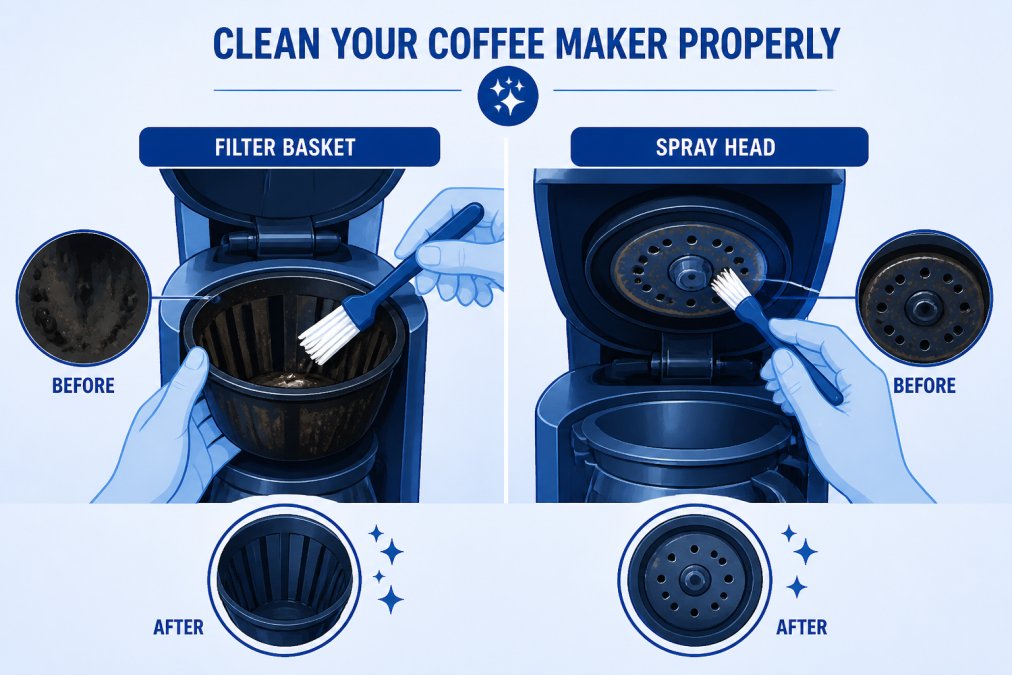
Most people rinse their coffee maker with water, but water alone doesn't remove oil. You need to scrub the internal surfaces where oils accumulate. For drip machines, remove the spray head and filter basket and scrub them with hot water and a brush, paying special attention to crevices where residue collects.
For deeper cleaning, run a descaling solution through your machine every month. Fill the water reservoir with a 1:1 mixture of white vinegar and water, run it through a full brew cycle without coffee, then run two full cycles of plain water to rinse.
French press owners should rinse the press immediately after brewing, then do a thorough cleaning with hot soapy water at least once a week. The metal mesh filter traps fine particles and oils that create off-flavors if left to sit.
Espresso machines require more attention because pressure forces water through tight spaces where oil accumulates. Backflush the group head regularly (if it has a 3-way solenoid valve) and soak the portafilter and basket in hot water with espresso machine cleaner weekly.
The burnt taste you're experiencing might completely disappear after a thorough cleaning.
Inspect Your Equipment for Oil Buildup
Coffee oils are hydrophobic, they don't dissolve in water. They cling to metal and plastic surfaces, building up over time. When these oils oxidize, they develop a rancid, burnt flavor that transfers to fresh coffee.
Visual inspection checklist:
Look inside your machine with a flashlight. Is the spray head discolored or dark? Are there visible deposits in the filter basket? That's oil buildup. The darker it is, the more oxidized it's become.
Equipment-specific oil accumulation patterns:
Drip coffee makers: Oil buildup concentrates in the spray head (where water first contacts grounds), the filter basket, and the heating element. The spray head is most critical, if clogged with residue, water doesn't distribute evenly, causing uneven extraction. Monthly cleaning with a commercial coffee maker cleaner will dissolve these deposits. Run a full brew cycle with the cleaner, then run two full cycles of plain water to rinse completely.
French press: Oil buildup concentrates in the metal mesh filter and glass carafe. Rinse the press immediately after brewing with hot water. Once a week, disassemble completely, soak the mesh filter in hot water with a few drops of dish soap for 10 minutes, then scrub gently with a soft brush.
Espresso machines: Oil buildup is most problematic in espresso machines because pressure forces water through tight spaces. The group head, portafilter, and basket are primary problem areas. If your machine has a 3-way solenoid valve, backflush the group head regularly: insert the basket without coffee, lock the portafilter into the group head, and run water through for 2 seconds, then stop for 1 second, repeating 5-10 times. Soak the portafilter and basket in hot water with espresso machine cleaner weekly. Never use vinegar in an espresso machine, it can damage internal seals. Always use espresso machine-specific cleaning products.
Pour-over brewers: Oil buildup is minimal because water passes through quickly. If using a reusable metal filter, rinse immediately after each use and soak weekly in hot water with a drop of dish soap.
Keurig and single-serve pod machines: Run the machine's cleaning cycle monthly. If your machine doesn't have a built-in cleaning cycle, run a full reservoir of water through without a pod, then repeat with a commercial descaling solution designed for single-serve machines.
Water quality and mineral content:
Hard water with high mineral content can interact with heat to create metallic or burnt off-flavors. Minerals accumulate on heating elements and in water lines. If you have very hard water (above 150 ppm of total dissolved solids), consider using filtered water for brewing. Descaling your machine monthly removes mineral buildup and prevents this problem.
Maintenance schedule:
- Daily: Rinse removable parts with hot water immediately after brewing.
- Weekly: Deep clean with hot soapy water or machine-specific cleaner.
- Monthly: Run a full cleaning cycle with a commercial cleaner.
- Quarterly: Disassemble and inspect internal components if your machine allows it.
Store Your Beans Correctly to Prevent Oxidation
How you store your beans after purchase determines how long they stay fresh. Oxidation is inevitable, but you can slow it dramatically with proper storage.
The enemies of bean freshness are light, heat, moisture, and oxygen. Store your beans in an airtight container away from direct sunlight. A dark cabinet or pantry is ideal. Avoid the freezer, temperature fluctuations cause condensation, which introduces moisture and speeds oxidation. Room temperature in a dark place is best.
If you buy beans in bulk, transfer them to smaller airtight containers. The less headspace in the container, the less oxygen is present to degrade the beans.
Whole beans stay fresh longer than ground coffee. Ground coffee has exponentially more surface area exposed to oxygen, so it oxidizes much faster. Grind only what you need for each brew, and grind just before brewing if possible.
The bag your beans come in matters. If it's a one-way valve bag (which allows CO2 to escape but prevents oxygen from entering), that's good. If it's a regular bag with no seal, transfer the beans immediately to an airtight container.
Venro Coffee Co. ships beans in sealed bags with roast dates printed clearly, and the beans arrive within days of roasting. When you receive fresh beans and store them properly, you're starting with the best possible foundation for a great cup.
Diagnose Over-Extraction vs. Under-Extraction
Over-extraction and under-extraction are different problems, but both can result in off-flavors. The critical distinction: over-extracted bitterness and actual burnt flavor are not the same thing, and they require different fixes.
Over-extraction happens when water spends too much time in contact with the grounds, pulling out excessive bitter compounds and tannins. The result tastes harsh, astringent, and excessively bitter, but the flavor is still recognizably coffee.
Actual burnt flavor (scorching) occurs when coffee oils are heated to the point of combustion or when beans are roasted too dark and then exposed to high heat during brewing. This tastes acrid, ashy, and charred, distinctly different from bitterness.
Under-extraction happens when water doesn't spend enough time in contact with the grounds. The result tastes sour, weak, and thin.
How to tell which one you have:
- Over-extracted bitterness: Tastes harsh and bitter, but still coffee-like. Aftertaste is bitter and lingers.
- Actual burnt/scorched flavor: Tastes acrid, ashy, or smoky. Aftertaste is unpleasant and chemical.
- Under-extracted: Tastes sour, weak, or thin. Lacks sweetness and body.
Brew-method-specific diagnostics:
For drip machines: Over-extraction usually comes from water sitting too long on grounds (clogged spray head, too-fine grind, or water temperature too high). Actual burnt flavor often indicates oil buildup on the spray head or heating element. Run a cleaning cycle and see if the burnt taste disappears.
For French press: Over-extraction is common because the immersion method keeps grounds in contact with water for the full brew time. If your coffee tastes bitter, try reducing brew time from 4 minutes to 3 minutes, or use a coarser grind.
For pour-over: Over-extraction happens when you pour too slowly, keeping water in contact with grounds longer than intended. Aim for a total brew time of 2.5-4 minutes.
For espresso: Over-extraction shows up as a bitter, ashy shot. This usually comes from too-fine grind, too much tamping pressure, or water temperature above 205°F. Actual burnt flavor often indicates a machine that needs backflushing or a group head that's too hot.
How to adjust:
If you have over-extraction (bitter flavor):
- Lower water temperature by 5°F
- Use a coarser grind
- Reduce brew time by 30 seconds
- Clean your equipment to remove oil buildup
If you have actual burnt flavor (acrid, ashy, smoky):
- Check your beans' roast date (if older than 8 weeks, oxidation may have created a burnt quality)
- Lower water temperature to 195°F
- Clean your equipment thoroughly
- For espresso, backflush the group head or run water through it to cool it
If you have under-extraction (sour flavor):
- Raise water temperature to 205°F
- Use a finer grind
- Increase brew time by 30 seconds
- Use more coffee (increase the coffee-to-water ratio)
Experiment systematically: Change one variable at a time. Adjust your grind, brew a cup, taste it, then decide what to adjust next.
Common Mistakes That Create Burnt Flavor
Certain mistakes show up repeatedly in home brewing. The first is using water straight from a boiling kettle. Boiling water (212°F) is too hot for almost all coffee brewing methods. Let it cool for 30 seconds, or use a variable-temperature kettle.
The second is grinding too fine. It feels more precise, but fine grounds over-extract quickly. Start coarser and adjust from there.
The third is not cleaning your equipment. Oil buildup accumulates silently and ruins flavor gradually. A thorough cleaning fixes it immediately.
The fourth is using stale beans. If your beans are more than 8 weeks old, oxidation has degraded them significantly. Check the roast date every time you buy.
The fifth is storing beans in the wrong conditions. Beans left on the counter in a paper bag oxidize faster than beans stored in an airtight container in a dark cabinet.
The sixth is using tap water without considering its mineral content. Hard water can affect extraction and flavor. If you have very hard water, consider using filtered water for brewing.
The seventh is brewing for too long. Leaving grounds in contact with water for excessive time pulls out harsh flavors. Know the optimal brew time for your method and stick to it.
Burnt-tasting coffee usually points to one of these controllable factors: water temperature, grind size, stale beans, dirty equipment, or over-extraction. Start by checking your water temperature and the roast date on your beans. If those are fine, clean your equipment thoroughly. Most of the time, one of these three fixes solves the problem.
When you're ready to eliminate variables entirely, Venro Coffee Co. delivers freshly roasted beans with exact roast dates, so you know you're starting with premium, fresh coffee. Our Breakfast Blend and House Blend are specifically roasted to shine in standard home brewing methods. Once you've optimized your technique, brewing with high-quality beans makes the difference between good coffee and exceptional coffee immediately obvious.


Frequently Asked Questions
How do I fix coffee that tastes burnt?
Start with water temperature, brew between 195°F and 205°F. If water is too hot, it over-extracts and scorches the grounds. Next, check your grind size; too fine causes excessive contact time. Clean your coffee maker thoroughly to remove oil buildup and residue, which intensifies burnt flavors. Finally, verify your beans are fresh and stored in an airtight container away from light and heat. Fresh beans won't taste burnt, but oxidized or stale beans develop harsh, acrid notes no matter how you brew.
Can a dirty coffee maker cause burnt-tasting coffee?
Yes. Coffee oils and sediment accumulate in your machine, and when heated, they burn and transfer bitter compounds to every brew. This is especially common in drip machines where the spray head and filter basket collect residue. Descaling removes mineral buildup; cleaning removes oils. Both are essential. Clean your machine weekly with hot water and a brush, and descale monthly with a commercial descaling solution or white vinegar to prevent burnt flavor from equipment contamination.
How can I tell if my coffee beans are fresh?
Fresh beans should smell vibrant and aromatic when you open the bag. Check the roast date on the label, beans peak in flavor 5-14 days after roasting and remain good for about 3-4 weeks. Stale or oxidized beans smell flat or musty and taste harsh or burnt. Look for an airtight bag with a one-way valve that lets CO2 escape. If your beans are more than a month old, oxidation has already begun, and they'll taste bitter and scorched no matter how carefully you brew.
What's the best water temperature for brewing coffee?
Brew between 195°F and 205°F. Water hotter than 205°F over-extracts grounds, pulling out excessive tannins and bitter compounds that taste burnt. Water cooler than 195°F under-extracts, leaving sour, thin flavors. Use a thermometer or electric kettle with temperature control to hit this range consistently. This single adjustment fixes burnt taste in most cases. If your kettle doesn't have a thermometer, let boiling water (212°F) cool for 30 seconds before pouring.
This article was written using GrandRanker