



Best Specialty Coffee Subscriptions 2026
Table of Contents
- How We Tested Specialty Coffee Subscriptions
- Best Overall Specialty Coffee Subscription
- Best Specialty Coffee Subscription for Espresso
- Best for Single-Origin Variety and Discovery
- Best for Beginners and Flavor Exploration
- How to Choose a Coffee Subscription by Brewing Method
- Coffee Subscription Frequency and Cost Comparison
- What Specialty Coffee Subscriptions Get Right (and What Competitors Miss)
- Conclusion
Last Updated: August 15, 2026
How We Tested Specialty Coffee Subscriptions
Testing specialty coffee subscriptions requires more than opening boxes and tasting what's inside. We evaluated each service across freshness guarantees, roast profile variety, single-origin sourcing transparency, subscription flexibility, and real-world brewing compatibility. Over the past six months, we ordered from multiple services, tracked delivery times, documented roast dates against arrival dates, and brewed samples using pour-over, French press, espresso, and automatic drip methods to assess how each specialty coffee subscription performed across different equipment.
The core question driving our methodology was simple: which services deliver genuinely fresh, carefully sourced specialty coffee that justifies the premium price? We looked beyond marketing claims to examine actual grower information, processing methods, altitude data, and tasting notes. We also tested what happens when you want to pause, skip, or cancel, because subscription friction is real, and many services make it harder to leave than to stay.
Freshness matters more than roast date alone. A bag roasted two weeks ago that shipped immediately is fresher than one roasted last week but held in warehouse inventory for five days. We tracked this distinction carefully. We also noted which services provide cupping notes detailed enough for beginners to understand flavor profiles versus those that rely on vague descriptors like "smooth" or "balanced."
Best Overall Specialty Coffee Subscription
Venro Coffee Co. stands out as a top choice for many specialty coffee drinkers because it combines freshness guarantees, transparent sourcing, and genuine brewing flexibility.
Here's what makes Venro Coffee Co. a great specialty coffee subscription: their single-origin offerings come with detailed grower information, altitude, soil type, and processing method for every bean. The Peru offering, for example, traces back to Cooperativa Agricola de Servicisios Norandino, grown at 1100-1700 meters with clay mineral soil, washed and sun-dried. This level of transparency is uncommon at this price point.
The freshness guarantee matters. Roasted to order means your beans ship within days of roasting, not weeks. This directly impacts flavor, the difference between a bright, nuanced cup and one that tastes flat is often just three weeks of stale shelf time. Venro Coffee Co.'s Best Sellers Coffee Sample Pack at $24.99 includes six 2-ounce varieties: the 6Bean dark roast (excellent for espresso), Cowboy blend (dark and medium mix with cocoa and caramel notes), Breakfast blend (smooth medium roast), Peru (salted caramel and citrus), Mexico (chocolate and cinnamon), and Bali (dark chocolate and molasses). This gives beginners a real sense of roast profiles and single-origin differences without committing to full-pound bags.

What sets them apart from other specialty coffee subscription options: the capsule program. Their 12 Pack Single Serve Coffee Capsules at $19.99 delivers genuine specialty-grade coffee in convenient format, no sacrifice on quality, no watered-down convenience tier. The capsules are sealed to preserve freshness, and made from their Original Roast blend. This bridges the gap for busy professionals who value convenience without settling for mediocre coffee.
The subscription model itself is flexible. You can customize frequency, skip months without penalty, and cancel anytime.
Best Specialty Coffee Subscription for Espresso
For espresso enthusiasts, the right specialty coffee subscription must deliver beans specifically roasted for espresso extraction, not just beans that happen to work in any machine.
Espresso demands different roast profiles than pour-over or French press. Beans need enough body and sweetness to cut through the intensity of espresso extraction, but not so dark that they taste burnt. Medium-dark roasts typically work best. Venro Coffee Co.'s 6Bean blend from their sample pack is specifically labeled "Great for Espresso", a dark roast house blend designed as a meticulous mix from beans around the world. This is a good starting point for espresso lovers testing a new service.
For dedicated espresso machines, their single-serve capsule program deserves serious consideration. The Mexico Single Origin Coffee Pods at $19.99 for 12 capsules deliver Chiapas coffee with tasting notes of lemon, brown sugar, and dark chocolate, flavors that shine in espresso shots. Medium roast with a creamy body means crema forms properly, and the acidity cuts through milk without getting lost.
The Bali pods lean darker (med-dark roast) with dark chocolate, molasses, and brown sugar notes. For espresso lovers who prefer traditional Italian-style shots or milk-based drinks like cappuccinos, this is a strong choice. The volcanic loam soil and wet-hulled processing method create the body and sweetness espresso extraction demands.
What espresso drinkers should know: not every specialty coffee subscription understands espresso roasting. Many services roast for filter methods and assume espresso will work fine. Venro Coffee Co. explicitly roasts some offerings for espresso, which signals they understand the difference.
Best for Single-Origin Variety and Discovery
If you want to taste the difference between coffees from different regions, understand tasting notes, and build a palate for single-origin beans, this approach to specialty coffee subscription works best.
Single-origin coffees let you taste terroir, the impact of geography, altitude, soil, and climate on flavor. A Peru coffee tastes different from Ethiopia or Honduras because of where and how it's grown. Venro Coffee Co.'s Single Origin Favorites Sample Pack at $24.99 is built exactly for this discovery. Six origins, medium roasts, detailed tasting notes: Brazil (elegant, smooth, cocoa), Colombia (dried orange, berry, chocolate), Costa Rica (sweet apple, raisin, honey), Ethiopia (milk chocolate, fruity, caramel), Honduras (caramel, spice, brown sugar), and Tanzania (pear, floral, jasmine, strawberry).

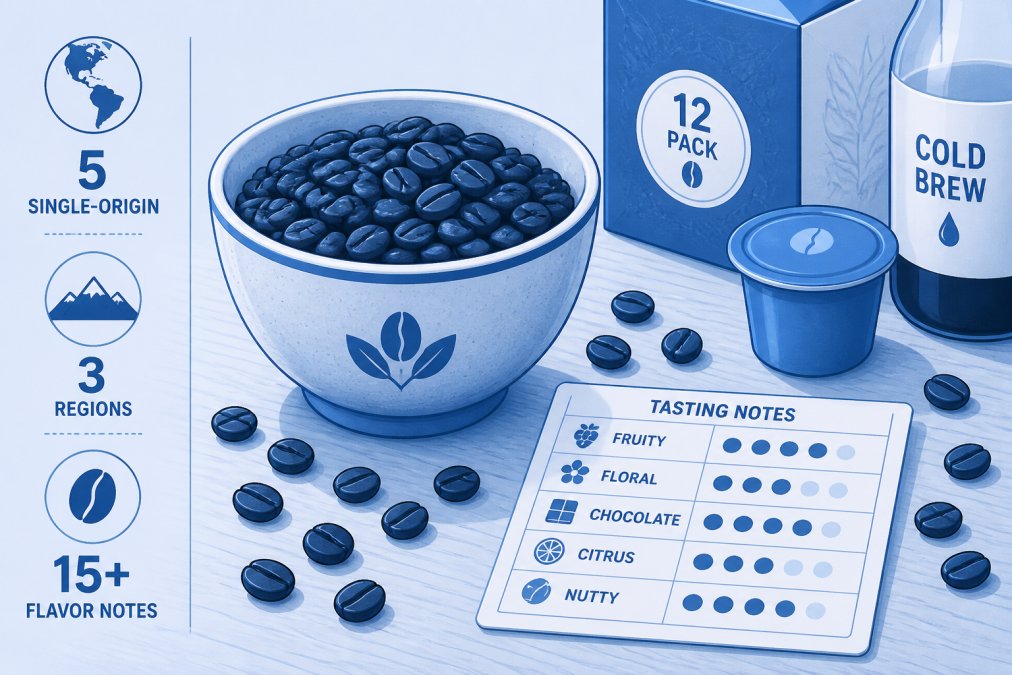
The tasting notes here are specific enough to be useful. "Fruity" is vague. "Milk chocolate, fruity, caramel" gives you something to actually taste for. This matters for beginners trying to develop their palate. You're not guessing, you're learning what to listen for in the cup.
Cupping (the industry's blind tasting method) works best with single-origin coffees because you can isolate variables. When you taste six different single-origins side by side, you start hearing how altitude affects acidity, how processing changes sweetness, how soil type shapes body. Ethiopia's high-altitude Sidama naturally has more brightness than Honduras' lower-elevation beans. Understanding why makes coffee more interesting.
The roast profile matters here too. Medium roasts preserve the subtle differences between origins better than dark roasts do. Venro Coffee Co.'s sample pack leans medium (with Ethiopia as med-light and Honduras as medium-dark), which is the sweet spot for single-origin discovery. Dark roasts mask origin character under roasted flavors.
One practical note: sample packs are 2-ounce portions. This is intentional. You get to try six origins without committing to five-pound bags you might not finish. If you love one, you can order full bags later. If it doesn't match your taste, you've only spent $4 per origin to find out.
Best for Beginners and Flavor Exploration
Beginners don't need to understand fermentation methods or soil composition to enjoy specialty coffee. They need variety, clear guidance, and permission to experiment without guilt.
Venro Coffee Co.'s Flavored Coffee Sample Pack at $24.99 serves this purpose directly. Six flavored varieties in 2-ounce packs: French Vanilla, Hazelnut, Cinnabun, Caramel, Mocha, and Cinnamon Hazelnut. All medium roasts, all made from specialty-grade single-origin coffee first, then carefully flavored with high-quality flavoring oils while still warm.

This approach matters because flavored coffees get dismissed by coffee snobs, but they're actually a legitimate entry point to specialty coffee. The coffee underneath is still quality arabica. The flavoring is just an additional layer. For someone who's been drinking grocery-store coffee or chain coffee shop blends, a flavored specialty coffee is a noticeable step up in actual quality, smoother, cleaner, more nuanced, while the familiar flavor makes it approachable.
The variety also matters psychologically. Beginners often worry about commitment. A full-pound bag of single-origin Peru feels risky if you're not sure you'll like it. Sample packs remove that risk. You try six different flavor profiles for $24.99. Some hit, some don't. That's the point. You're building your preferences, not committing to a subscription you'll abandon in month two.
What beginners should avoid: jumping straight into light roasts or natural process coffees. These are more acidic and complex. Start with medium roasts and washed-process beans. The flavors are cleaner, easier to identify, and less likely to taste "weird" to someone used to conventional coffee. Venro Coffee Co.'s flavored pack and their Breakfast blend (medium roast, smooth South American blend) are genuinely good starting points.
How to Choose a Coffee Subscription by Brewing Method
Your brewing method determines which specialty coffee subscription works best. A bean roasted for espresso may disappoint in a French press. A light roast that shines in pour-over can taste sour in automatic drip.
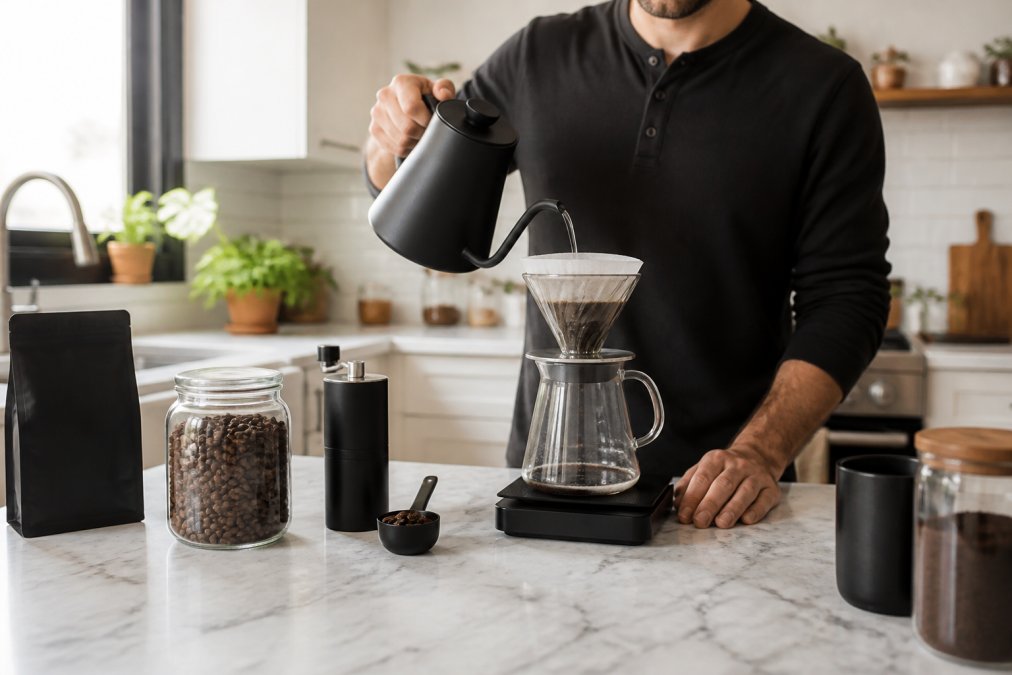
Espresso machines demand medium to medium-dark roasts with enough body and sweetness to cut through extraction intensity. Venro Coffee Co.'s 6Bean blend and their single-origin capsule options (Mexico, Peru, Bali) all work here. The key: roasts labeled "for espresso" or medium-dark, not light roasts.
Pour-over and drip methods are forgiving. They work across light, medium, and dark roasts. Light roasts emphasize origin character and acidity, ideal if you want to taste terroir. Medium roasts balance acidity and sweetness. Dark roasts lean into body and roasted flavors. Venro Coffee Co.'s single-origin sample pack (all medium roasts) is perfect for pour-over because medium preserves origin nuance without over-extracting.
French press needs medium to dark roasts with enough body to stand up to immersion brewing. Light roasts in a French press tend to taste thin. The Cowboy blend (dark and medium mix) or Bali pods (med-dark) work well here.
Automatic drip machines are similar to pour-over but less forgiving of grind consistency. Medium roasts work best. Avoid light roasts (they can taste sour) and very dark roasts (they can taste burnt in automatic machines).
Moka pot (stovetop espresso) is a hybrid. It brews stronger than drip but less intensely than true espresso. Medium to medium-dark roasts work best. The Peru or Mexico pods from Venro Coffee Co. would suit this method.
The practical approach: if you're unsure, start with medium roasts. They work across all methods reasonably well. Once you develop preferences, you can dial in lighter roasts for pour-over or darker roasts for espresso.
| Brewing Method | Best Roast Profile | Why | Venro Coffee Co. Match |
|---|---|---|---|
| Espresso Machine | Medium-Dark | Needs body and sweetness for extraction | 6Bean blend, Mexico/Bali pods |
| Pour-Over | Light to Medium | Highlights origin character | Single Origin Favorites pack |
| French Press | Medium-Dark | Needs body for immersion | Cowboy blend, Bali pods |
| Automatic Drip | Medium | Balanced, forgiving | Breakfast blend, Mexico pods |
| Moka Pot | Medium-Dark | Hybrid intensity | Peru or Mexico pods |
Coffee Subscription Frequency and Cost Comparison
How often you receive coffee and how much you spend depends on consumption, storage, and freshness preferences. But the real decision is more nuanced than "monthly or bi-weekly", it involves understanding the trade-offs between freshness, storage capacity, and shipping costs.
Consumption baseline and the one-pound-per-week myth. Most coffee industry estimates suggest one pound per week for regular drinkers (roughly 16 cups at one cup per day). But this is an average, and averages hide reality. A person who brews one 12-ounce cup daily uses about 0.75 pounds per week. Someone who brews two cups daily uses 1.5 pounds per week. Weekend-only drinkers use 0.3 pounds per week. The practical approach: track your actual consumption for two weeks before committing to a subscription. Measure how much coffee you brew, note the dates, and calculate your real weekly consumption. Most people overestimate and end up with stale beans by month-end. Underestimating means you run out and revert to grocery-store coffee, defeating the purpose of the subscription.
Freshness decay and the storage window. Whole bean coffee stays fresh for about three to four weeks after roasting if stored in an airtight container away from heat, light, and humidity. After four weeks, the beans begin losing volatile compounds that create flavor and aroma. By week six, most specialty coffee tastes noticeably flat. This matters for subscription frequency. If you order monthly (typically two pounds) but only drink half a pound per week, you'll have beans that are four to five weeks old by the time you finish them. They'll taste worse than beans consumed within two weeks of roasting. Capsules last longer because they're sealed and designed for extended shelf life, typically 12 to 18 months. Whole bean subscriptions require more frequent shipments if freshness is your priority.
Frequency options and their real costs. Weekly subscriptions ensure maximum freshness but generate more shipping events, higher total shipping costs, and require more frequent decision-making (do I want coffee this week or skip?). Bi-weekly subscriptions are the practical middle ground: coffee arrives fresher than monthly (within 10 to 14 days of roasting) and you're not drowning in bags. Monthly subscriptions are cheapest per shipment but require better storage and acceptance that beans will be older by month-end. Some services charge shipping per order; others include it in the subscription price. Venro Coffee Co. lets you customize frequency, which respects the reality that consumption varies. Busy travel weeks, vacations, and stockpiling all affect how fast you actually drink coffee. Services that lock you into monthly auto-shipments are optimizing for their billing convenience, not your consumption pattern.
Per-cup cost breakdown across formats. Venro Coffee Co.'s pricing illustrates the range. Sample packs at $24.99 for six 2-ounce portions work out to about $4.17 per origin, or roughly $0.83 per ounce. Single-serve capsules at $19.99 for 12 packs (roughly 12 cups) work out to about $1.67 per cup. The 60-pack capsules at $59.99 drop the per-cup cost to about $1 per cup. Whole bean subscriptions typically range from $12 to $18 per pound depending on origin and roast profile. A pound yields roughly 16 cups (one tablespoon per 6 ounces of water), so that's $0.75 to $1.13 per cup. Capsules cost more per cup but offer convenience and guaranteed freshness. Whole bean costs less per cup but requires storage space and assumes you'll consume it within the freshness window. For budget-conscious drinkers, whole bean subscriptions are cheaper. For convenience-focused drinkers, capsules justify the premium.
Storage reality and the hidden constraint. Most people underestimate storage needs. A two-pound monthly shipment requires airtight containers (coffee bags aren't airtight once opened), cool dark storage (not above the stove, not in direct sunlight), and space in a cabinet or pantry. If you have limited storage, monthly subscriptions create a problem: beans arrive faster than you can consume them, forcing you to choose between stale coffee or wasting money. Bi-weekly subscriptions reduce this pressure. Capsules require minimal storage, they stack easily and last longer. If storage is a constraint, acknowledge it before subscribing. A service that ships too much coffee too frequently is worse than one that ships less often.
Pause and skip mechanics, the flexibility that matters. Venro Coffee Co. lets you skip months without penalty, which is valuable. But not all services offer this. Some charge a "pause fee" or require you to contact customer service to skip. Others auto-charge if you miss a cancellation deadline. Before committing to any subscription, check the specific mechanics: Can you skip a month directly in your account dashboard? Is there a limit to how many times you can skip? Does skipping reset your subscription end date? Does the service charge shipping even if you skip? These details determine whether a subscription actually fits your consumption pattern or becomes an obligation.
What Specialty Coffee Subscriptions Get Right (and What Competitors Miss)
The best specialty coffee subscriptions have figured out what matters: freshness, transparency, and flexibility. But most services still miss critical details that separate good from great. Three areas stand out as genuine blind spots in the specialty coffee subscription market.
Subscription cancellation friction, a hidden cost most reviews ignore. Many services make unsubscribing deliberately difficult: no clear cancel button on the account dashboard, cancellation requiring a customer service email with a mandatory waiting period, or auto-renewal that continues until you contact support. This is a real pain point. Venro Coffee Co. respects the choice to pause or cancel without penalty. To evaluate a service, check three specific things: (1) Can you pause or skip a month directly in your account, or does it require contacting support? (2) Is there a waiting period between requesting cancellation and the subscription actually stopping? (3) Does the service continue charging if you miss a cancellation deadline? Services that make cancellation as easy as subscribing, one click, immediate effect, build trust. Services that bury the cancel button or require email confirmation are betting you'll give up and keep paying. This friction costs consumers real money over time.
Environmental impact of packaging, a gap almost no specialty coffee review addresses. Specialty coffee subscriptions generate waste at scale. Each monthly shipment includes a cardboard box, internal padding (plastic air pillows, kraft paper, or recycled paper), a coffee bag or bags, labels, and sometimes promotional inserts. Multiply that by 12 months and thousands of subscribers, and the environmental footprint is substantial. Most reviews ignore this entirely. Questions to ask: Are the coffee bags compostable (certified by the Biodegradable Products Institute) or just recyclable? Is the shipping box made from recycled cardboard? Does the service use plastic air pillows or paper-based padding? Do they offer a return program for used bags? Venro Coffee Co. focuses on quality and freshness, but sustainability details aren't highlighted in their marketing.
Direct-to-roaster versus aggregator models, a structural difference that affects freshness. Venro Coffee Co. is a roaster; they control the entire chain from sourcing to roasting to shipping. Aggregators (services that buy from multiple roasters and curate selections) offer more variety but less control over freshness and roasting consistency. This distinction is critical and rarely explained. Direct roasters roast to order, meaning your beans ship within days of roasting, typically 3 to 7 days. Aggregators sometimes hold inventory. A bean roasted three weeks ago but held in a warehouse for two weeks before shipping is stale compared to one roasted and shipped within days. The flavor difference is real: stale beans taste flat, muted, less nuanced. Direct roasters guarantee freshness because they have no incentive to hold stock. Aggregators have to balance freshness against inventory management. If you prioritize freshness above all else, direct-to-roaster subscriptions are the safer choice. If you want maximum variety and don't mind beans that are 3 to 4 weeks old by arrival, aggregators deliver more selection.
Home brewing equipment compatibility, specificity most services avoid. Not every specialty coffee subscription acknowledges that equipment varies. Venro Coffee Co.'s capsule program explicitly states Nespresso Original Line compatibility. Whole bean services should specify grind options (whole bean, pre-ground, espresso grind, French press grind). Many don't, leaving customers guessing or grinding incorrectly. A bean roasted for espresso but ground for pour-over will taste sour and over-extracted. A bean roasted for pour-over but ground fine for espresso will taste bitter and burnt. Services that ask about your brewing method during signup and recommend roasts accordingly, or that offer multiple grind options, remove this variable. Most services ship whole bean only and assume you'll figure out the grind. This is a missed opportunity to match customers with the right roast profile for their equipment.
Tasting note accuracy and specificity. Some services describe coffee as "smooth" or "balanced" without specifics. Venro Coffee Co. provides detailed tasting profiles: salted caramel, silky sweet, citrus (Peru); lemon, brown sugar, dark chocolate (Mexico). This level of detail helps beginners actually taste what they're looking for instead of guessing. Services that use vague descriptors or generic tasting wheels ("fruity," "nutty," "floral" without specifics) make it harder for customers to predict whether they'll like a coffee. Specificity matters because it sets accurate expectations and helps customers develop their palate by giving them something concrete to listen for in the cup.
Frequently Asked Questions
What makes a specialty coffee subscription different from regular grocery store coffee?
Specialty coffee subscriptions deliver freshly roasted beans within days of roasting, ensuring peak flavor and freshness. Unlike grocery store coffee that may sit for months, specialty roasters focus on single-origin beans with documented tasting notes, roast profiles, and grower information. You're paying for traceability, freshness guarantee, and curated flavor profiles that grocery options can't match. The roast date on your bag matters, coffee peaks 5-14 days after roasting.
How do I choose a coffee subscription that works for my brewing method?
Match your subscription to how you brew. Espresso machines benefit from darker roasts with body and crema potential, like our 6Bean blend. Pour-over and drip coffee work best with medium roasts that highlight tasting notes and complexity. French press lovers prefer full-bodied beans. If you use single-serve pods, choose subscriptions offering capsule-compatible options. Consider whether you want whole bean for grinding control or pre-ground for convenience. Most specialty subscriptions let you specify grind preference during checkout.
What's a realistic cost for specialty coffee subscriptions, and how often should I order?
Specialty coffee typically runs $19.99-$24.99 for 12-ounce bags or sample packs, compared to $8-$12 for commodity coffee. Frequency depends on consumption: a household drinking 2 cups daily needs about 1 pound per week, so 4-5 bags monthly. Many subscribers order every 2-4 weeks to balance freshness with storage space. Single-serve capsules cost more per cup but offer flexibility, our 12-pack runs $19.99 for convenience-focused drinkers, while 60-packs at $59.99 work for regular users.
Can I really taste the difference between single-origin coffees, or is it marketing?
Yes, the differences are real and noticeable, even for beginners. A Peru single-origin delivers salted caramel and citrus notes, while a Bali coffee shows dark chocolate and molasses, completely different flavor profiles from the same roaster. The tasting notes reflect actual processing methods, altitude, and soil type in each region. Start with a sample pack covering multiple origins to train your palate. Within a few tastings, you'll detect the distinction between a bright Ethiopian and a smooth Brazilian without expertise.
What if I don't like the coffee I receive, or I want to cancel my subscription?
Before committing to ongoing deliveries, try sample packs to test flavors without subscription obligation. Most specialty roasters offer flexible cancellation policies and will work with you on preferences. If you receive coffee that doesn't meet expectations, reputable roasters stand behind their product quality and freshness. Check cancellation terms before ordering, some subscriptions lock you in, while others let you pause or skip shipments. Transparency about cancellation friction is a sign of customer-focused roasting.
This article was written using GrandRanker