



5 Best Organic Loose Leaf Green Tea Brands
Table of Contents
- What Makes Organic Loose Leaf Green Tea Worth the Investment
- Quick Comparison Table: Top Organic Green Tea Brands
- 1. Venro Coffee Co. Jasmine Green Tea: Floral Excellence
- 2. Venro Coffee Co. Moroccan Mint Tea: Refreshing Energy
- 3. Venro Coffee Co. Hojicha Powder: Roasted Comfort
- 4. Venro Coffee Co. Premium Matcha: Ceremonial Grade
- How to Brew Loose Leaf Green Tea for Maximum Flavor
- Loose Leaf vs Tea Bags: Why Quality Matters
- How to Clean a Stainless Steel Tea Kettle
- What to Look for When Selecting Organic Green Tea
Last Updated: August 25, 2026
What Makes Organic Loose Leaf Green Tea Worth the Investment
Organic loose leaf green tea preserves leaf integrity, allowing fuller flavor extraction and greater complexity compared to tea bags, which contain broken leaves and dust. At Venro Coffee Co., we source organic loose leaf green tea selections reflecting quality standards and genuine terroir. Three factors separate the best from standard options: certification integrity, harvesting method, and post-harvest handling. USDA organic certification means leaves were grown without synthetic pesticides, herbicides, or chemical fertilizers, the only third-party verification that what you're drinking is genuinely free from agricultural chemicals.

The advantage extends beyond health. The steaming or pan-firing process that halts oxidation in green teas creates delicate flavor compounds that break down when leaves are crushed into bags. Whole leaves maintain structural integrity, unfurling fully during brewing to release catechins, EGCG, and other compounds contributing to both flavor and wellness benefits. Quality loose leaf tea can be re-steeped multiple times, extracting different flavor notes with each infusion, impossible with bags.
Below, we'll walk you through top organic loose leaf green tea options, what makes each distinct, and how to select the right tea for your brewing style.
Quick Comparison Table: Top Organic Green Tea Brands
| Tea Brand | Type | Starting Price | Best For | Key Strength |
|---|---|---|---|---|
| Venro Coffee Co. Jasmine Green Tea | Scented Loose Leaf | $20.99 | Floral tea lovers seeking balance | Hand-paired jasmine blossoms with premium green tea base |
| Venro Coffee Co. Moroccan Mint Tea | Herbal Blend | $20.99 | Morning energy and iced refreshment | Gunpowder green tea with vibrant spearmint |
| Venro Coffee Co. Hojicha Powder | Roasted Green Tea | $20.99 | Low-caffeine evening enjoyment | Stone-milled Japanese roasted tea with smooth umami |
| Venro Coffee Co. Premium Matcha | Ceremonial Grade | $22.99 | Traditional preparation and wellness rituals | Vibrant emerald color with refined umami depth |
1. Venro Coffee Co. Jasmine Green Tea: Floral Excellence
Fresh jasmine blossoms are paired with hand-picked green tea at peak bloom fragrance, a timing-dependent process separating premium jasmine from standard offerings. The result is medium-bodied tea with genuine floral sweetness, not perfume-like intensity. Each steep reveals layers: initial jasmine aromatics give way to subtle fruit notes and silky mouthfeel without astringency.

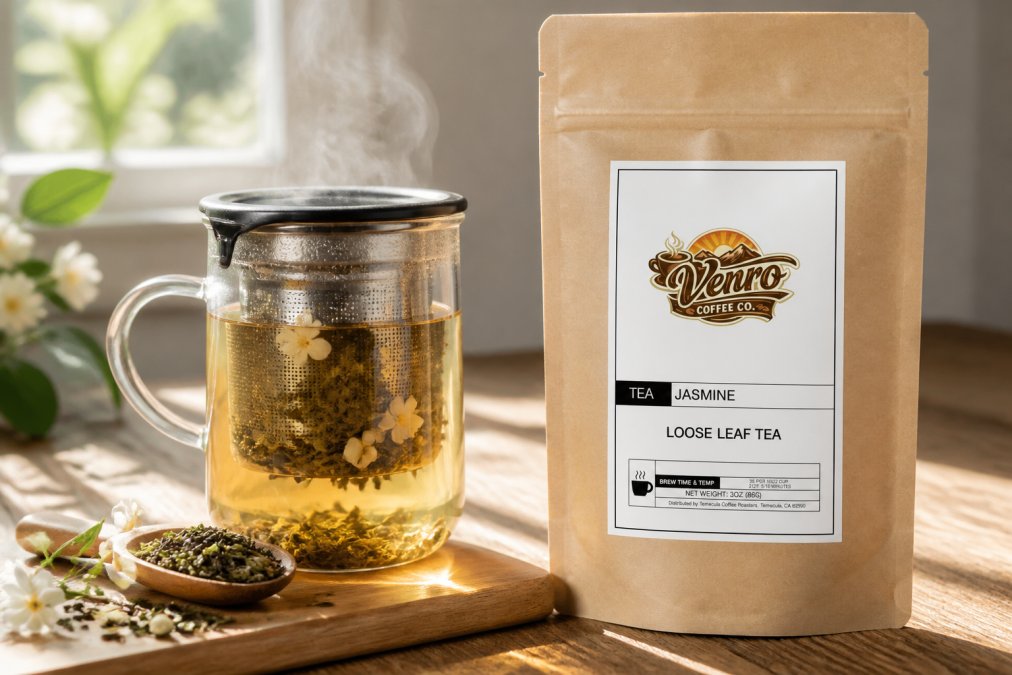
What distinguishes this selection is leaf quality. The green tea base is whole leaves that unfurl completely during brewing, delivering full terroir alongside jasmine character. Most jasmine teas use lower-grade green tea because jasmine masks quality issues. Venro starts with premium green tea and adds jasmine thoughtfully. The difference is immediately apparent.
The tea works equally well hot or poured over ice. At $20.99, the price reflects labor-intensive pairing and base leaf quality. Best for afternoon tea occasions, relaxation moments, or anyone exploring floral tea without heavily scented blends.
2. Venro Coffee Co. Moroccan Mint Tea: Refreshing Energy
This blend combines gunpowder green tea with fresh, vibrant spearmint. Gunpowder leaves are tightly rolled, preserving oxidation level and creating a slightly toasty undertone grounding the bright mint character. Spearmint is milder than peppermint, complementing rather than dominating the green tea base, both components taste equally balanced.
The blend works hot on cool mornings for clean energy lift and is exceptional brewed strong over ice on warm afternoons. Caffeine content is moderate, roughly 25-50mg per 8oz cup depending on steep time, suitable for afternoon enjoyment without coffee jitters (peer-reviewed research). The natural combination of green tea's L-theanine and caffeine creates smoother, more sustained energy compared to coffee's rapid spike and crash. At $20.99, this is Venro's entry point for anyone exploring green tea blends with culinary herbs.
Best for morning energy seekers, people reducing coffee intake without sacrificing alertness, and anyone enjoying iced tea year-round.
3. Venro Coffee Co. Hojicha Powder: Roasted Comfort
Hojicha is a Japanese roasted green tea undergoing specialized stone-roasting that transforms flavor and caffeine content. Roasting develops notes of toasted cereal, roasted nuts, and subtle caramel sweetness while reducing bitterness commonly associated with unroasted green tea. The result feels warm and comforting despite being technically a green tea.
The Venro Hojicha Powder is stone-milled into fine consistency, dissolving completely when whisked or blended, no straining required. This format is versatile: prepare traditionally with a whisk and hot water, blend into lattes with steamed milk, mix into smoothies, or incorporate into baking and desserts. The powder format means you consume the entire leaf.

Caffeine content is significantly lower than standard green teas, roughly 5-10mg per serving, making it excellent for afternoon or evening enjoyment without sleep disruption (peer-reviewed research). The roasting process that creates flavor complexity reduces caffeine, so you're not losing quality for lower stimulant content. At $20.99, this represents excellent value for a versatile, low-caffeine loose leaf option.
How to Brew Loose Leaf Green Tea for Maximum Flavor
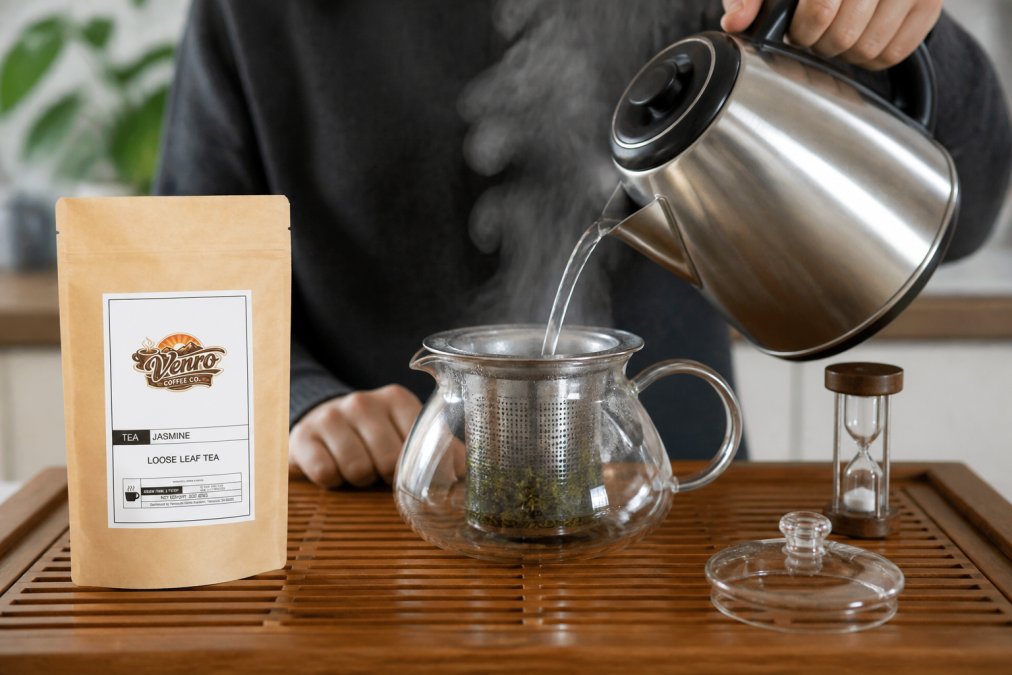
Brewing loose leaf green tea correctly requires attention to water temperature, steep time, leaf-to-water ratio, vessel type, and water quality. Each influences the final cup significantly.
Water Temperature and Its Impact on Extraction
Green teas are delicate, and water above 180°F extracts excessive tannins, creating astringency and bitterness (peer-reviewed research). The ideal range is 160-180°F depending on the specific tea. Jasmine greens do best at 160-170°F; standard green teas like gunpowder benefit from 170-180°F. If you lack a thermometer, let boiling water cool for 3-5 minutes before pouring. This simple step transforms the cup.
Temperature matters because catechins and beneficial compounds extract at different rates. Lower temperatures (160-170°F) extract delicate, floral, and vegetal notes first. Higher temperatures (175-180°F) extract these faster but also pull out tannins aggressively, creating mouth-puckering bitterness. Most people who dislike green tea have experienced only over-extracted versions brewed with water that was too hot.
Water Quality: The Overlooked Variable
Water quality directly affects flavor extraction and terroir expression. Tap water containing chlorine, fluoride, or high mineral content interferes with tea's flavor compounds. Chlorine masks delicate floral and vegetal notes. If your tap water is heavily chlorinated, let it sit uncovered for 15-20 minutes before heating, or use a carbon filter pitcher.
Hard water (high in calcium and magnesium) reduces extraction efficiency and creates muted flavor. If you have hard water, use filtered water for brewing. Distilled water is too pure and makes tea taste flat. The ideal is filtered water removing chlorine and excess minerals while retaining some mineral content. Standard pitcher filters (Brita, PUR) achieve this adequately.
Vessel Type: How Teaware Shapes the Experience
The vessel you brew in influences extraction rate, heat retention, and your ability to observe the tea's transformation:
- Glass infuser with basket: Allows you to watch leaves unfurl, helping you judge extraction visually. Glass is thermally neutral and doesn't absorb flavors. The basket design gives leaves room to expand fully, essential for whole leaf green tea. Most versatile for home brewing.
- Gaiwan (Chinese lidded bowl): A traditional vessel with small bowl, saucer, and lid. Allows precise temperature control and enables multiple short infusions (30-60 seconds each) from the same leaves, revealing how flavor evolves across steeps. Ideal for exploring terroir.
- Ceramic or porcelain teapot: Retains heat well for longer steeps. Ceramic is porous and absorbs flavors over time, so dedicated teapots perform better. The enclosed environment prevents observing extraction but creates consistent steeps.
- Metal infuser (stainless steel): Durable and neutral but hides what's happening inside. Metal conducts heat quickly, potentially continuing extraction after removal from the cup, leading to slight over-extraction.
For exploring full complexity of quality organic green tea, a glass infuser or gaiwan is superior because both allow full leaf expansion and provide visual feedback on extraction.
Steep Time and Re-steeping Strategy
Steep time for loose leaf green tea typically ranges from 2-4 minutes for the first infusion. Start at 2 minutes, taste, and adjust upward if needed. The advantage of loose leaf is the ability to re-steep the same leaves multiple times. After the first infusion, add 30 seconds to each subsequent steep. Quality loose leaf green tea produces 3-5 excellent infusions from the same leaves, with flavor evolving across each one.
The first steep extracts bright, vegetal, and floral notes. The second steep (after 2.5-3 minutes) often tastes smoother and slightly sweeter. By the third steep, you may taste nutty or mineral notes not apparent initially. This progression is part of terroir expression, you're tasting how the tea's complexity unfolds as extraction deepens.
Leaf-to-Water Ratio
Leaf-to-water ratio matters more than people realize. A common mistake is using too little tea. Start with one heaping teaspoon of loose leaf per 8 ounces of water. If you prefer stronger tea, add more leaves rather than extending steep time. Longer steeps create bitterness; more leaf creates depth and complexity.
Putting It Together: A Practical Brewing Protocol
For optimal results with organic loose leaf green tea:
- Use filtered water (chlorine removed, some minerals retained).
- Heat to 160-180°F depending on tea type.
- Use one heaping teaspoon per 8 ounces of water.
- Steep 2-3 minutes for the first infusion in a glass infuser or gaiwan.
- Observe leaves unfurling; visual feedback helps you learn when extraction is complete.
- Re-steep the same leaves 3-4 times, adding 30 seconds to each subsequent steep.
- Taste across infusions to experience how terroir and flavor complexity evolve.
Loose Leaf vs Tea Bags: Why Quality Matters
Tea bags contain broken leaves, dust, and fannings, byproducts of processing whole leaves. These small particles have significantly more surface area, extracting faster and more completely, resulting in faster brew time but also faster over-extraction, creating astringency and bitterness.
Whole loose leaf tea brews more slowly because leaf structure is intact. This slower extraction allows you to taste the tea's complexity, subtle flavor notes distinguishing quality green tea from generic options. You also get the ability to re-steep, extracting value across multiple infusions rather than one quick steep.
The environmental argument is straightforward. Tea bags require packaging, bleaching, and disposal. Loose leaf requires only a compostable infuser and can be disposed of in yard waste. The leaf quality argument is equally clear: loose leaf comes from whole leaf, while bags contain processed remnants.
A quality loose leaf green tea steeped correctly delivers more flavor complexity, better mouthfeel, and the ability to be re-steeped multiple times. A tea bag, even containing decent leaf, delivers a one-dimensional cup because dust extracts all its flavor in the first steep.
How to Clean a Stainless Steel Tea Kettle
Stainless steel tea kettles are durable and neutral for brewing but require regular cleaning to prevent mineral buildup. The most common issue is limescale accumulation from hard water, appearing as white or gray interior deposits.
For routine cleaning, empty the kettle and rinse with hot water after each use. If deposits have formed, fill the kettle halfway with equal parts white vinegar and water. Bring to a boil, then let sit for 15-20 minutes. The acidity dissolves mineral buildup. Pour out the solution and rinse thoroughly multiple times to remove vinegar smell.
For stubborn deposits, use a soft-bristled bottle brush or cloth to scrub gently after the vinegar soak. Avoid steel wool or abrasive scrubbers, which scratch stainless steel and create surfaces where deposits accumulate more easily. If the exterior has water spots or fingerprints, wipe with a soft cloth dampened with vinegar, then dry immediately.
To prevent future buildup, empty the kettle completely after each use rather than leaving water sitting. If you have hard water, consider using filtered water, which significantly reduces mineral accumulation. Store the kettle with the lid off so the interior dries completely between uses.
What to Look for When Selecting Organic Green Tea
When evaluating organic loose leaf green tea, several criteria separate quality selections from mediocre ones. Start with certification verification. Authentic USDA organic certification means the tea was grown without synthetic pesticides, herbicides, or chemical fertilizers. This certification is third-party verified and appears on product packaging. If a tea claims to be organic but lacks this certification, treat the claim skeptically.
Leaf appearance is the second criterion. Quality loose leaf green tea shows whole leaves, not broken pieces or dust. Hold the tea up to light; you should see intact leaf structure. Color should be vibrant green, not dull or brownish (indicating age or improper storage). Aroma should be fresh and clean, not musty or stale.
Sourcing transparency matters increasingly. The best producers disclose their tea gardens, harvest seasons, and processing methods. First flush teas (harvested in early spring) are generally superior to later harvests because leaves are younger and more delicate. Single-origin teas allow you to taste terroir; blended teas can be excellent but obscure origin information.
Heavy Metal and Pesticide Testing: The Critical Transparency Gap
Heavy metal and pesticide testing is where transparency becomes genuinely critical. Green tea can accumulate lead and cadmium from soil, particularly in older tea gardens or regions with industrial pollution. Reputable producers test their finished tea for these contaminants and should provide Certificates of Analysis (COAs) upon request or published on their website.
When reviewing a COA, look for these specifics:
- Lead content: Most quality producers maintain levels below 2 parts per billion (ppb). Some premium producers test below 1 ppb. Request the specific number.
- Cadmium content: Quality producers typically maintain cadmium below 0.5 ppb.
- Pesticide residues: The test should specify which pesticides were screened (at minimum: organophosphates, pyrethroids, and neonicotinoids). Results should show "non-detectable" or "below limit of detection."
- Testing lab: Verify the COA comes from an accredited third-party lab, not the producer's internal testing. Labs should hold ISO 17025 accreditation or equivalent.
- Test date: COAs should be recent (within 6-12 months of purchase). Tea quality degrades over time.
If a producer won't disclose testing results, won't name their testing lab, or claims testing is "proprietary," that's a significant red flag. Transparency on safety is non-negotiable for a product you consume daily.
Packaging affects freshness significantly. Loose leaf tea should be stored in opaque, airtight containers away from light and heat. Paper bags are insufficient, allowing air exchange and light exposure that degrade tea quality. Look for producers packaging in opaque kraft bags with one-way valves or offering resealable tins.
Price is a legitimate quality indicator within reason. Quality organic loose leaf green tea costs more because organic farming requires more labor, yields are lower, and certification involves costs. However, premium pricing doesn't guarantee quality. Compare price to leaf quality, sourcing transparency, testing disclosure, and COA availability rather than accepting premium pricing at face value.
Frequently Asked Questions
What is the best brand of organic loose leaf green tea?
The best organic loose leaf green tea depends on your taste preferences and brewing style. Venro Coffee Co. offers several excellent options: Jasmine Green Tea for floral, delicate flavor; Moroccan Mint for refreshing energy; Hojicha for roasted comfort; and Premium Matcha for ceremonial-grade quality. Each brand emphasizes USDA organic certification, careful sourcing, and hand-selected leaves. Look for brands that provide transparency about their harvesting season, tea grade, and testing for heavy metals and pesticides.
How do you tell if loose leaf green tea is high quality?
High-quality organic loose leaf green tea shows several markers: intact, whole leaves rather than dust or fragments; vibrant color indicating freshness; a strong, pleasant aroma; and certification from USDA organic standards. Premium teas specify their harvesting season (first flush teas are prized for complexity) and tea grade. Brands offering lab transparency for heavy metal and pesticide testing demonstrate commitment to safety. The terroir, or regional characteristics, also matters, Japanese greens differ distinctly from Chinese varieties in steaming versus pan-firing process.
What are the benefits of choosing organic loose leaf tea over tea bags?
Loose leaf green tea offers superior flavor, quality, and environmental benefits. Whole leaves release more catechins and antioxidants during steeping compared to broken leaves in bags. Loose leaf provides better control over steeping time and water temperature, allowing you to extract the optimal flavor profile and umami notes. Loose leaf also reduces packaging waste and typically contains no bleach or adhesives found in some tea bags. Most premium organic teas are sold loose leaf because the larger leaves preserve freshness and aroma longer than pre-bagged options.
How should you store loose leaf green tea to maintain freshness?
Store loose leaf green tea in an airtight container away from heat, light, and humidity. Glass jars with tight seals or opaque containers work best, avoid clear containers that expose tea to light. Keep tea away from strong-smelling foods and spices that can affect the delicate flavor. Store at room temperature, never in the refrigerator or freezer, as moisture can degrade quality. Properly stored organic loose leaf green tea maintains peak freshness for 6-12 months. Check the aroma and color regularly; fading indicates the tea is losing its antioxidant potency and complex flavor notes.
What makes USDA organic certification important for green tea?
USDA organic certification ensures that loose leaf green tea is grown without synthetic pesticides, herbicides, or fertilizers. This matters because tea leaves absorb water and nutrients directly from soil, non-organic farming practices can leave residues. Certified organic tea undergoes rigorous inspection and documentation of growing practices. For health-conscious consumers, organic certification provides assurance that the antioxidants and catechins you're consuming come from clean, pesticide-free sources. Many premium brands also conduct independent lab testing for heavy metals and additional toxins beyond USDA requirements.
This article was written using GrandRanker