



Order Artisan Tea Online: 2026 Guide
Table of Contents
- What Makes Artisan Tea Worth Ordering Online
- Single-Origin Tea Benefits and Why They Matter
- Loose Leaf vs. Tea Bags: What You're Actually Buying
- How to Store Artisan Tea for Freshness
- How to Brew Loose Leaf Tea Properly
- Seasonal Collections and Harvest Arrivals in 2026
- Subscription vs. One-Time Purchase: Which Model Fits Your Needs
- Ethical Sourcing and Transparency: What to Verify Before Ordering
- Steps to Order Artisan Tea Online and Ensure It Arrives Fresh
Last Updated: August 21, 2026
What Makes Artisan Tea Worth Ordering Online
When you order artisan tea online, you're accessing direct relationships with tea estates, seasonal single-origin harvests, and freshness that local shops can't match. Artisan tea represents small-batch, hand-processed leaves sourced directly from specific regions and estates, the opposite of mass production. A single-origin oolong from Taiwan's high-elevation farms tastes entirely different from a blended black tea. You're not buying generic "green tea," you're buying a cultivar from a specific harvest with tasting notes that reflect terroir the way wine does.

At Venro Coffee Co., we've built our tea selection around this principle. Every tea comes with a story: where it was grown, how it was processed, and what to expect in the cup. The real advantage of ordering online is consistency and discovery. You can find rare aged teas, seasonal first-flush harvests, and cultivars that don't exist locally, then return to the exact same tea months later rather than hoping your local shop restocked it.
Single-Origin Tea Benefits and Why They Matter
Single-origin tea is tea from a specific region, estate, or harvest, rather than a blend combining leaves from multiple sources. The benefit is profound: you taste the terroir, the combination of soil, elevation, climate, and processing technique that makes that tea unique.
A Darjeeling from the Makaibari estate tastes different from a Darjeeling from Risheehat, even though both are from the same region. The elevation, cultivar, harvest timing, and processing method all create distinct flavor profiles. Single-origin teas reward attention and precision. When you dial in the right water temperature and steeping time, you unlock layers of flavor that a generic blend simply doesn't have.
Single-origin teas also hold their value in aging. A high-quality oolong or pu-erh actually improves with time, developing deeper, more complex flavors (peer-reviewed research). A commodity blend just gets stale. This means when you order artisan tea online from reputable single-origin sources, you're making an investment that can pay off over months or years.
| Benefit | What It Means | Why It Matters |
|---|---|---|
| Terroir expression | Unique flavor tied to specific region and conditions | Taste becomes an education in geography and climate |
| Flavor complexity | Multiple layers that emerge with proper brewing | Rewards attention and improves with skill |
| Aging potential | Quality improves over time for certain types | Creates long-term value and discovery |
| Traceability | You know exactly where the tea came from | Supports ethical sourcing and transparency |
Loose Leaf vs. Tea Bags: What You're Actually Buying
The difference between loose leaf and tea bags isn't just convenience, it's the quality of what's in your cup. Loose leaf tea consists of whole leaves or large pieces. Tea bags, especially commercial ones, often contain dust and fannings: broken bits left over after processing. Those fragments brew faster but over-extract quickly, creating bitterness.
When you order artisan tea online, you're almost always getting loose leaf. Whole leaves give you control over brewing. You can steep for exactly the right amount of time, then remove the leaves. A loose leaf oolong has a clean, nuanced taste with distinct tasting notes. The same oolong in a tea bag tastes flat and over-brewed, even with identical steeping time.
Loose leaf also gives you control over strength. Want a lighter cup? Use less tea. Want it stronger? Add more. With a bag, you're locked into the manufacturer's amount. This flexibility is why serious tea drinkers never look back after switching to loose leaf.
How to Store Artisan Tea for Freshness
Artisan tea absorbs moisture, odors, and light like a sponge. How you store it after arrival determines whether you'll taste the tea as intended or a muted, stale version.
The enemy of freshness is exposure to air, moisture, light, and strong smells. A sealed container in a cool, dark place is essential. Glass or metal containers are better than kraft paper because they don't allow air exchange. Avoid clear glass; dark glass or opaque metal containers are ideal.
Temperature matters more than most realize. Room temperature is fine, but avoid anywhere that gets warm. Never store tea above the stove or near a sunny window. Heat accelerates oxidation. For teas you plan to keep for months, consider storing them in the refrigerator or freezer in an airtight container.
Humidity is the silent killer. Tea stored in humid environments will absorb moisture and develop off-flavors within weeks. A dry environment is non-negotiable. If you live somewhere humid, airtight containers are essential, and you might need a small desiccant packet.
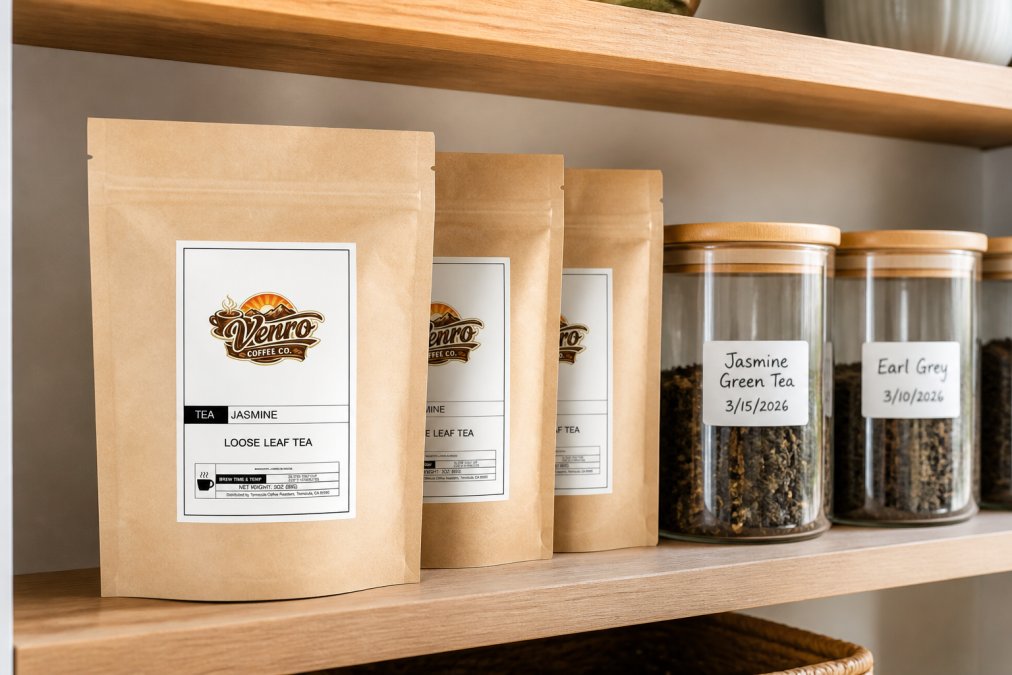
Keep tea away from strong-smelling foods and spices. Tea absorbs odors readily, so store it separately from garlic, onions, or anything pungent. Label everything with the purchase date and tea name to help you rotate stock so older tea gets used first.
How to Brew Loose Leaf Tea Properly
Brewing loose leaf tea properly is simpler than most guides suggest, but precision matters. Three variables control everything: water temperature, steeping time, and leaf-to-water ratio.
Water temperature is critical. Green teas and white teas need cooler water (160-180°F) because hot water extracts too many tannins, creating bitterness (peer-reviewed research). Black teas and oolongs handle hotter water (195-212°F). Herbal teas and rooibos can take boiling water. If you don't have a thermometer, let boiling water cool for 3-5 minutes before pouring over delicate teas.

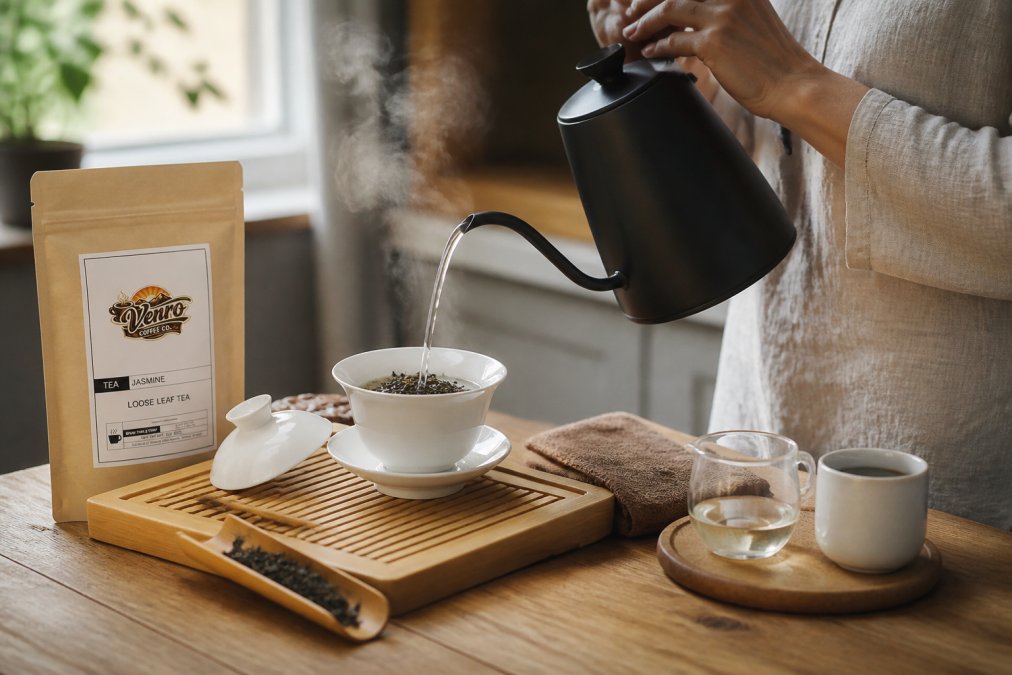
Steeping time is where most people go wrong. Longer steeping doesn't mean stronger tea, it extracts more tannins, creating harsh, bitter flavors that mask the tea's actual character. Start with the vendor's recommended time, usually 3-5 minutes for a first steep. Taste it. If it's too weak, add more leaves next time, not more time. If it's too strong, reduce the time by 30 seconds.
Leaf-to-water ratio is the third variable. A common starting point is one teaspoon of loose leaf per 8 ounces of water, but this varies by tea type. Denser teas like pu-erh need less leaf. Fluffy oolongs need more. Experiment and adjust to your taste.
A gaiwan, a small lidded cup, is the traditional brewing vessel and gives you the most control. You can see the leaves and adjust steeping time precisely. A simple infuser basket or mesh strainer works too. Most quality loose leaf tea can be steeped multiple times. After the first steep, drain the leaves completely, then re-steep with fresh hot water. The second and third infusions often taste different, sometimes better, sometimes more delicate.
Seasonal Collections and Harvest Arrivals in 2026
Artisan tea is seasonal. The best teas arrive at specific times of year, and timing matters when you order artisan tea online. Understanding the harvest calendar helps you know when to expect new arrivals and why certain teas command premium prices.
Spring harvests, typically April through May, produce the most prized teas. These are the first leaves after winter dormancy, tender, nuanced, and complex. Darjeeling first-flush, Chinese green teas, and Japanese sencha all peak in spring. These teas are expensive because the yield is low and the quality is exceptional.
Summer harvests happen June through August and produce heartier, more robust teas. These are less prized than spring but often more affordable. Oolong production shifts into high gear in summer, especially in Taiwan, where multiple harvests happen throughout the season.
Fall harvests, September through November, are when oolong production peaks. Taiwanese oolongs are renowned for their fall character: fruity, complex, and aromatic. This is also when new pu-erh raw material is processed.
Winter is quiet for most regions, but aged teas shine. Pu-erh that's been aging for years becomes drinkable. Vintage oolongs from previous seasons are released. In 2026, watch for first-flush Darjeeling to arrive in late April, Japanese green teas in May, and Taiwanese oolong to peak from June through October. Timing your purchase to these windows means you're getting the tea at peak freshness.
Subscription vs. One-Time Purchase: Which Model Fits Your Needs
When you order artisan tea online, you face a choice: subscribe to regular deliveries or buy one-time. Each model has real trade-offs.
A subscription locks you into a regular delivery schedule, typically monthly, and usually offers a small discount. The appeal is convenience: tea arrives automatically and you get a slight price break. The downside is commitment. If you travel or discover you don't like a particular blend, you're stuck unless you pause or cancel.
One-time purchases give you complete flexibility. You can experiment without committing to a subscription and pause for months if you want. The downside is you pay full price and must remember to reorder.
Most serious tea drinkers use a hybrid approach: maintain a subscription for their everyday tea and make one-time purchases for experimentation and seasonal arrivals. This gives you convenience for your staple while preserving freedom to explore.
Consider your consumption rate. If you drink two cups of tea per day, a single order lasts about a month. If you drink five cups per day, it lasts two weeks. A subscription makes sense if you're a heavy drinker who would otherwise forget to reorder.
Ethical Sourcing and Transparency: What to Verify Before Ordering
When you order artisan tea online, you're making an ethical choice whether you intend to or not. The tea industry has real problems: exploited workers, unsustainable farming, and false claims about organic or fair-trade status.
Start by looking for specificity. A reputable tea vendor can tell you the exact estate or cooperative where the tea came from. They can name the farmer or cooperative manager and describe the farming practices, processing method, and harvest date. If a vendor says "organic" but can't point to a certification or describe how the tea is actually grown, that's a red flag.
Certifications matter, but they're not sufficient. Look for Fair Trade, Rainforest Alliance, or organic certifications from recognized bodies. A tea that's certified organic was grown without synthetic pesticides, that's a real standard. A tea that claims to be "naturally grown" with no certification is just marketing.
Direct-trade relationships are worth seeking out. This means the vendor has a direct relationship with the grower or cooperative, not buying through middlemen. Direct trade typically means better prices for farmers and more transparency. Ask about water usage and environmental impact. A vendor that sources from regions with adequate rainfall or uses water-efficient processing methods is making an ethical choice. Worker conditions are harder to verify, but vendors should have information about cooperatives, wages, and support for farming communities.
Steps to Order Artisan Tea Online and Ensure It Arrives Fresh
Ordering artisan tea online is straightforward, but a few steps ensure you get fresh tea and avoid surprises.
Step 1: Choose Your Vendor Identify a vendor that matches your priorities. Are you looking for specific regions? Do you want organic or fair-trade certified teas? Venro Coffee Co. offers a curated selection of artisan teas with detailed descriptions, harvest dates, and brewing guides. Spend time reading product descriptions; good vendors tell you exactly what you're buying.
Step 2: Read the Product Description Carefully Look for: harvest date, processing method, tasting notes, brewing recommendations, and certifications. A good description tells you if the tea is fresh (harvest date within the last 6 months), how to brew it, and what to expect in the cup.
Step 3: Check the Roast or Harvest Date This is critical. A tea harvested six months ago is fine. A tea harvested two years ago is stale. The vendor should clearly state the harvest or roast date. If they don't, ask before buying.
Step 4: Review Shipping Options Look for expedited shipping, especially during warm months. Tea degrades in heat and humidity. A package sitting in a hot warehouse for two weeks arrives in worse condition than one that arrives in three days.
Step 5: Place Your Order Add your selections to the cart, choose your shipping method, and complete checkout. If you're trying a vendor for the first time, start with a smaller order so you can evaluate their quality and service.
Step 6: Inspect the Package Upon Arrival When the tea arrives, open it immediately. Check that the packaging is intact and sealed. Open the tea and smell it; it should smell fresh and aromatic, not musty or stale. If something seems off, contact customer service. Most reputable vendors replace damaged or stale tea without question.
Step 7: Transfer to Proper Storage Once you've verified the tea is fresh, transfer it to an airtight container away from light, heat, and moisture. This is where most people lose quality after receiving fresh tea.
Step 8: Brew and Taste Follow the vendor's brewing recommendations for your first cup. Take notes on what you taste; this helps you remember what you liked and identify patterns in your preferences.
When you order artisan tea online, you're choosing quality and intentionality over convenience. The process takes more thought than grabbing a box of tea bags at the grocery store, but the difference in your cup is profound. Venro Coffee Co. has built our tea selection around this principle: every tea we offer comes with a story, a harvest date, and brewing guidance to help you experience it as intended. Start with one tea that genuinely interests you, brew it carefully, and let the quality speak for itself.
Frequently Asked Questions
Q: What should I look for when ordering loose leaf tea online?
A: Prioritize freshness indicators: look for harvest dates on product pages, not just vague "recently roasted" claims. Check whether the supplier sources directly from tea estates or uses wholesalers. Examine the tasting notes for specificity ("floral jasmine, light fruit, silky" beats generic "smooth"). Verify loose leaf format, not dust or fannings. Read customer reviews mentioning freshness and flavor clarity. Reputable artisan suppliers like Venro Coffee Co. clearly list origin, processing method, and brewing instructions.
Q: How does shipping affect the quality of artisan tea?
A: Tea degrades through exposure to light, oxygen, humidity, and temperature fluctuations during transit. Fast shipping (2-3 days) minimizes oxidation damage compared to week-long delays. Packaging matters significantly: airtight kraft pouches with oxygen absorbers protect better than paper envelopes. Upon arrival, transfer tea immediately to airtight glass or metal containers away from sunlight. Ordering in smaller quantities more frequently beats stockpiling, which compounds storage risks over weeks or months.
Q: What is the difference between commercial tea and artisan tea?
A: Commercial tea prioritizes volume and consistency through blending tea dust, fannings, and lower-grade leaves. Artisan tea uses whole leaves, single-origin sources, and smaller batches to showcase terroir and cultivar character. Artisan producers often direct-source from specific tea estates, control processing methods, and document harvest dates. You'll notice the difference in steeping clarity, flavor complexity, and the ability to re-steep multiple times. Artisan tea costs more per serving but delivers superior tasting notes and freshness that justify the premium for tea connoisseurs.
Q: How do I ensure the artisan tea I order is fresh?
A: Verify the harvest date on the product page before ordering; prioritize teas harvested within the last 6 months. Choose suppliers that roast or process on a rolling basis rather than stockpiling inventory. Request expedited shipping to minimize transit time. When your order arrives, inspect the package for proper sealing and airtight packaging. Brew a test cup immediately: fresh artisan tea produces clear, vibrant liquor with distinct tasting notes. If flavor seems muted or flat, contact the supplier within 7 days. Store properly in airtight containers away from light and heat to maintain freshness after arrival.
This article was written using GrandRanker