



Impact of Altitude on Specialty Coffee Flavor Profiles
Table of Contents
- How Altitude Shapes Coffee Bean Density and Flavor
- High Altitude vs Low Altitude Coffee Taste: A Side-by-Side Comparison
- The Science of Altitude: Temperature, Maturation Rate, and Chemical Composition
- Why High-Altitude Beans Are Considered Specialty Grade
- The Altitude Paradox: When High Elevation Doesn't Guarantee Better Flavor
- How Processing Methods Interact with Altitude
- Climate Change and the Future of Coffee Altitude Zones
- Practical Brewing Adjustments for High-Density Beans
- Frequently Asked Questions
Last Updated: September 25, 2026
How Altitude Shapes Coffee Bean Density and Flavor
The impact of altitude on specialty coffee flavor profiles starts with a simple physical fact: coffee grown higher develops denser beans, and denser beans concentrate the sugars and acids that define a great cup. This guide from Venro Coffee Co. breaks down why elevation matters, where the rule holds, and where it quietly falls apart.
Higher elevations bring cooler air and wider day-to-night temperature swings. Those swings slow the coffee cherry's maturation rate, giving the bean more time to develop sugars, lipids, and aromatic compounds before harvest. Slower maturation means denser tissue, and density is the single best predictor of how a bean will roast and taste.
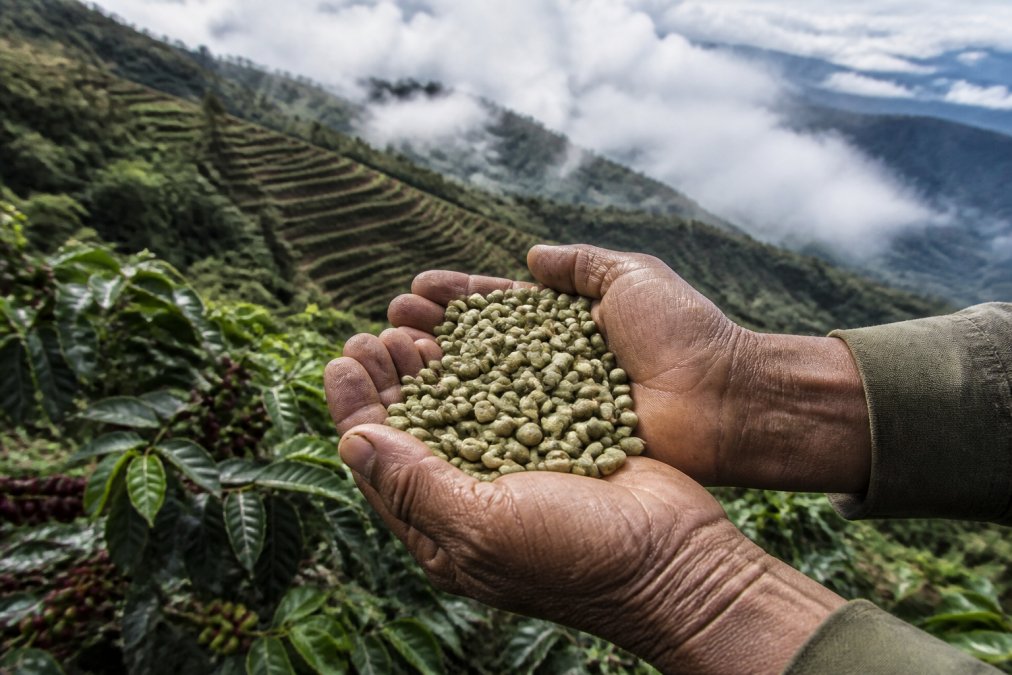
Why Bean Density Matters for Roasting and Brewing
Dense beans absorb heat more slowly and evenly, which gives a roaster a wider window to develop flavor without scorching the outside. That density also changes how you brew. A hard, high-grown bean resists extraction, so it rewards a finer grind, hotter water, and a longer contact time than a soft lowland bean.
A common mistake is treating every bag the same at the grinder. If your high-altitude pour-over tastes thin and sour, the fix is usually a finer grind, not more coffee.
High Altitude vs Low Altitude Coffee Taste: A Side-by-Side Comparison
High-altitude coffee tends to taste brighter, more acidic, and more aromatic, while low-altitude coffee tastes rounder, sweeter, and lower in acidity. The table below summarizes the core differences before we unpack each one.
| Trait | High Altitude | Low Altitude |
|---|---|---|
| Bean density | High, hard | Lower, softer |
| Acidity | Bright, complex | Muted, soft |
| Aromatics | Pronounced, layered | Subtle, simple |
| Body | Medium to full | Light to medium |
| Maturation | Slow | Fast |
| Typical use | Pour-over, filter | Drip, cold brew |
Acidity, Aromatics, and Body: What Changes with Elevation
The acidity in high-grown coffee reads as complex rather than sharp. Cool nights slow the breakdown of chlorogenic acid, and that slower chemistry leaves more of the bright, fruity character intact. Aromatics follow the same pattern: gradual sugar development builds flavor precursors that survive roasting and land in the cup as nuance and clarity.
Body works differently. Dense beans often carry more dissolved solids, giving a fuller mouthfeel, but a light roast can thin that out. The varietal and the roast profile still get a vote. A washed Bourbon grown at 1,900 meters and a natural process bean from the same slope will taste nothing alike, even at identical density.
The Science of Altitude: Temperature, Maturation Rate, and Chemical Composition
Temperature is the engine behind everything else. Every rise in elevation drops the average temperature, and that cooling slows the coffee cherry's growing cycle. A slower cycle means enzymatic reactions have more time to convert starches into sugars and to build the lipids that carry flavor through the roast.
The chemical payoff shows up in three places:
- Sugar development increases, feeding sweetness and caramelization during roasting.
- Lipids accumulate in the bean, improving body and mouthfeel.
- Chlorogenic acid degrades more slowly, preserving the bright, structured acidity that defines specialty grade coffee.
Caffeine content barely moves with elevation. The popular idea that high-grown beans carry more caffeine is largely a myth; the difference is flavor, not stimulation.
Why High-Altitude Beans Are Considered Specialty Grade
High elevation does not automatically create specialty coffee, but it stacks the odds. The Specialty Coffee Association's grading standards reward cup quality, and the slow-matured beans from high zones consistently score higher on sensory analysis for acidity, sweetness, and flavor clarity. That is why so many single-origin lots carry an elevation figure on the bag.
The Altitude Paradox: When High Elevation Doesn't Guarantee Better Flavor
The altitude paradox is the gap between elevation as a number on a bag and elevation as a flavor outcome. Two farms at the same height can produce wildly different cups, and the reason usually has nothing to do with the mountain. Latitude, microclimate, shade, soil, varietal, and picking discipline all shift the result, and in some cases they outweigh the elevation figure entirely.
Start with latitude. A farm at 1,500 meters near the equator sits closer to the sun's seasonal path than a farm at 1,900 meters well outside the tropics. The equatorial farm often sees more intense midday radiation and a tighter day-to-night temperature swing, which can slow cherry maturation just as effectively as a higher elevation would. This is why Colombian lots grown around 1,600 to 1,800 meters frequently cup alongside East African lots grown above 1,900 meters: the tropical latitude does part of the work that elevation does elsewhere.
Microclimate is the second variable. A valley floor at 1,700 meters can trap cold air at night and warm slowly in the morning, mimicking the slow-maturation conditions of a slope 200 meters higher. A ridge at the same elevation, fully exposed to wind and sun, can mature fruit faster and lose the aromatic complexity the elevation number implies. Shade trees, Inga, Erythrina, and similar nitrogen-fixing species common on Latin American farms, moderate temperature swings under the canopy, which is one reason shade-grown lots from moderate elevations can outperform sun-grown lots from higher ones.
Varietal is the third. A Bourbon or Typica planted at 1,400 meters will often show more acidity and clarity than a Catimor or Robusta-hybrid planted at 1,800 meters, because the varietal's genetic ceiling on sugar and acid development is lower. Elevation raises the ceiling; the varietal sets it. A farm growing a high-yielding, disease-resistant hybrid at a high elevation can still produce a cup that scores below a well-handled heirloom varietal grown lower.
Soil and picking discipline close the loop. Volcanic soils with high organic matter and good drainage tend to support slower, more even maturation. Selective picking, harvesting only ripe cherries rather than strip-picking the branch, preserves the sugar-to-acid balance that altitude built. A high-elevation farm that strip-picks and processes mixed-ripeness fruit will lose most of its elevation advantage before the coffee ever reaches a roaster. Consistent agricultural practices ultimately determine whether the inherent high elevation coffee benefits manifest in the cup or remain locked away by poor post-harvest handling.
The practical takeaway: treat elevation as one input among several, not a verdict. When you see "high altitude" on a bag with no tasting notes, no varietal, and no processing detail, the claim is doing marketing work rather than flavor work. The lots that consistently deliver on their elevation figure are the ones where latitude, microclimate, varietal, and picking discipline all point the same direction.
How Processing Methods Interact with Altitude
Processing is the variable that decides which of altitude's built-in qualities actually reach the cup. A dense, high-grown bean arrives at the mill with more sugar, more lipid, and more intact chlorogenic acid than a soft lowland bean. What happens next, washed, natural, honey, or wet-hulled, determines whether those compounds read as clarity, as fruit, or as something else entirely.
Washed is the process that most directly translates altitude into cup clarity. The fruit is removed before drying, so the bean ferments and dries with almost nothing between it and the air. On a dense high-grown bean, that means the bright, structured acidity and floral aromatics survive intact. This is why washed Ethiopian and Kenyan lots from high elevations so often taste of jasmine, bergamot, and stone fruit rather than of the fermentation itself. The trade-off is that washed processing exposes flaws: a thin or hollow high-grown bean has nowhere to hide when the fruit is stripped away.
Natural processing does the opposite. The cherry dries around the seed for weeks, and the fruit's sugars and acids migrate into the bean. On a dense high-altitude bean, that layering produces the blueberry, strawberry, and wine notes that made naturally processed Ethiopian lots famous. The mechanism is straightforward: the bean already has a high sugar concentration from slow maturation, and the drying fruit adds more on top. The risk is that natural processing can bury the delicate floral and citrus notes that altitude built, and on a lower-density bean it can tip into fermented or boozy flavors.
Honey processing sits between the two. Some mucilage is left on the bean during drying, which adds body and a rounded sweetness without the full fruit intensity of a natural. On high-grown beans, honey processing often preserves the acidity while softening its edges, a useful middle path when a washed lot feels too sharp and a natural feels too heavy.
Wet-hulled, the traditional Indonesian method, is the exception that proves the rule. The bean is hulled while still moist, which produces the earthy, cedar, and full-bodied profile associated with Sumatra. The process deliberately trades the delicate acidity that high elevation builds for depth and weight. A wet-hulled bean grown at 1,500 meters will not taste like a washed bean grown at 1,500 meters, and the elevation figure alone will not predict the cup.
The practical pattern: altitude sets the raw material, and processing decides which of its qualities are amplified, preserved, or overwritten. When you compare two bags with the same elevation figure, the processing method is often the single best predictor of what you will taste.
Climate Change and the Future of Coffee Altitude Zones
Warming temperatures are pushing viable coffee growing zones uphill, and that shift threatens the highest farms first because there is nowhere left to climb. Producers in traditional high-altitude regions are already testing shade systems, new varietals, and relocated plots to hold onto the flavor profiles their elevation once guaranteed.
This is the angle most guides skip. The elevation on a 2026 bag may not describe the same conditions a 2010 bag did, and the specialty coffee world is watching which zones adapt and which quietly fall out of range.
Practical Brewing Adjustments for High-Density Beans
High-density beans need more from your brew method, not less. Because they resist extraction, the standard recipe often under-extracts them, leaving a cup that tastes sour, thin, and hollow. Three adjustments fix most of it.
- Grind finer. Step down one setting at a time until the cup sweetens and gains body.
- Raise the water temperature. Dense beans tolerate hotter water without turning bitter.
- Extend contact time. Add 15 to 30 seconds to your pour-over or French press steep.
If you are coming from a soft lowland bean, expect to re-dial your grinder entirely. The same setting that worked before will taste weak on a dense high-grown lot.
Venro Coffee Co. roasts to order in small batches and ships direct, so the density and aromatics built at altitude reach your grinder intact rather than fading on a shelf. Our Tanzania Single Origin, grown between 1,200 and 1,900 meters, shows exactly what slow maturation does for a cup: pear, jasmine, and strawberry in a clean, elegant finish.

Altitude sets the stage for flavor, but it never writes the whole script. Density, maturation rate, and chemical composition give high-grown beans their potential, and processing, roasting, and your own brew adjustments decide how much of it lands in the cup. Venro Coffee Co. makes that final step easy with freshly roasted single-origins like our Ethiopia Natural and Bali Blue, plus convenient capsule options for busy mornings. Get started with Venro Coffee Co. and taste what carefully sourced, high-altitude beans can do in your daily ritual.
Frequently Asked Questions
Why does high-altitude coffee taste better?
High-altitude coffee tastes better because cooler temperatures slow the cherry's maturation rate, allowing sugars and aromatic compounds to develop more fully. This produces denser beans with complex acidity, layered flavors, and a cleaner cup. The slower growing cycle also concentrates flavor precursors that survive roasting, giving high-grown coffee its distinctive nuance and clarity.
What is considered high altitude for coffee production?
In most specialty coffee regions, high altitude means 1,200 to 2,000 meters above sea level. Coffees grown above 1,500 meters are typically classified as strictly high grown. The exact threshold varies by latitude: closer to the equator, farms need higher elevations to achieve the cooler temperatures that slow maturation and build bean density.
How does altitude affect the acidity of coffee?
Altitude increases coffee's perceived acidity, but in a desirable way. Cooler growing conditions slow sugar development and preserve chlorogenic acid and other flavor precursors, resulting in bright, complex acidity rather than sharp sourness. Lowland coffees tend to have lower acidity and a flatter cup, which is why high-grown beans often show more fruit-forward and floral notes.
Does coffee grown at lower altitudes have less flavor?
Lowland coffee is not flavorless, but it typically has less complexity. Warmer temperatures speed maturation, producing softer beans with lower density and simpler sugar profiles. The result is a cup that may taste smooth and earthy but lacks the layered acidity and aromatic nuance of highland coffee. Processing and roast profile can still elevate lowland beans, but the ceiling is lower.