



Can You Taste Differences in Coffee? A Guide
Table of Contents
- Yes, You Can Taste Real Differences in Coffee
- How to Tell If Coffee Beans Are Fresh
- The Impact of Grind Size on Coffee Taste
- Single Origin vs Blend Coffee Taste
- Roast Levels and Flavor Development
- Water Temperature and Extraction Chemistry
- Brewing Methods Shape Your Flavor Profile
- Train Your Palate: A Beginner's Tasting Guide
- Why Your Coffee Tastes Different Every Time
- Conclusion: Elevate Your Coffee Experience
Last Updated: August 17, 2026
Yes, You Can Taste Real Differences in Coffee
Most people can develop the sensory skills to detect meaningful variations between beans, roasts, and brewing methods. The real question isn't whether you can taste the difference, it's whether you know what to look for.
At Venro Coffee Co., we work with coffee enthusiasts surprised by how much variation exists in what many treat as a simple beverage. A single-origin Ethiopian coffee tastes nothing like a Brazilian blend. The difference comes down to how beans are grown, processed, roasted, and brewed. Each step creates measurable changes in flavor profile, acidity, body, and mouthfeel that your palate can learn to recognize.
This guide walks you through the factors that create genuine taste differences in coffee, how to train your palate to detect them, and why your cup might taste different every time you brew.
How to Tell If Coffee Beans Are Fresh
Fresh coffee beans are the foundation of any cup worth drinking. The moment beans are roasted, they begin losing volatile aromatic compounds that create complexity and brightness. Beans roasted more than four weeks ago will taste noticeably flatter than fresh ones.
The best way to assess freshness is the roast date on the bag. Beans reach peak flavor between 5-14 days after roasting, when CO2 has mostly escaped but aromatic compounds remain intact. After that window, they gradually decline. By week four, you'll notice a shift toward dull, papery flavors.
Fresh beans have an oily or slightly glossy appearance, especially darker roasts. When you open a fresh bag, you should smell a strong, pleasant aroma from escaping CO2 and volatile compounds. Stale beans smell muted or musty.
Storage conditions matter enormously. Keep beans in an airtight container away from direct sunlight and heat. A cool, dark cabinet works well for beans you'll use within a month. The real enemy is exposure to oxygen and temperature fluctuation.
The Impact of Grind Size on Coffee Taste
Grind size directly controls how quickly water extracts flavor compounds from coffee grounds. This is one of the easiest variables to observe and one of the most impactful on final taste.
Coarse grinds (like sea salt) expose less surface area to water, so extraction happens slowly. This works well for immersion brewing like French press, where grounds steep for several minutes. You get fuller body and less bitterness because the extraction window is controlled.
Fine grinds (like powdered sugar) expose maximum surface area, so extraction happens rapidly. This works for espresso and pour-over methods where water passes through quickly. But grind too fine and you over-extract, pulling out harsh, bitter compounds that ruin the cup.
Medium grinds split the difference and work for drip machines and Aeropress brewers. Inconsistent grind size means water moves through some particles faster than others, creating both under-extracted (sour) and over-extracted (bitter) flavors in the same cup.
Burr grinders outperform blade grinders because they produce uniform particle size. Blade grinders create a chaotic mix of dust and chunks, guaranteeing uneven extraction and muddled flavor. Consistent grind size is non-negotiable if you're serious about tasting differences.
Single Origin vs Blend Coffee Taste
Single-origin coffees come from a specific farm, region, or country and showcase the unique characteristics of that terroir, altitude, climate, soil, and processing method. A Kenyan coffee will have bright acidity and berry notes. A Sumatran coffee will be earthy and full-bodied.
Blends combine beans from different origins to achieve a specific flavor profile. A roaster might blend high-acidity Ethiopian beans with low-acidity Brazilian beans to create balance, or target a particular use case like espresso or breakfast.
Single origins are more complex and interesting if you're paying attention, because you're tasting the distinct characteristics of one place. Blends are more predictable and balanced. Neither is objectively better, it depends on what you're looking for.
Tasting single origins teaches you what to look for in coffee. You learn what "fruity" means when you taste a naturally processed Ethiopian. You understand "chocolate notes" when you experience a washed Brazilian. That education transfers to blends, where you can identify the individual origins contributing to the final flavor.
Venro Coffee Co. offers both single-origin options and signature blends. The Single Origin Favorites Sample Pack lets you compare beans from different regions side by side, which accelerates your palate development.
Roast Levels and Flavor Development
Light roasts preserve the origin characteristics of the beans, terroir shines through. You taste the specific fruit, floral, or tea-like notes from where the coffee was grown. Light roasts have bright acidity and lighter body.
Medium roasts balance origin character with roast-induced flavors. The beans have developed some sweetness and body from roasting, but you still taste the origin. This is the most popular roast level for good reason.
Dark roasts emphasize roast flavors over origin. Extended heat creates bold, smoky, or chocolatey notes. Origin characteristics fade into the background. Dark roasts have lower acidity and fuller body.
The relationship between roast level and extraction is important. Dark roasts are more porous and extract faster, so they need slightly coarser grinds and shorter brew times. Light roasts are denser and extract slower. If you use the same brewing parameters for both, the dark roast will taste over-extracted and harsh.
Understanding this relationship explains why your coffee tastes different when you change roasts but keep everything else the same. A light roast needs slightly more time or finer grind to fully extract. A dark roast needs less time or coarser grind to avoid bitterness.
Water Temperature and Extraction Chemistry
Water temperature and water chemistry are two distinct but equally important variables that control extraction speed and which compounds dissolve into your cup.
Temperature and Extraction Speed
Ideal brewing temperature falls between 195-205°F for most methods. Water cooler than 195°F extracts too slowly, leaving behind fruity and acidic compounds while missing sweetness and body. The result tastes thin and sour. Water hotter than 205°F extracts too quickly, pulling out bitter compounds. The result tastes harsh and burnt.
Temperature consistency matters for consistent taste. If your kettle cools from 205°F to 180°F while you brew, your extraction window shifts and your cup tastes noticeably different. A gooseneck kettle that maintains temperature helps. An electric kettle with a temperature setting gives you precision. A simple thermometer costs a few dollars and reveals exactly what's happening in your brew.
Water Chemistry: The Hidden Variable
Water quality adds another critical layer most casual drinkers overlook. Water contains dissolved minerals, primarily magnesium and calcium, measured in parts per million (ppm) or total dissolved solids (TDS). This mineral content directly affects how coffee extracts and tastes.
Hard water (typically 150-300+ ppm) contains more magnesium and calcium. These minerals enhance extraction, pulling more flavor compounds from the grounds and making coffee taste richer and more complex. However, if your water is extremely hard and your brewing parameters aren't adjusted, you risk over-extraction and harsh bitterness.
Soft water (typically 0-50 ppm) has fewer minerals and extracts more slowly and less completely. Coffee brewed with soft water often tastes flat, thin, or sour because not enough flavor compounds are being pulled from the grounds.
Medium-hardness water (50-150 ppm) is considered optimal for coffee brewing by the Specialty Coffee Association. This range provides enough minerals to enhance extraction without causing over-extraction, creating balanced, complex flavor.
Testing and Adjusting for Water Chemistry
You can test your water's mineral content with an inexpensive TDS meter (typically $15-30), available online or at aquarium supply stores. This single measurement tells you whether your water is soft, medium, or hard.
If your water is too soft (below 50 ppm), consider using filtered water that retains some minerals rather than distilled water, or add a commercial coffee water additive (like Third Wave Water or Barista Hustle Water) to increase TDS to the 50-150 ppm range.
If your water is too hard (above 200 ppm), consider using a basic water filter to reduce mineral content, or brew with slightly coarser grinds or shorter brew times to avoid over-extraction.
Why Water Chemistry Explains Taste Differences
This is a major reason why your coffee tastes different at home than at a coffee shop, or why it tastes different when you travel. Coffee shops often use filtered or treated water optimized for extraction. Your home tap water may have a completely different mineral profile. A single-origin Ethiopian coffee that tastes bright and fruity with medium-hardness water might taste flat and sour with soft water, not because the coffee changed, but because extraction changed.
Brewing Methods Shape Your Flavor Profile
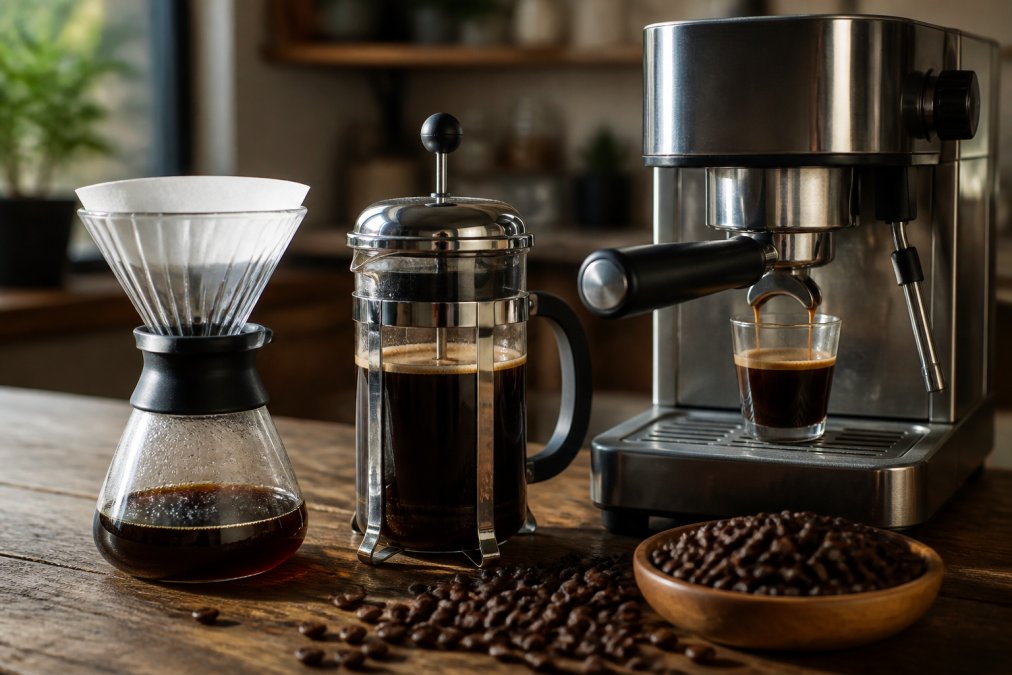
Different brewing methods extract coffee differently because of how water contacts grounds and for how long.
French press uses immersion brewing, grounds steep in hot water for 4 minutes. This long contact time pulls out more oils and body, creating a full, rich cup. The metal filter lets oils through, contributing to mouthfeel.
Pour-over uses percolation, water passes through grounds once. This shorter contact time creates a cleaner, brighter cup because paper filters trap oils. The flavor feels more delicate and nuanced.
Espresso uses pressure and very fine grounds to force rapid extraction in 25-30 seconds, creating intense, concentrated flavor with thick body and crema.
AeroPress and Moka pot fall somewhere in between. AeroPress combines immersion and pressure to create a balanced, clean cup with good body. Moka pot uses steam pressure to push water through grounds, creating a strong, concentrated brew similar to espresso but less intense.
The brewing method you choose determines what flavor profile you'll experience from any given coffee. A light roast that tastes bright and fruity in a pour-over might taste thin in a French press. A dark roast that tastes smooth in a French press might taste over-extracted in an AeroPress. There's no "best" method, there's the method that best suits the beans and roast level you're using.
Train Your Palate: A Beginner's Tasting Guide
Developing your ability to taste differences in coffee is a learnable skill that improves with practice. However, genetic and biological factors significantly influence how well you can detect subtle flavors.
Understanding Taste Perception Differences
Research in sensory science has identified distinct categories of taste perception based on fungiform papillae (taste buds) density on the tongue. Supertasters have roughly three times as many taste receptors as non-tasters, making them hypersensitive to bitter compounds and subtle flavor variations. Most people fall into the "medium taster" category, which is actually advantageous for coffee appreciation because medium tasters can develop nuanced palate skills without being overwhelmed.
Understanding where you fall on this spectrum matters. If you're a supertaster, you may find that very light roasts taste almost painfully bright, this is normal. You might prefer medium or dark roasts. If you're a non-taster, focus on body, mouthfeel, and aroma rather than subtle flavor notes.
A Structured Tasting Framework
Intentional practice improves your ability to identify and articulate what you're experiencing. Start by tasting coffee side by side. Brew two different coffees using the same method, then taste them back to back. This comparison makes differences obvious.
Pay attention to these sensory dimensions in order:
First, aroma. Smell the coffee before you taste it. Describe what you smell in simple terms: fruity, floral, nutty, earthy, chocolatey, spicy, or woody. Aroma accounts for much of what we perceive as taste and is the most accessible sensory dimension.
Second, body. Notice the weight and texture on your tongue. Does it feel light and tea-like or heavy and syrupy? Light body feels clean and bright. Heavy body feels rich and coating.
Third, acidity. Notice any brightness, tartness, or liveliness. High-acidity coffees taste crisp and alive. Low-acidity coffees taste smooth and mellow.
Fourth, flavor notes. Taste for specific flavors. Does it remind you of chocolate, berries, nuts, flowers, caramel, or spices? If you struggle with specific notes, focus on categories: Is it more fruity or nutty? More floral or earthy?
Fifth, aftertaste. Notice what lingers after you swallow. Does the flavor fade quickly or linger pleasantly?
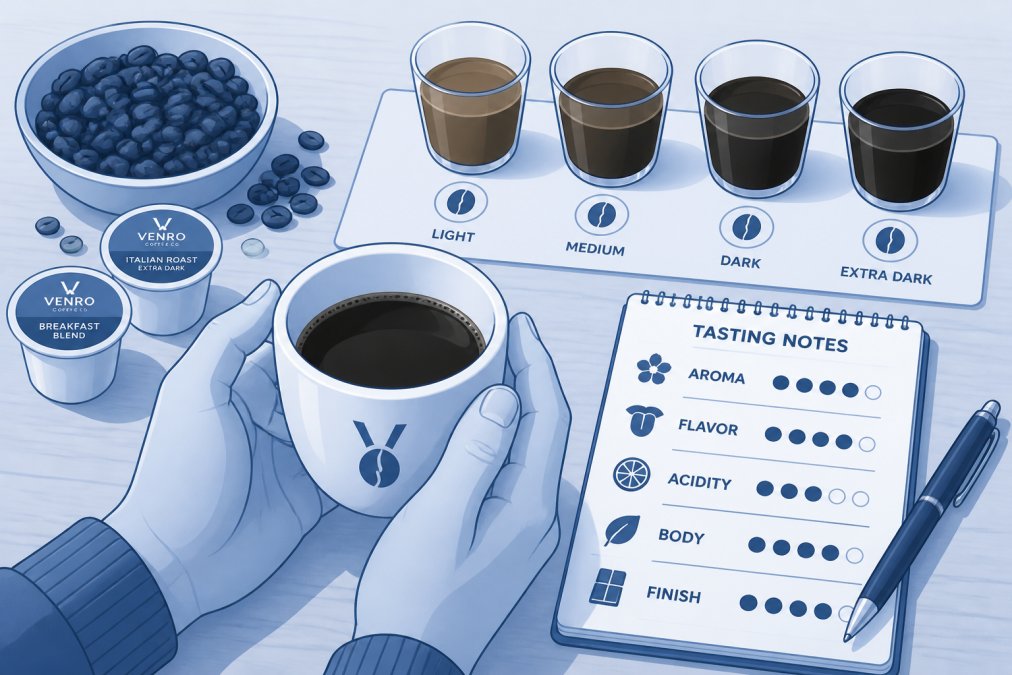
The Venro Coffee Co. Best Sellers Sample Pack and Single Origin Favorites Sample Pack are designed for comparative tasting. You get multiple distinct coffees in small quantities, perfect for side-by-side evaluation.

A practical tasting session takes 15 minutes. Brew small cups of two different coffees and taste them in the order above. Write down what you notice. Do this regularly and your palate develops quickly. After a few weeks of intentional tasting, you'll notice differences that seemed invisible before.
Why Your Coffee Tastes Different Every Time
If you've ever brewed the same coffee twice and gotten different results, you've experienced the compounding effect of multiple variables. Coffee is sensitive to small changes in grind size, water temperature, brew time, coffee-to-water ratio, water quality, bean freshness, and equipment condition.
A 5-degree shift in water temperature changes extraction. A slightly coarser grind extends brew time by 30 seconds. A different water source introduces new minerals. Any one of these shifts the flavor noticeably.
This is why consistency matters. Use a scale to measure beans and water precisely. Use a thermometer to verify water temperature. Use a timer for brew time. Use the same grind setting. These aren't obsessive habits, they're the only way to isolate what's actually changing.
Many people discover their coffee tastes better when they start controlling variables. They weren't bad at brewing, they just had no way to know what was changing between cups. Once you control the variables you can control, you can taste the actual differences in the coffee itself.
You can absolutely taste real differences in coffee. The ability isn't special or rare, it's a skill anyone can develop by understanding what creates those differences and practicing intentional tasting. The factors that matter most are freshness, grind consistency, water temperature, and brewing method. Control these variables and you'll taste the actual character of the coffee.
Venro Coffee Co. makes this exploration easier by delivering freshly roasted specialty coffees directly to your door. When you start with genuinely fresh, carefully sourced beans, whether single origins that showcase terroir or blends designed for specific brewing methods, you have something worth tasting carefully. Pair that with intentional brewing and a willingness to pay attention, and you'll discover that coffee tastes far more interesting than you realized. Shop Coffee and start tasting the difference.

Frequently Asked Questions
Why does coffee taste different every time I brew it?
Coffee taste varies due to multiple factors: water temperature, grind consistency, brewing time, bean freshness, and even water chemistry. Small changes in any of these variables shift the extraction rate, which determines whether your cup tastes balanced, under-extracted (sour), or over-extracted (bitter). Consistent measurements and technique reduce these variations.
How can I tell if coffee beans are fresh?
Fresh beans have a vibrant aroma and visible oils on the surface (especially in darker roasts). Check the roast date on the bag, beans peak within 2-4 weeks of roasting. Stale beans smell flat or cardboard-like and produce less crema in espresso. Venro Coffee Co. ships freshly roasted beans directly to your door, ensuring peak flavor when they arrive.
Does grind size really affect how coffee tastes?
Absolutely. Finer grinds expose more surface area, speeding up extraction and often producing bitter, over-extracted coffee if brewed too long. Coarser grinds slow extraction, risking sour, under-extracted flavors. Each brewing method requires a specific grind size: espresso needs fine, French press needs coarse, pour-over needs medium. Matching grind to method is essential for balanced flavor.
What's the difference between single-origin and blend coffee taste?
Single-origin beans express the terroir of their region, a Peruvian coffee might taste fruity and bright, while a Bali bean offers earthy, cocoa notes. Blends combine beans from multiple origins to create balanced, consistent flavor profiles. Blends often taste smoother and more complex; single-origins showcase distinct regional characteristics. Both offer excellent tasting experiences; your choice depends on whether you prefer complexity or clarity.
This article was written using GrandRanker