



Is Specialty Coffee Worth the Price? A Data-Driven Guide
Table of Contents
- Is Specialty Coffee Worth the Price? The Short Answer
- Specialty Coffee vs Regular Coffee: Understanding the Difference
- Cost of Specialty Coffee: Breaking Down What You're Actually Paying For
- Factors Influencing Specialty Coffee Pricing
- Flavor Profiles in Specialty Coffee: Can You Actually Taste the Difference?
- Ethical Sourcing Coffee: Premium Price or Premium Practice?
- The Diminishing Returns Curve: When More Expensive Isn't Better
- Storage and Shelf Life: Protecting Your Investment
- Is Specialty Coffee Worth It? The Verdict
- Conclusion
Last Updated: July 30, 2026
Is Specialty Coffee Worth the Price? The Short Answer
Whether is specialty coffee worth the price depends on what you value most. At Venro Coffee Co., we've spent years analyzing this exact question through the lens of actual consumers, and the answer isn't as straightforward as "yes" or "no." If you prioritize flavor complexity, freshness, and traceability, specialty coffee delivers measurable value that commodity coffee simply cannot match. If you're buying coffee purely for caffeine, you're overpaying. The real question isn't whether specialty coffee is worth the price in absolute terms, it's whether the specific benefits align with what you're willing to spend.
Most people approach this backward. They assume specialty coffee costs more because of branding or marketing hype. In reality, the price difference reflects fundamental differences in how the coffee is grown, processed, roasted, and delivered. Understanding what you're actually paying for is the first step to determining whether the premium makes sense for your situation.
Below, we'll break down the cost structure of specialty coffee, examine the flavor differences you can actually taste, explore ethical sourcing claims, and provide a framework to help you decide if specialty coffee fits your budget and preferences.
Specialty Coffee vs Regular Coffee: Understanding the Difference
Specialty coffee isn't just a marketing category, it's a defined standard. According to the Specialty Coffee Association's grading standards, specialty coffee scores 80 points or higher on a 100-point scale during professional cupping evaluations. Commodity coffee, by contrast, has no minimum quality threshold and often scores in the 60-75 range.
The difference starts at the farm. Specialty coffee producers invest in selective harvesting, precise fermentation timing, and careful sorting. They track individual lots from harvest to roaster. Commodity coffee combines beans from multiple farms and often includes defective beans that would be rejected in specialty production.
What Makes Coffee 'Specialty'
Specialty coffee is coffee that has been grown, harvested, processed, and roasted with intentionality and quality control at every step. It's the opposite of industrial commodity production, where the goal is volume and consistency at the lowest cost.
Several factors separate specialty from commodity coffee:
-
Single-origin sourcing, Specialty coffees are typically traced back to a specific farm, region, or even microplot. You know where your beans came from and can learn about the farmer's practices.
-
Selective harvesting, Specialty producers pick ripe cherries by hand, not strip the entire tree. This takes more labor but produces higher-quality beans.
-
Careful processing, The method used (washed, natural, honey process) is intentional and monitored. Processing directly influences flavor, and specialty producers optimize this step.
-
Quality control, Beans are sorted by size, density, and defects. Specialty producers remove damaged or immature beans before roasting.
-
Freshness, Specialty coffee is roasted closer to the purchase date. You'll see a roast date on the bag, which commodity coffee rarely provides.
The SCA Grading System
The Specialty Coffee Association (SCA) uses a standardized cupping protocol to evaluate coffee quality. Professional cuppers taste and score coffee on multiple dimensions: aroma, flavor, aftertaste, acidity, body, balance, and overall impression. The total score determines the coffee's grade.
Here's how the scale breaks down:
- 90-100: Outstanding
- 85-89: Excellent
- 80-84: Very Good
- Below 80: Not specialty grade
Specialty coffee roasters typically purchase beans scoring 80 or higher. Many focus on 85+ for their single-origin offerings. This standardized grading removes subjectivity from the conversation. When you buy a coffee labeled as "85 SCA," you're getting a coffee that multiple professional cuppers have evaluated against the same criteria.
The grading system also provides transparency. A roaster can tell you exactly why a coffee costs more: "This Ethiopian natural-process scored 86 points with notes of blueberry and jasmine, while our baseline blend scores 82." The points directly correlate to flavor complexity and cup quality.
Cost of Specialty Coffee: Breaking Down What You're Actually Paying For
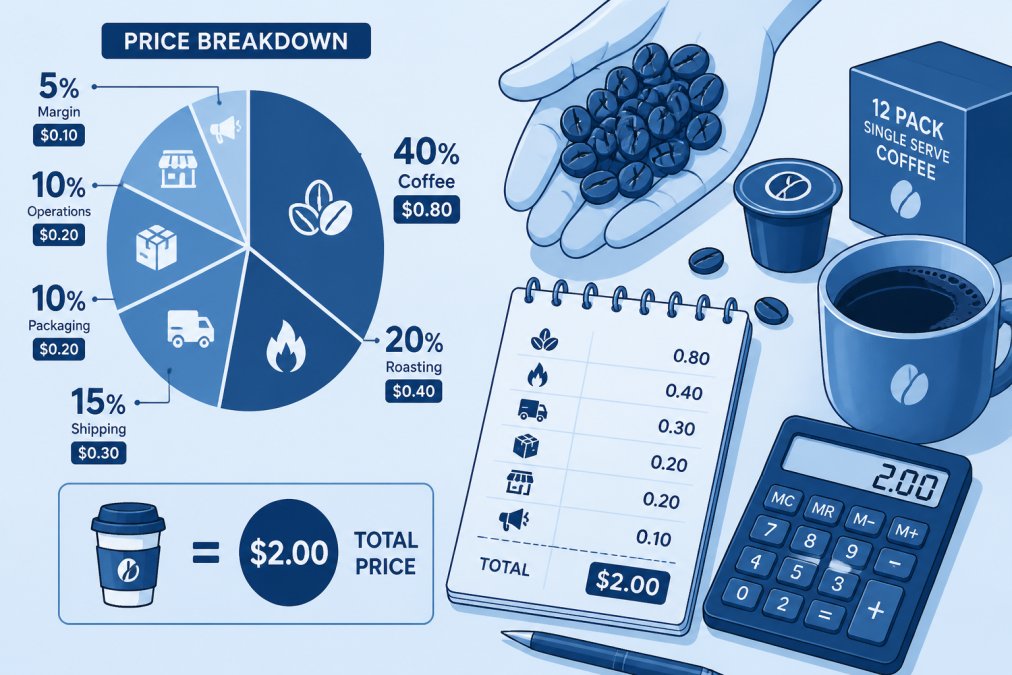
The price difference between specialty and commodity coffee isn't arbitrary. Each dollar reflects real costs in production, processing, logistics, and quality control. Understanding this breakdown helps you evaluate whether the premium is justified.
Cost-Per-Cup Breakdown
When you compare specialty coffee to commodity coffee on a per-cup basis, the actual price difference is smaller than most people assume.
Consider this realistic scenario:
- Specialty coffee: $18 per pound, 0.35 oz per cup = $0.39 per cup
- Commodity coffee: $8 per pound, 0.35 oz per cup = $0.18 per cup
- Difference: $0.21 per cup
That $0.21 difference, roughly 21 cents, is the actual premium you're paying per cup when brewing at home. For daily drinkers, that's about $6-7 per month more than commodity coffee. Many people spend more than that on a single specialty coffee shop visit.
The math changes significantly if you're comparing home-brewed specialty coffee to café prices. A specialty coffee shop charges $5-7 per cup. Home-brewing specialty coffee at $0.39 per cup means you're paying roughly 94% less than the café equivalent while getting superior freshness.
Price Comparison: Specialty vs Commodity Coffee
The retail price difference is significant, but it reflects different production methods and quality standards:
| Coffee Type | Typical Price Per Pound | Roast Date Provided | Traceability | Flavor Complexity |
|---|---|---|---|---|
| Commodity (Supermarket) | $6-10 | No | Unknown | Low |
| Mid-tier Specialty | $14-18 | Yes | Single country | Medium |
| Premium Specialty | $18-24 | Yes | Single farm | High |
| Micro-lot/Rare | $24-35 | Yes | Specific microplot | Very High |
Venro Coffee Co.'s offerings span the specialty range. The Italian Roast blend, for example, is priced at $19.99 per pound and combines specialty-grade Arabica and Robusta beans. This positions it in the mid-tier specialty category, higher than commodity but not at the premium single-origin level.
The Best Sellers Sample Pack at $24.99 includes six varieties (6Bean, Cowboy, Breakfast, Peru, Mexico, Bali), allowing you to explore different flavor profiles without committing to full bags. This is a practical entry point for anyone questioning whether specialty coffee is worth the investment.
Factors Influencing Specialty Coffee Pricing
Specialty coffee costs more because of legitimate production and supply chain expenses. Understanding these factors helps you see where your money actually goes.
Labor, Processing, and Supply Chain Costs
Hand-harvesting specialty coffee is labor-intensive. In countries like Ethiopia, Colombia, and Peru, coffee pickers are paid by weight of ripe cherries harvested. Selective harvesting, picking only ripe fruit, requires multiple passes through the same plant, multiplying labor costs compared to strip-harvesting commodity coffee.
Processing methods also drive cost differences. Natural-process coffee (where the fruit dries on the bean) requires careful monitoring to prevent over-fermentation. Washed-process coffee requires clean water and infrastructure. Honey-process (a middle ground) demands precise timing. Each method is more expensive than the industrial commodity approach of removing fruit as quickly as possible.
Transportation adds another layer. Specialty coffee is typically shipped in smaller quantities than commodity coffee, increasing per-pound shipping costs. Additionally, specialty producers often use direct-trade relationships, cutting out commodity brokers but requiring more direct communication and coordination.
The Role of the Roaster in Quality and Price
The roaster's skill directly impacts the final product. A specialty coffee roaster doesn't simply apply heat to beans. They develop roast profiles for each coffee based on its origin, density, and desired flavor outcome.
A light roast brings out origin flavors, the natural characteristics of the region and processing method. A darker roast emphasizes body and reduces acidity. The roaster's job is to develop each coffee to its potential without over-roasting or under-roasting.
This expertise comes with overhead: equipment maintenance, climate control, quality testing, and staff training. Specialty roasters also operate at lower volume than commodity roasters, meaning fixed costs are spread across fewer bags. Venro Coffee Co.'s approach of offering freshly roasted beans delivered directly reflects this model, smaller batches roasted closer to order date, which costs more but ensures superior freshness.
The roaster also determines freshness. Specialty roasters include roast dates on bags and often roast to order. Commodity coffee may sit for weeks or months before reaching consumers. A coffee roasted three weeks ago will taste noticeably flatter than one roasted five days ago.
Flavor Profiles in Specialty Coffee: Can You Actually Taste the Difference?
This is the core question: Is the flavor difference real, or is it placebo driven by higher price expectations?
Research and blind taste tests consistently show that trained tasters and many casual drinkers can identify flavor differences between specialty and commodity coffee. However, the difference isn't always dramatic, and your ability to perceive it depends on brewing method, water quality, and your own palate development.
Single-Origin vs Blends
Single-origin coffee comes from a specific farm or region and showcases the unique characteristics of that terroir, climate, altitude, soil, and processing method. A single-origin Ethiopian natural-process coffee tastes distinctly different from a single-origin Colombian washed-process coffee.
Single-origins typically cost more because they're produced in smaller quantities and require more careful sourcing and quality control. They're also more variable, two harvests from the same farm may taste slightly different due to weather and other factors.
Blends combine beans from multiple origins to create a consistent flavor profile. A blend might mix Ethiopian and Colombian beans to balance acidity with body, or combine three African coffees to create a specific flavor profile. Blends are often less expensive because they allow roasters to use beans that might not shine alone but work well together.
For daily drinking, many people prefer blends because they're more forgiving, consistent flavor regardless of brewing variables. For exploration and appreciation, single-origins reward attention and reveal how geography and processing influence taste.
Venro Coffee Co.'s sample pack approach, offering both blends and single-origins, lets you experiment without committing to full bags of coffee you might not enjoy.
Freshness and Roast Date Impact on Taste
Freshness is the most underrated factor in coffee quality. A specialty coffee roasted two weeks ago will taste noticeably better than the same coffee roasted three months ago.
Coffee begins losing volatile aromatic compounds immediately after roasting. At one week, it's at peak flavor. By three weeks, complexity starts fading. By two months, the coffee tastes flat and muted. This isn't spoilage, the coffee is still safe to drink, but the sensory experience degrades.
Commodity coffee often sits for months before reaching consumers. Supermarket coffee may have been roasted six months prior. You're paying for stale coffee without realizing it.
Specialty roasters print roast dates specifically so you can evaluate freshness. When buying from Venro Coffee Co. or other specialty roasters, check the roast date and aim for coffee roasted within the past two weeks. This single factor, freshness, often accounts for 40-50% of the perceived quality improvement when switching from commodity to specialty coffee.
Ethical Sourcing Coffee: Premium Price or Premium Practice?
Ethical sourcing claims are everywhere. Fair trade, direct trade, rainforest alliance, these labels suggest the coffee was produced responsibly. But do the certifications justify the premium price?
Fair Trade and Direct Trade Certifications
Fair Trade certification guarantees that coffee farmers received a minimum price per pound, typically $1.40-1.60 regardless of commodity market fluctuations. This protects farmers from price crashes but doesn't necessarily mean they received premium prices for quality.
Fair Trade is primarily a price-protection mechanism, not a quality guarantee. You can buy fair-trade commodity coffee. The certification ensures ethical treatment but doesn't require specialty-grade quality.
Direct trade is less formalized but potentially more impactful. Roasters buy directly from farms, cutting out middlemen and paying farmers a higher percentage of the retail price. Direct-trade relationships often include multi-year commitments and premium pricing for quality improvements.
The trade-off: Direct trade is harder to verify than Fair Trade's formal certification. You're relying on the roaster's integrity and transparency. Reputable specialty roasters publish their sourcing information and often share direct relationships with specific farms.
For consumers deciding whether ethical sourcing justifies premium pricing, ask these questions:
- What certification does the coffee carry? Fair Trade, Direct Trade, or other?
- Can the roaster name the specific farm or farmer? Direct relationships usually mean they can.
- What percentage of the retail price goes to the farmer? Specialty roasters should be willing to discuss this.
- Has the roaster visited the farm? Many specialty roasters maintain long-term relationships and visit annually.
Venro Coffee Co.'s emphasis on "carefully sourced" beans suggests attention to sourcing practices.
The Diminishing Returns Curve: When More Expensive Isn't Better
Here's where the "is specialty coffee worth the price" question becomes genuinely interesting: value doesn't increase linearly with price.
The jump from commodity coffee ($8/lb) to mid-tier specialty ($16/lb) produces a dramatic flavor improvement. Most people notice the difference immediately. The jump from mid-tier specialty ($16/lb) to premium single-origin ($24/lb) produces a noticeable but smaller improvement. The jump from premium ($24/lb) to micro-lot rare ($35/lb) produces an improvement that only trained tasters consistently detect.
This is the diminishing returns curve. Initial price increases deliver proportionally larger quality gains. Beyond a certain point, you're paying more for smaller improvements.
For most home brewers, the sweet spot is $14-20 per pound. At this price range, you're buying specialty-grade coffee with excellent freshness, clear flavor profiles, and ethical sourcing. You're not overpaying for rarity, and you're not settling for commodity quality.
Beyond $20 per pound, you're typically paying for:
- Micro-lot scarcity (limited production)
- Extreme altitude or special processing methods
- Competition among collectors
- Roaster reputation or exclusivity
These are legitimate factors if you value them. But they're not necessary for an excellent cup of coffee.
Storage and Shelf Life: Protecting Your Investment
Specialty coffee costs more, so protecting that investment through proper storage makes sense.
Coffee's enemies are heat, light, moisture, and air. Store beans in an opaque, airtight container at room temperature, not in the refrigerator or freezer, which introduces moisture through condensation. Whole beans last 3-4 weeks at peak flavor. Ground coffee lasts 1-2 weeks because grinding increases surface area, accelerating oxidation.
Buy whole beans and grind just before brewing. A burr grinder (not a blade grinder) produces consistent particle size, which improves extraction and flavor.
For longer storage, freezing can work if done properly: seal beans in an airtight container, freeze immediately after roasting, and thaw only the amount you'll use in a few days. However, this introduces complexity. For most people, buying smaller bags more frequently is simpler than managing frozen storage.
The practical implication: Don't buy large quantities of specialty coffee intending to store it for months. Buy smaller bags (8-12 oz) more frequently to ensure freshness. This aligns with how specialty roasters operate, they prefer selling smaller quantities more often over large bulk orders.
Is Specialty Coffee Worth It? The Verdict
The answer depends on your specific situation and priorities. Here's how to evaluate:
For Daily Drinkers
If you brew one or two cups per day and value convenience and consistency, specialty coffee is worth the modest price premium. The per-cup cost increase ($0.15-0.25) is negligible compared to the flavor improvement and freshness advantage.
Start with a mid-range specialty blend like Venro Coffee Co.'s Italian Roast or a sample pack to explore options. You'll immediately notice the difference compared to supermarket coffee, and the cost increase is minimal.
The single-serve capsule options (12-pack or 60-pack) offer convenience for busy mornings while maintaining specialty-grade quality. At $19.99 for 12 capsules, that's approximately $1.67 per capsule, higher than bulk beans but still significantly cheaper than café coffee.
For Coffee Enthusiasts
If you enjoy experimenting with brewing methods, exploring different origins, and developing your palate, specialty coffee is absolutely worth the investment. The flavor complexity and variability across different coffees provide endless exploration.
Invest in a quality burr grinder and scale if you don't have them. These tools get the most from specialty coffee far more than buying increasingly expensive beans. A $30 grinder upgrade will improve your coffee more than switching from a $16 to a $24 per pound coffee.
Subscribe to a specialty roaster's offerings to receive fresh coffee regularly. Venro Coffee Co.'s approach of offering sample packs and diverse blends supports this exploration without requiring large upfront commitments.
For Values-Driven Consumers
If ethical sourcing, sustainability, and farmer support matter to you, specialty coffee aligns with those values better than commodity coffee. The higher price often reflects genuine commitments to fair compensation and sustainable practices.
Verify sourcing claims directly with the roaster. Ask about certifications, farm relationships, and the percentage of retail price reaching farmers. Roasters committed to ethical sourcing are typically transparent about these details.
Whether is specialty coffee worth the price ultimately comes down to what you value: flavor complexity, freshness, ethical sourcing, or simply the ritual of a better morning cup. For most people, specialty coffee delivers measurable improvements that justify the modest per-cup cost increase. The key is buying at the right price point (roughly $14-20 per pound) and prioritizing freshness through roast dates and proper storage. Start with Venro Coffee Co.'s sample pack or a mid-range blend to experience the difference without significant commitment. You'll quickly determine whether specialty coffee fits your budget and preferences, and most people discover that it does.
Frequently Asked Questions
What is the difference between specialty coffee and regular coffee?
Specialty coffee is graded by the Specialty Coffee Association (SCA) and scores 80 points or higher on a 100-point scale, with meticulous attention to origin, processing, roasting, and freshness. Regular or commodity coffee has no such standards and is typically bulk-produced without traceability. Specialty coffee emphasizes single-origin beans, precise brewing methods, and distinct flavor profiles, while commodity coffee prioritizes volume and consistency over complexity.
Why does specialty coffee cost more, and is specialty coffee worth the price for casual drinkers?
Specialty coffee costs more due to higher labor standards, selective harvesting, careful processing methods, direct trade relationships, and smaller production batches. For casual drinkers, the premium may not be essential, a quality mid-range coffee offers good value. However, if you brew daily, the cost-per-cup difference narrows significantly. For example, specialty beans at $19.99 per pound yield roughly 16 cups, making it $1.25 per cup versus $0.50 for commodity coffee, a modest premium for noticeably better flavor.
How do I know specialty coffee will actually taste better, and can I tell the difference in a blind taste test?
Many people can detect differences in flavor profiles, acidity, body, and aroma in blind taste tests, though sensitivity varies. Single-origin specialty coffees often display distinctive tasting notes, berry, chocolate, citrus, that are harder to find in blended commodity coffee. The best way to judge is trying a sample pack: Venro's Best Sellers Sample Pack ($24.99) offers six varieties to compare. Freshness matters enormously; specialty coffee with a recent roast date tastes noticeably better than stale commodity beans.
Is specialty coffee with ethical sourcing and fair trade certification worth the extra cost?
Ethical sourcing and fair trade certifications ensure farmers receive fair compensation and work under better conditions, supporting sustainability. While these practices add cost, they create long-term supply chain stability and higher-quality beans. If values-driven consumption matters to you, the premium is justified. If cost is your only concern, standard specialty coffee still offers better quality than commodity options. Look for transparency: reputable roasters disclose their sourcing practices and certifications clearly.
This article was written using GrandRanker