



How to Brew Single Origin Beans: A Step-by-Step Guide
Table of Contents
- What Makes Single Origin Beans Different
- Essential Equipment and Preparation for Brewing Single Origin Beans
- Water to Coffee Ratio for Pour Over and Other Methods
- Coffee Grind Size Chart and Adjustment Guide
- Brewing Temperature for Specialty Coffee and Bloom Time
- Step-by-Step: How to Brew Single Origin Beans at Home
- How to Taste Coffee Notes and Identify Flavor Profiles
- Storage, Freshness Timeline, and Equipment Calibration
- Common Mistakes When Brewing Single Origin Beans
- Conclusion
How to Brew Single Origin Beans: A Step-by-Step Guide
Last Updated: August 4, 2026
Learning how to brew single origin beans transforms your morning ritual from routine to intentional. Single-origin coffees demand precision, they're grown in specific microclimates, processed with care, and roasted to highlight their unique characteristics. When you brew them poorly, you're throwing away months of work by farmers and roasters.
This guide walks you through exactly how to brew single origin beans at home, from measuring your dose to evaluating what's in your cup. Most guides treat all coffee the same, but single-origin beans are different. Their acidity, body, and flavor profile shift based on altitude, processing method, and roast level. Your technique needs to match those characteristics, not fight them.
What Makes Single Origin Beans Different
Single-origin coffee comes from one specific geographic region, farm, or micro-lot within a farm. This traceability tells you something concrete about what's in your cup. Unlike blends, which combine beans from multiple origins to create balance, single-origin coffees showcase the distinct characteristics of their terroir, the combination of altitude, climate, soil, and processing that defines their flavor.
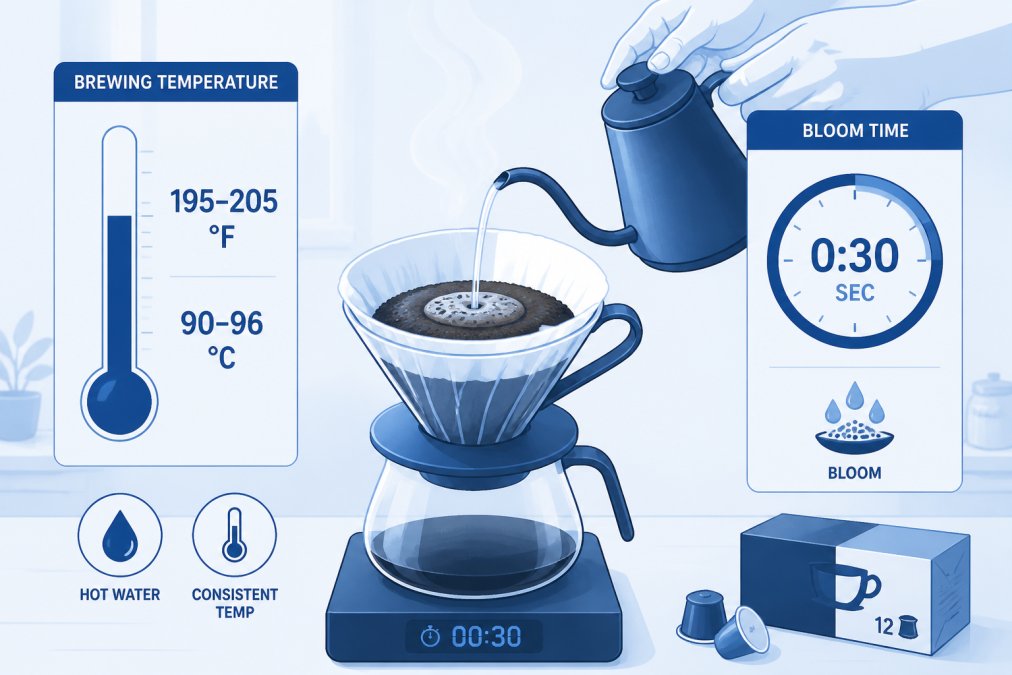
Origin characteristics determine everything about how you should approach brewing. A Colombian coffee grown at 2,000 meters elevation develops different sweetness and acidity than a Kenyan coffee from 1,800 meters. The depulped processing method used in many Central American coffees creates cleaner cups with brighter acidity, while natural (or dry) processing common in African coffees produces heavier body and more complex fermentation notes.
Venro Coffee Co. sources single-origin beans from distinct regions precisely because these origin characteristics deserve attention. When you brew Colombia or Costa Rica, you're working with beans that have traveled thousands of miles to reach your kitchen. That journey is worth respecting through proper technique.

Essential Equipment and Preparation for Brewing Single Origin Beans
You don't need expensive gear to brew single-origin beans well, but you do need the right gear. The three non-negotiable pieces are a burr grinder, a brewing vessel, and a way to measure water temperature.
Choosing the Right Grinder and Brew Method
A burr grinder is essential; blade grinders produce inconsistent particle sizes that lead to uneven extraction and muddy cups. Burr grinders crush beans to a uniform size, ensuring every particle extracts at roughly the same rate.
Your choice of brew method determines which grind size you'll need. Pour-over methods like Chemex or Hario V60 work best with medium-fine grounds and benefit from agitation during brewing. French press requires coarse grounds and steeping time. Espresso demands fine grounds and high pressure. Your grinder should have adjustable settings so you can dial in your grind size precisely. Burr grinders from reputable manufacturers cost between $40 and $200 for home use.
Water Quality and Its Role in Extraction
Water makes up 98% of your brewed coffee, yet most home brewers ignore it completely. Tap water varies wildly depending on your location. Hard water (high in minerals) over-extracts and produces harsh, bitter cups. Soft water (low in minerals) under-extracts and tastes thin and sour. Total dissolved solids (TDS) should ideally fall between 75 and 200 parts per million for specialty coffee.
If you're starting out, filtered water from a pitcher or tap filter is a reasonable middle ground. For serious brewing, consider a water filter designed specifically for coffee. Temperature matters equally. Cold water extracts too slowly, leaving your cup sour. Boiling water (212°F) over-extracts immediately, creating bitter, astringent flavors. The target window is 195-205°F for most single-origin beans. A simple digital thermometer costs under $15 and removes all guesswork.
Water to Coffee Ratio for Pour Over and Other Methods
The 1:16 Golden Ratio Explained
The 1:16 ratio, one part coffee to sixteen parts water by weight, is the starting point for most specialty coffee brewing. If you use 20 grams of coffee, you'd brew with 320 grams of water. Weight removes variability that volume measurements introduce. A simple kitchen scale costs $15-30 and is the single most useful tool for consistency.
The 1:16 ratio isn't sacred, it's a reference point. Light roasts with bright acidity sometimes benefit from slightly less water (1:15 ratio), which emphasizes citrus and floral notes. Darker roasts might work better at 1:17, which highlights sweetness and mouthfeel.
Adjusting Ratios by Brew Method
Different brew methods extract at different rates, so the ratio needs adjustment. A French press steeps grounds for 4 minutes, giving water plenty of time to extract. A pour-over finishes in 3-4 minutes with active pouring and agitation. Espresso uses pressure and extracts in 25-30 seconds.
For pour-over (Chemex, V60, Kalita Wave): Start at 1:16. If your cup tastes sour, increase water slightly (1:17). If it tastes flat, decrease water (1:15).
For French press: Use 1:15 because immersion extracts more thoroughly than percolation.
For AeroPress: Start at 1:16 but experiment aggressively. The AeroPress produces excellent results across a wide ratio range (1:14 to 1:18).
Coffee Grind Size Chart and Adjustment Guide
Matching Grind Size to Your Brew Method
Grind size controls how fast water moves through coffee grounds. Fine grinds have more surface area, so water extracts quickly. Coarse grinds have less surface area, so extraction takes longer. Match your grind size to your brew method's contact time.
| Brew Method | Grind Size | Particle Size | Brew Time |
|---|---|---|---|
| Espresso | Very Fine | Powder-like | 25-30 seconds |
| Pour-Over (V60/Chemex) | Medium-Fine | Sand-like | 3-4 minutes |
| AeroPress | Medium | Granular | 1-2 minutes |
| French Press | Coarse | Breadcrumb-like | 4 minutes |
| Cold Brew | Very Coarse | Pebble-like | 12-24 hours |
A single notch adjustment on your grinder can shift your extraction from sour to balanced to bitter. If your pour-over tastes sour (under-extracted), grind finer. If it tastes bitter (over-extracted), grind coarser.
Troubleshooting Extraction Issues
Under-extraction produces sour, thin cups with sharp acidity. Solutions: grind finer, increase water temperature by 5°F, or extend your brew time by pouring more slowly.
Over-extraction produces bitter, astringent cups. Solutions: grind coarser, decrease water temperature by 5°F, or brew faster.
Channeling, where water finds a path of least resistance through your grounds instead of flowing evenly, creates inconsistent extraction and muddy cups. Prevention: distribute grounds evenly before pouring, pour slowly and deliberately, and avoid tamping (unless you're making espresso).
Brewing Temperature for Specialty Coffee and Bloom Time
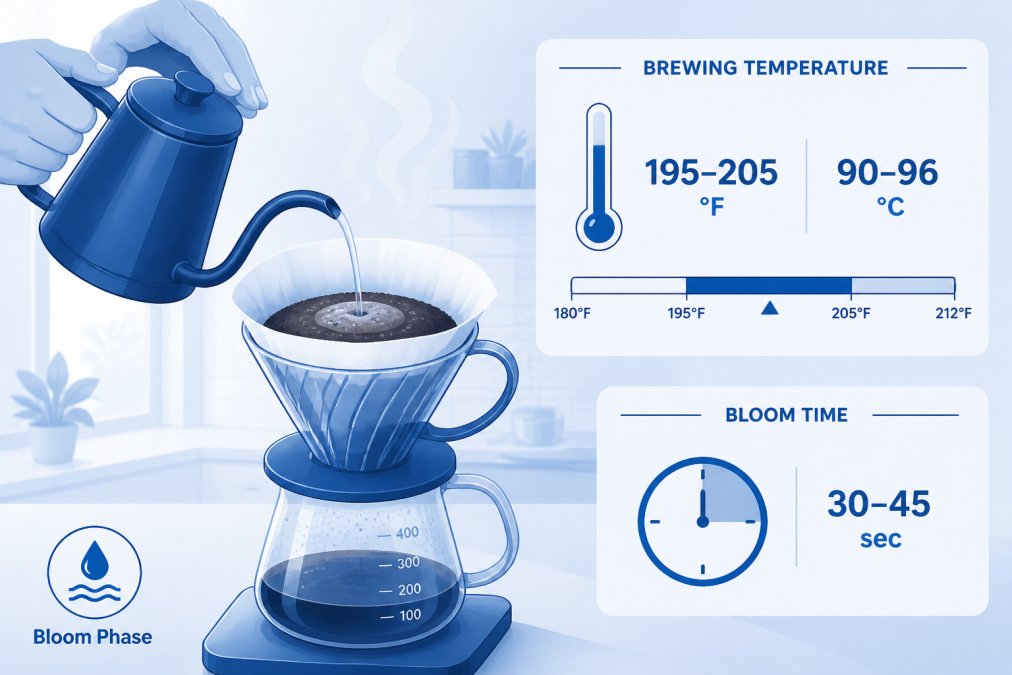
Water temperature directly controls extraction speed. For single-origin beans, the target range is 195-205°F. Some specialty roasters recommend slightly lower temperatures (190-200°F) for light roasts to preserve delicate floral and citrus notes. Darker roasts tolerate higher temperatures (200-210°F) without becoming over-extracted.
Slurry Temperature and Extraction Control
Slurry temperature, the temperature of the water and grounds mixture during brewing, is what actually matters for extraction. When you pour 200°F water over room-temperature grounds, the slurry temperature drops slightly.
During the bloom phase (the first 30-45 seconds of brewing), water saturates the grounds and releases CO2 trapped during roasting. CO2 escape allows water to penetrate the bean structure more evenly, setting up balanced extraction for the rest of the brew. If your water is too cool during bloom, CO2 release happens slowly and unevenly. If it's too hot, you risk over-extracting the bloom phase itself, creating bitter flavors before the main brew begins.
Step-by-Step: How to Brew Single Origin Beans at Home
Step 1: Measure and Grind Your Beans
Weigh your beans using a kitchen scale. For a standard pour-over, start with 25 grams of beans. Grind immediately before brewing; ground coffee loses volatile aromatics within 15 minutes of grinding. Adjust your grinder to the correct setting for your brew method and grind continuously for consistent results.
Step 2: Prepare Water and Heat to Target Temperature
Measure your water by weight using the 1:16 ratio. For 25 grams of coffee, measure 400 grams of water. Heat water to 200°F using a gooseneck kettle with a built-in thermometer, or heat to a boil and let it cool for 30 seconds. A gooseneck kettle's narrow spout gives you precise control over pouring speed and direction.
Step 3: Bloom Your Coffee
Place your dripper on your cup or carafe. Add grounds and pour just enough water to saturate them, roughly 2 times the weight of coffee (so 50 grams of water for 25 grams of coffee). Wait 30-45 seconds. During this time, CO2 escapes and water penetrates the bean structure. You'll see the grounds rise and bubble as gas releases.
Step 4: Pour and Agitate for Even Extraction
After bloom, begin pouring slowly in a circular motion, keeping the water level consistent. Pour in stages rather than all at once. For a 25-gram dose, pour in 3-4 stages over 2-3 minutes total. Agitation, gentle stirring or swirling, helps break up the slurry and ensures even extraction. The total brew time should be 3-4 minutes for pour-over methods. If it finishes in under 3 minutes, grind finer next time. If it takes longer than 4 minutes, grind coarser.
Step 5: Evaluate Your Brew
Once your coffee finishes dripping, let it cool slightly (about 1 minute) before tasting. You should taste origin characteristics: citrus brightness in a Kenya, chocolate sweetness in a Brazil, floral notes in an Ethiopian. If your cup tastes sour (under-extracted), grind finer or increase water temperature next brew. If it tastes bitter (over-extracted), grind coarser or decrease temperature. Write down what you tasted and what you changed. After 5-10 brews of the same bean, you'll dial in the perfect parameters.
How to Taste Coffee Notes and Identify Flavor Profiles
The Role of Origin Characteristics and Processing
The flavor profile of your cup begins with origin and processing, not roast level. A light roast highlights origin characteristics; a dark roast mutes them. Altitude determines acidity and sweetness. High-altitude coffees (above 1,500 meters) develop more acidity and complexity because they grow slower, allowing sugars to develop more fully.
Processing method determines how much fermentation flavor is present. Washed (or wet) processing removes fruit before drying, producing clean cups with bright acidity. Natural (or dry) processing leaves fruit on the bean during drying, creating fermented, fruity flavors. Honey (or pulped natural) processing splits the difference.
Acidity, Body, and Mouthfeel in Single Origin Coffees
Acidity in specialty coffee is a positive attribute, it's brightness, liveliness, complexity. High-acidity coffees (like Kenyans or Central Americans) taste crisp and vibrant. Low-acidity coffees (like Brazils or Indonesians) taste smooth and heavy.
Body describes how the coffee feels in your mouth, thick or thin, heavy or light. Mouthfeel is the overall sensation: velvety, silky, dry, astringent. Single-origin coffees with good extraction should feel clean and pleasant. To develop your palate, taste the same coffee multiple times and notice how it changes as it cools. Compare two different origins side by side; the contrasts make both coffees' characteristics more obvious.
Storage, Freshness Timeline, and Equipment Calibration
Keeping Your Beans Fresh from Roast to Cup
Whole beans stay fresh for 2-4 weeks after roasting if stored properly. Ground coffee loses freshness within 15 minutes of grinding. Store beans in an airtight container away from light, heat, and moisture. A sealed bag with a one-way valve works well. Avoid the freezer; moisture from condensation degrades beans faster than room-temperature storage.
Buy only what you'll brew in 3-4 weeks. Many specialty roasters offer subscription options that deliver fresh beans on your schedule. Check the roast date on your bag. If it's more than 4 weeks old, the beans are past their prime.
Calibrating Your Equipment for Consistency
Your grinder needs calibration every few months. Burrs wear over time, and grind size drifts. If you notice your brews getting consistently slower or faster without changing your grinder settings, recalibration is due. Your scale should be calibrated annually if you use it daily. Your thermometer should be checked against a known reference; boil water and measure it, it should read 212°F at sea level.
Common Mistakes When Brewing Single Origin Beans
The most common mistake is grinding too coarse. Home brewers often think specialty coffee must be delicate, so they use a coarse grind. This produces sour, under-extracted cups.
Another frequent error is brewing with stale beans. Beans lose 50% of their aromatic compounds within 2 weeks of roasting. Using boiling water is a classic mistake; 212°F is too hot and over-extracts immediately. Let boiled water cool for 30 seconds before brewing.
Ignoring water quality is surprisingly common. If your tap water tastes bad, your coffee will taste bad. A $20 pitcher filter solves this. Finally, changing too many variables at once makes it impossible to know what improved your cup. Change one thing per brew: either grind size, water temperature, or ratio. Keep everything else identical.
Brewing single-origin beans is a skill that compounds. Your first 10 brews will teach you more than reading any guide. The key is approaching each brew with intention, measuring, noting what you taste, and adjusting deliberately.
Venro Coffee Co. sources single-origin beans specifically because they reward this attention. When you brew Bali Blue or Brazil Santos with proper technique, you taste the work of farmers and roasters across the globe. Start with fresh beans from a reputable roaster, dial in your grind size, and let your palate guide you. The difference between a mediocre cup and an exceptional one is rarely about equipment, it's about understanding how the variables interact and having the patience to dial them in.


Frequently Asked Questions
What is the best way to brew single origin coffee?
The best method depends on your equipment and preference, but pour-over and French press are popular choices for single origin beans. Use the 1:16 brew ratio (1 gram coffee to 16 grams water), grind size matched to your method, water heated to 195-205°F, and allow a 30-45 second bloom before brewing. Single origin beans shine when you control extraction variables carefully, slight adjustments to temperature, grind size, or agitation reveal different flavor notes from the same coffee.
How do I know the right water to coffee ratio for pour over brewing?
The golden ratio for pour over is 1:16, one part coffee to 16 parts water by weight. For example, 25 grams of coffee requires 400 grams of water. This ratio works well for most single origin beans and brew methods. You can adjust slightly based on your taste: use 1:15 for a stronger cup or 1:17 for a lighter one. Always measure by weight, not volume, for consistency across different brew sessions.
What grind size should I use for single origin beans?
Grind size depends on your brew method. Pour-over requires medium-fine grounds (similar to sea salt), French press needs coarse grounds (like breadcrumbs), and espresso demands very fine grounds. For single origin beans, precision matters, too fine causes over-extraction and bitterness, too coarse results in under-extraction and weak flavor. Start with the recommended size for your method, then adjust in small increments if your coffee tastes sour (too coarse) or bitter (too fine).
Why does water temperature matter when brewing single origin beans?
Water temperature controls extraction speed and which flavor compounds dissolve from the grounds. Water that's too cool (below 195°F) under-extracts, leaving your coffee sour and thin. Water that's too hot (above 210°F) over-extracts, creating harsh, bitter flavors. For single origin beans, aim for 195-205°F to highlight the bean's unique origin characteristics, acidity, and sweetness. Even a 5-degree difference affects how much you taste the bean's terroir and processing method.
This article was written using GrandRanker