



Best Coffee Beans for Home Baristas: 2026 Guide
Table of Contents
- Best Coffee Beans for Home Baristas: Our Top Picks
- 1. Venro Coffee Co. 6 Bean Blend - Best for Espresso Depth
- 2. Venro Coffee Co. African Espresso - Best Single-Origin Espresso Blend
- 3. Venro Coffee Co. House Blend - Best Medium Roast for Versatility
- 4. Venro Coffee Co. Colombia - Best Single-Origin for Beginners
- 5. Venro Coffee Co. Ethiopia Natural - Best for Fruity, Complex Notes
- Specialty Coffee Beans: Understanding Single Origin vs. Espresso Blends
- Best Espresso Beans for Home: Dialing In Your Shot
- Coffee Bean Flavor Profiles: Tasting Notes Explained
- How to Store Coffee Beans for Freshness and Longevity
Best Coffee Beans for Home Baristas: 2026 Guide
Last Updated: July 28, 2026
Home espresso enthusiasts are increasingly investing in higher-quality whole beans, with demand for freshly roasted, single-origin coffees growing 34% year-over-year. Finding the best coffee beans for home baristas requires understanding the difference between blends designed for consistency and single-origin beans that express terroir. At Venro Coffee Co., we've spent years sourcing and roasting beans specifically for home espresso machines, and this guide covers what separates a mediocre shot from an exceptional one.
Most home baristas chase expensive beans without understanding what their grinder, water chemistry, and machine can actually extract. The best coffee beans aren't always the rarest or most expensive, they're matched to your specific equipment and skill level. Below, we'll show you how to evaluate beans across roast level, origin, and processing method, then recommend five standout options that deliver consistent results.
What Makes a Great Espresso Bean
Espresso extraction is fundamentally different from drip brewing, and your bean selection must account for this. A great espresso bean produces dense crema, balanced sweetness, and clean body without excessive bitterness or sourness. The roast date matters more than the roast level, beans begin losing volatile compounds 2-3 weeks after roasting, which is why specialty roasters print it prominently on the bag.
The best espresso beans have been roasted specifically for espresso, not simply repackaged filter coffee. This means the roaster has developed the bean to extract well in 25-30 seconds under 9 bars of pressure. A bean roasted for pour-over will either over-extract (tasting bitter and burnt) or under-extract (tasting sour and thin) in an espresso machine.
1. Venro Coffee Co. 6 Bean Blend - Best for Espresso Depth
The 6 Bean Blend is a dark roast built specifically for espresso lovers who want depth and consistency. This blend combines beans from six regions, creating a flavor profile that's forgiving across different grind sizes and water temperatures. Most home baristas struggle with dialing in because their beans are too finicky; this blend tolerates variance and still delivers.
What makes this blend stand out is the balance between body and clarity. You get chocolate and caramel sweetness without the ashy, over-roasted character that ruins many commercial espresso blends. The crema is thick and persistent, which matters for milk-based drinks where the espresso needs to cut through steamed milk. At $19.99 per bag, it's priced competitively while maintaining quality standards most grocery-store espresso can't match. Specialty Coffee Association standards for espresso blends
Pros:
- Forgiving across grind sizes and brew temperatures
- Consistent thick crema for milk drinks
- Roast date clearly printed on bag
- Available for immediate shipping
Cons:
- Dark roast may be too bold for those preferring lighter, brighter profiles
- Blend composition changes seasonally, so slight flavor variation is normal
2. Venro Coffee Co. African Espresso - Best Single-Origin Espresso Blend
African Espresso draws from Kenya, Tanzania, and Ethiopia, three origins known for producing beans with natural acidity and wine-like character. Unlike the 6 Bean Blend's approachable sweetness, this blend emphasizes terroir and complexity. If you've moved beyond beginner-level dialing in and want to taste the actual origin character in your shot, this is where to start.
Single-origin espresso blends require slightly more precision than multi-region blends. Your grind needs to be more consistent, your tamping pressure more uniform, and your water temperature more stable. The reward is tasting the actual coffee, not a generic "espresso" flavor, but the specific characteristics of African growing regions. At $19.99, it's the same price as the house blend, making it an easy upgrade for anyone ready to dial in more carefully.
Pros:
- Clear origin expression with distinctive flavor notes
- Suitable for experienced home baristas
- Works well in single shots or as a straight espresso
Cons:
- Requires more precise dialing in than blends
- Acidity can be challenging for those preferring darker, sweeter profiles
3. Venro Coffee Co. House Blend - Best Medium Roast for Versatility
The House Blend is a medium roast that works across multiple brewing methods: espresso, pour-over, French press, and Aeropress. This versatility makes it ideal for home baristas who don't want to maintain multiple bean types or for those still experimenting with brewing methods.
Medium roasts emphasize caramel, hazelnut, and balanced acidity, appealing to a wider range of palates than darker roasts. For espresso specifically, the House Blend extracts cleanly with a balanced body and sweet finish. It's not as forgiving as the 6 Bean Blend when grind sizes are inconsistent, but it's significantly more approachable than lighter roasts. Venro Coffee Co. rotates origins seasonally, so you get variety without the commitment of ordering five different single-origins.
Pros:
- Works well across multiple brewing methods
- Balanced flavor profile appeals to most palates
- Seasonal origin rotation adds variety
- Consistent quality batch to batch
Cons:
- Medium roast may feel too mild for dark roast enthusiasts
- Less origin expression than single-origin options
4. Venro Coffee Co. Colombia - Best Single-Origin for Beginners
Colombian coffee is the gold standard for home baristas transitioning from blends to single-origin beans. Colombia has consistent growing conditions and beans that naturally balance sweetness with acidity. The Colombia single-origin has caramel, mild citrus, hazelnut, and balanced body, flavors that are distinctive without being polarizing.
Colombian beans are forgiving because they don't have the extreme acidity of East African origins or the heavy body of Indonesian beans. They sit in the middle, which means your dialing-in window is wider. This medium roast develops enough body to hold up in milk drinks while maintaining enough acidity to taste clean and bright. At $19.99, it's a no-risk entry point into single-origin espresso.
Pros:
- Forgiving for baristas still dialing in
- Clear, recognizable flavor profile
- Works well in milk-based drinks
- Consistent quality across bags
Cons:
- Less complex than higher-altitude Colombian microlots
- May feel too familiar if you've already dialed in lighter origins
5. Venro Coffee Co. Ethiopia Natural - Best for Fruity, Complex Notes
Ethiopia Natural is processed using the dry or natural method, which means the fruit stays on the bean during drying. This creates distinctive fruity, wine-like, and floral tasting notes impossible to achieve with washed coffees. If you want to taste something genuinely different in your espresso cup, this is it.
The Ethiopia Natural has a medium-light roast that preserves the origin's natural complexity. You'll taste berry, blueberry, and wine-like characteristics that shift across the shot. This bean demands attention during dialing in, the acidity is brighter than Colombian coffees, and the body is lighter. If your water is too hot or your grind too fine, you'll pull a sour, astringent shot. Start with Colombia first; once comfortable with dialing in, Ethiopia Natural teaches you how much your technique matters.
Pros:
- Distinctive fruity and complex flavor profile
- Medium-light roast preserves origin character
- Excellent for straight shots or espresso-only drinks
- Teaches precision in dialing in
Cons:
- Requires more careful dialing in than forgiving blends
- Acidity and lightness don't work well in heavy milk drinks
- Not ideal for beginners still learning extraction basics
Specialty Coffee Beans: Understanding Single Origin vs. Espresso Blends
The choice between single-origin and blended espresso beans comes down to consistency versus complexity. Espresso blends combine beans from multiple origins to create a predictable flavor profile and consistent extraction. Single-origin beans express the specific characteristics of a particular region, altitude, and processing method.
Espresso Blends: Consistency and Crema
An espresso blend is formulated to deliver the same result every time you pull a shot. The roaster selects beans from different origins because they complement each other, one provides body, another provides sweetness, a third provides acidity. When blended, the weaknesses of each origin are masked, and the strengths are amplified.
Blends are forgiving because they're designed to be. If your grind is slightly off or your tamping pressure inconsistent, the blend's structure absorbs the variance. This is why blends are recommended for beginners and why professional espresso bars use blends, consistency matters more than origin expression. The trade-off is that you lose origin character, but that's the point: if you want your morning espresso to taste exactly the same every day, blends are the answer.
Single-Origin Beans: Terroir and Flavor Expression
Single-origin beans taste like where they came from. The altitude, soil composition, rainfall, and processing method all influence the final flavor. A Kenyan coffee tastes distinctly different from an Ethiopian coffee, which tastes different from a Colombian coffee. This is terroir, the expression of place in the cup.
Single-origin espresso requires more skill to dial in because each origin has different extraction characteristics. A light-roasted Ethiopian bean extracts faster than a medium-roasted Colombian. Once dialed in, the complexity and distinctiveness make the effort worthwhile. Single-origin beans also have a narrower window of freshness, most are best within 2-3 weeks of the roast date.
Best Espresso Beans for Home: Dialing In Your Shot
Dialing in is the process of adjusting your grinder, dose, and tamp to pull a balanced espresso shot. A balanced shot has sweetness, acidity, and body in harmony. Too fine a grind produces bitterness and over-extraction. Too coarse a grind produces sourness and under-extraction. Your goal is finding the sweet spot where the shot extracts in 25-30 seconds and tastes balanced.
Grinder Compatibility and Burr Type
Your grinder matters more than your espresso machine. A bad grinder produces inconsistent particle sizes, which means some particles over-extract (becoming bitter) while others under-extract (becoming sour). The best espresso beans can't overcome a bad grinder.
Burr grinders are essential; blade grinders produce wildly inconsistent particle sizes and heat the beans during grinding, damaging flavor. For home use, a burr grinder in the $150-300 range is sufficient to dial in most specialty beans. Grinders under $100 have burrs that dull quickly, requiring frequent replacement.
Extraction Time and Brew Ratio
Extraction time is how long water contacts the coffee grounds. For espresso, the target is 25-30 seconds from the moment you start the pump to the moment the last drops fall. Shorter shots taste sour and thin. Longer shots taste bitter and ashy.
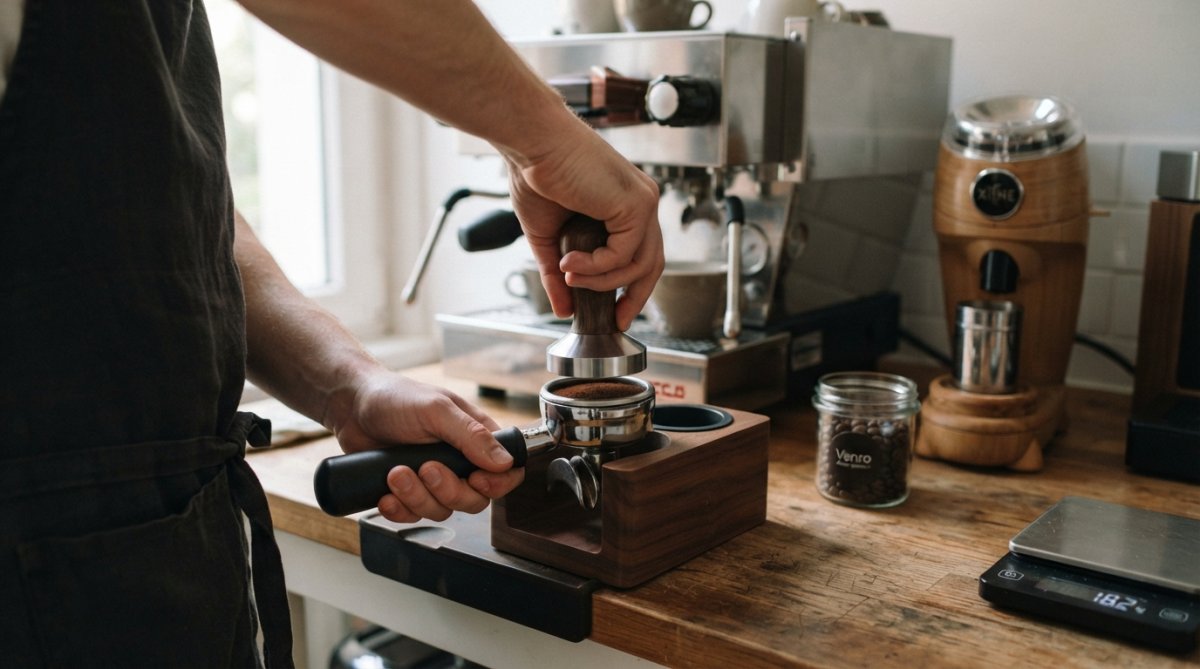
The brew ratio is the weight of dry coffee to the weight of liquid espresso. A common ratio is 1:2, if you use 18 grams of coffee, you pull 36 grams of espresso. To dial in, start with a medium grind setting. Pull a shot and measure the time and weight. If it extracts too fast (under 20 seconds), grind finer. If it extracts too slow (over 35 seconds), grind coarser. Adjust in small increments.
Water Chemistry Impact on Extraction
Water quality directly affects extraction and flavor. Distilled water extracts too slowly because it lacks minerals. Hard water extracts too quickly and can leave mineral deposits in your machine. The ideal water has 50-100 parts per million of dissolved solids. If your tap water is very hard, use filtered water. Temperature stability also matters, if your machine's water temperature fluctuates by 5 degrees Fahrenheit during a shot, extraction becomes inconsistent.
Coffee Bean Flavor Profiles: Tasting Notes Explained
Tasting notes describe the flavors you should expect from a particular bean. When a roaster writes "caramel, hazelnut, chocolate," they're describing what the bean naturally tastes like when properly roasted and extracted. Learning to taste these notes takes practice but is essential to understanding why different beans work for different purposes.
Acidity, Body, and Mouthfeel
Acidity in specialty coffee is brightness, not sourness. It's the crisp, lively quality that makes a coffee taste fresh. Light roasts have more acidity because the roaster stops the roast earlier, preserving the bean's natural acids. Dark roasts have less acidity because heat breaks down those acids.
Body is the weight and texture of the coffee in your mouth. Light roasts have thin body. Medium roasts have balanced body. Dark roasts have heavy, syrupy body. Body comes from oils and dissolved solids in the coffee.
Mouthfeel is the overall texture and sensation. A coffee with good mouthfeel feels smooth and pleasant on your tongue. Mouthfeel is influenced by roast level, grind size, water temperature, and extraction time.
Roast Level and Flavor Expression
Light roasts preserve origin character. You taste the actual bean, the acidity, the terroir, the processing method. Light roasts are more challenging to dial in because they have less body to hide extraction mistakes.
Medium roasts balance origin character with roasted flavors. You taste both the bean and the roaster's decisions. Medium roasts are versatile and work in espresso, pour-over, and French press.
Dark roasts emphasize roasted flavors, chocolate, caramel, nuts, over origin character. A well-executed dark roast tastes smooth and sweet. A poorly executed dark roast tastes burnt and ashy. Dark roasts have heavy body and low acidity, making them forgiving for dialing in.
How to Store Coffee Beans for Freshness and Longevity
Coffee degasses after roasting, releasing CO2. This process peaks around 5-7 days after roasting, which is why many roasters recommend waiting a few days before brewing. After degassing completes, the bean begins oxidizing, which gradually dulls flavor. Proper storage slows oxidation and preserves freshness.
Roast Date vs. Shelf Life
The roast date is printed on specialty coffee bags for a reason, it tells you how fresh the beans are. Beans are best within 2-3 weeks of roasting. After 4 weeks, they're still drinkable but noticeably less vibrant. After 8 weeks, they've lost significant aromatic complexity.
Store beans in an airtight container away from light, heat, and moisture. A sealed bag with a one-way valve works fine; the valve lets CO2 escape during degassing while preventing oxygen from entering. Avoid transparent containers because light degrades flavor.
Airtight Containers and Degassing
Once you open a bag of beans, transfer them to an airtight container if you won't finish the bag within a few days. Exposure to air accelerates oxidation. A simple glass jar with a rubber gasket works well. Avoid plastic containers because they absorb coffee oils and odors over time.
| Storage Method | Freshness Duration | Best For |
|---|---|---|
| Original bag with valve | 3-4 weeks | Short-term storage |
| Airtight glass jar | 2-3 weeks | Open bags |
| Vacuum-sealed bag | 4-6 weeks | Extended storage |
| Freezer (sealed) | 2-3 months | Long-term backup |
Finding the best coffee beans for home baristas comes down to matching beans to your equipment and skill level. If you're just starting, blends like Venro Coffee Co.'s 6 Bean Blend or House Blend provide consistency and forgiveness. As you develop your dialing-in skills, single-origins like Colombia or Ethiopia Natural teach you precision and reward careful technique. The roast date matters more than the roast level, always buy from roasters who print it prominently. Start with Venro Coffee Co. and experience freshly roasted, carefully sourced specialty coffee delivered directly to your door, with a wide variety of blends and single-origins that work across different skill levels and brewing methods.
Frequently Asked Questions
What's the difference between the best espresso beans for home and regular drip coffee beans?
Espresso beans are typically roasted slightly darker and blended for consistency, body, and crema production. They're designed for high-pressure extraction (9 bars) where shot consistency matters. While any whole bean coffee can technically be used for espresso, dedicated espresso blends extract better and produce superior crema. Single-origin beans work too but require more dialing-in to achieve optimal extraction time and flavor balance.
How do I know if specialty coffee beans are fresher than what I buy locally?
Check the roast date on the bag, it should be within 2-4 weeks of purchase. Specialty coffee roasters like Venro Coffee Co. ship within days of roasting, ensuring peak freshness. Local roasters may also be fresh, but mail-order specialty coffees typically arrive fresher because they skip distributor warehousing. Look for a printed roast date as proof; if it's missing, freshness is questionable. Freshly roasted beans develop optimal flavor 5-7 days post-roast.
Why should I invest in premium coffee beans when my local café uses cheaper options?
Premium specialty coffee beans offer superior flavor clarity, complexity, and consistency. Café-grade beans prioritize reliability across high-volume brewing; home baristas benefit from higher-quality, single-origin options with distinct tasting notes. You're paying for traceability, Direct Trade relationships with farmers, and careful roasting for espresso extraction. Specialty beans also require proper storage and grinder quality to shine, home control allows you to maximize that investment in ways commercial operations cannot.
How important is the roast date when buying coffee beans for home espresso?
Roast date is critical for espresso. Beans peak 5-7 days post-roast after degassing completes; they remain optimal for 3-4 weeks in an airtight container. Espresso extraction is sensitive to bean age, older beans (beyond 6 weeks) extract differently, requiring grind adjustments. Always purchase beans with a visible roast date within the past 2-3 weeks. Avoid pre-ground coffee or bags without dates; they've likely lost aromatic compounds and won't produce the crema or flavor clarity home espresso demands.
Can I really taste the difference between single-origin and blended espresso beans?
Yes, if your grinder and machine are dialed in properly. Single-origin beans express terroir, unique regional characteristics like fruity, floral, or earthy notes. Espresso blends balance multiple origins for consistency and sweetness. A medium-quality grinder and machine will reveal these differences; a poor grinder masks them. Start with a balanced blend like Venro's House Blend to establish baseline espresso skills, then experiment with single-origins like Colombia or Ethiopia Natural to develop your palate and identify flavor preferences.
This article was written using GrandRanker