



Benefits of Drinking Herbal Tea for Winter Wellness
Table of Contents
- Why Herbal Tea Winter Wellness Matters More Than You Think
- Best Herbal Tea for Immune System Support in Cold Weather
- Soothe Digestion and Beat Winter Bloating
- Relaxation, Sleep Quality, and Stress Relief in Winter
- How to Brew Loose Leaf Herbal Tea for Maximum Benefits
- Herbal Tea for Cold and Flu Season: What to Sip When You're Sick
- Caffeine-Free vs. Low-Caffeine: What Winter Sipping Requires
- Contraindications and Drug Interactions You Should Know
- Sustainable Sourcing and Organic Certification in Herbal Tea
- Build Your Winter Wellness Routine
- Frequently Asked Questions
Last Updated: October 1, 2026
Why Herbal Tea Winter Wellness Matters More Than You Think
Cold weather changes what your body needs. Shorter days, dry indoor air, and more time spent indoors all put pressure on your immune system, digestion, and sleep. The benefits of drinking herbal tea for winter wellness come down to one simple fact: a warm, caffeine-free cup delivers hydration, plant compounds, and a calming ritual in a single habit.
This guide from Venro Coffee Co. explores how to build a winter tea routine that supports your immune system, soothes digestion, and helps you sleep.
Herbal tea is a caffeine-free infusion made by steeping dried flowers, leaves, roots, spices, or fruit in hot water rather than true tea leaves. That distinction matters: no caffeine means you can drink it at night without wrecking your sleep hygiene.
Best Herbal Tea for Immune System Support in Cold Weather
The best herbal tea for immune system support combines ingredients with antioxidant and anti-inflammatory properties, like hibiscus, rosehips, and rooibos. These botanicals contain phytonutrients that support your body's natural defense during cold and flu season.
Hibiscus, in particular, is rich in bioactive compounds. A review of hibiscus research on PubMed notes its antioxidant activity, which is one reason it shows up in so many winter blends.
Soothe Digestion and Beat Winter Bloating
Heavy winter meals and less movement slow digestion, which is why bloating peaks this time of year. Warming herbal infusions with ginger, cinnamon, and citrus help soothe digestion by supporting digestive enzymes and easing the feeling of fullness after a rich meal.
Peppermint and ginger are the classic choices here. Both have warming properties that relax the gut and reduce that sluggish post-dinner feeling. Sip a cup 20 to 30 minutes after eating rather than during the meal for the best effect.
Relaxation, Sleep Quality, and Stress Relief in Winter
Winter stress is real, and it shows up at night. A caffeine-free cup about an hour before bed supports stress reduction and better sleep quality by giving your body a consistent wind-down signal.
The ritual matters as much as the herbs. Steaming a cup, letting it cool, and drinking it slowly tells your nervous system the day is over. For calming effects, reach for blends built on rooibos or fruit rather than anything with caffeine.
How to Brew Loose Leaf Herbal Tea for Maximum Benefits
Learning how to brew loose leaf herbal tea correctly is the difference between a bland cup and one that actually delivers. Herbal infusions need a longer steeping time than true tea because the ingredients are denser: flowers, roots, and dried fruit release their compounds slowly.
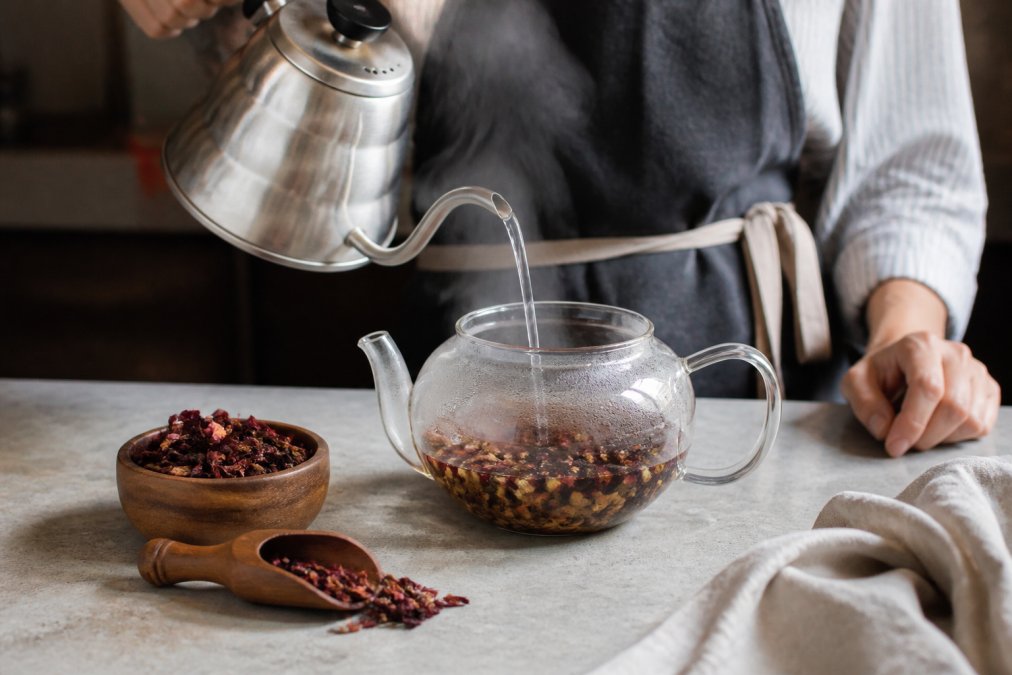
Here's a simple method that works for almost any blend:
- Measure 3 grams of loose leaf tea per 12 ounces of water
- Heat water to 212°F for roots, spices, and hibiscus
- Steep for 5 to 10 minutes, covered to trap volatile oils
- Strain and taste before adding anything
- Re-steep the same leaves once more if the flavor holds
A decoction is a related technique where you simmer tougher ingredients like roots and bark in water for 10 to 20 minutes instead of steeping. Use it for ginger and cinnamon-heavy blends.
| Goal | Water Temp | Steeping Time | Best Base |
|---|---|---|---|
| Immune support | 212°F | 5-10 min | Hibiscus, rosehips |
| Digestion | 212°F | 5-8 min | Ginger, cinnamon |
| Evening calm | 200°F | 5-7 min | Rooibos, fruit |
| Cold relief | 212°F | 8-10 min | Spiced blends |
Venro Coffee Co. carries several loose leaf options built for exactly this, including the Apple Cider Rooibos Tea, a caffeine-free blend of rooibos, cinnamon, and orange peel that's ideal for cozy winter evenings.

Herbal Tea for Cold and Flu Season: What to Sip When You're Sick
When you're actually sick, the goal shifts. Herbal tea for cold and flu season should focus on hydration, respiratory support, and soothing a sore throat rather than general wellness. The difference between a cup that helps and a cup that just feels nice comes down to which botanicals you choose and how you prepare them. Integrating these targeted ingredients into your nightly routine allows you to better understand the science of herbal tea and how specific infusions can facilitate deeper rest during your recovery.
What each herb actually does:
- Ginger contains gingerols and shogaols, the pungent compounds that create the warming sensation. Simmering sliced fresh root in water for 10 to 15 minutes pulls more of these out than steeping a tea bag for three minutes.
- Elderberry is traditionally used for upper respiratory comfort. It works best in a decoction or syrup rather than a quick steep because the berries are dense.
- Marshmallow root and slippery elm contain mucilage, a gel-forming fiber that coats a raw throat. These need cold-water extraction or a long, low simmer; boiling hard degrades the mucilage.
- Thyme contains thymol, a volatile compound that supports respiratory comfort. Cover the cup while steeping so the volatile oils stay in the liquid instead of escaping as steam.
- Licorice root is intensely sweet and soothing, but see the contraindications section below before making it a daily habit.
A practical sick-day routine:
- Morning: a ginger-cinnamon decoction, simmered 10 to 15 minutes, to warm you up and loosen congestion.
- Midday: thyme or elderberry infusion, steeped covered for 8 to 10 minutes.
- Evening: marshmallow root or slippery elm, prepared with cool water first and then warmed gently, to coat the throat before sleep.
Warm liquids help with sinus congestion by loosening mucus, and steam from the cup adds mild relief. Honey can soothe a scratchy throat, but it is still sugar, and it should never be given to infants under one year old because of the risk of infant botulism.
Apple Cider Rooibos Tea – Spiced & →
Caffeine-Free vs. Low-Caffeine: What Winter Sipping Requires
Most true herbal teas are naturally caffeine-free, but not all. Blends that include black or green tea, like masala chai, carry caffeine. That distinction matters when you're drinking multiple cups a day.
For most winter sipping, caffeine-free wins. You can drink it in the afternoon and evening without affecting sleep hygiene. If you want a morning cup with a gentle lift, a low-caffeine spiced chai works well. The Masala Chai Loose Leaf Tea from Venro Coffee Co. blends black tea with cardamom, ginger, and cinnamon for exactly that morning role.

Contraindications and Drug Interactions You Should Know
Herbal tea is not automatically risk-free just because it's natural. Some botanicals interact with medications or aren't suitable for certain people, and most lifestyle articles skip this entirely.
- Hibiscus may interact with blood pressure and diuretic medications
- Ginger in large amounts can interact with blood thinners
- Licorice root can affect potassium levels and blood pressure
- Chamomile may trigger reactions in people with ragweed allergies
If you take prescription medication, are pregnant, or manage a chronic condition, check with a healthcare provider before making herbal tea a daily habit. The FDA's guidance on dietary supplements is a useful starting point for understanding how these products are regulated.
Sustainable Sourcing and Organic Certification in Herbal Tea
Where your tea comes from affects both quality and your peace of mind. Sustainable sourcing means growers use practices that protect soil, water, and workers, while organic certification verifies that ingredients are grown without synthetic pesticides. Most benefit-focused articles skip this entirely, which is a mistake: a poorly sourced botanical can carry pesticide residue or heavy metals that undercut the whole point of drinking it.
Certifications worth looking for on the label:
- USDA Organic, the USDA Organic certification program sets the legal standard for organic labeling in the United States. Products must contain at least 95 percent certified organic ingredients to carry the seal.
- Fair Trade Certified, verifies minimum prices and safe working conditions for growers, which matters most for labor-intensive botanicals like hibiscus and rosehips.
- Rainforest Alliance, focuses on ecosystem protection and farm-level sustainability practices.
- Non-GMO Project Verified, relevant if you want assurance that ingredients weren't derived from genetically engineered crops.
Quality markers beyond certification:
- Whole-leaf versus dust and fannings. Broken leaf and dust have more surface area, so they go stale faster and lose volatile oils. Whole flowers, roots, and leaves hold their aroma longer.
- Harvest date, not just a best-by date. Volatile oils fade over time. A blend packed 18 months ago will taste flat no matter how well it was grown.
- Origin transparency. A label that names the region or farm is a stronger signal than a vague 'imported from multiple countries' claim.
- Packaging. Light and oxygen degrade dried botanicals. Opaque, resealable packaging preserves quality better than a clear bag.
The trade-off to expect: certified organic and fair-trade botanicals typically cost more per ounce because the growing and verification standards are stricter. For a daily winter habit, that premium is usually worth it on the herbs you drink most often, and less critical on occasional blends.
Venro Coffee Co. focuses on carefully sourced artisan teas.
Build Your Winter Wellness Routine
The benefits of drinking herbal tea for winter wellness add up fastest when the habit is simple and consistent. Pick a caffeine-free blend for evenings, a warming spiced option for mornings, and keep your brewing method dialed in.
If you want a starting point, Venro Coffee Co. delivers premium loose leaf teas, including the caffeine-free Peach Paradise Herbal Tea and the antioxidant-rich Hibiscus Berry Tea, straight to your door. Each one is built for the kind of daily ritual that makes winter feel a little warmer.

Frequently Asked Questions
What happens if you drink herbal tea every day?
Drinking herbal tea daily can support hydration, provide antioxidants, and offer a calming ritual. Caffeine-free options like rooibos or hibiscus are gentle enough for regular enjoyment. However, some herbs can interact with medications or cause side effects with excessive intake. Rotate varieties and consult a healthcare provider if you take prescription drugs or have a medical condition.
Which herbal tea is best for overall wellness?
There is no single best tea; it depends on your goals. For immune support, look for blends with elderberry, ginger, or echinacea. For relaxation, chamomile or peppermint work well. For antioxidant intake, hibiscus and rooibos are excellent choices. A varied rotation of caffeine-free herbal infusions gives you a broader range of bioactive compounds throughout the week.
What is the best way to brew loose leaf herbal tea for maximum wellness benefits?
Use fresh, filtered water heated to 212°F. Measure about 3 grams of loose leaf tea per 12 ounces of water. Steep for 5 to 10 minutes, depending on the blend; longer steeping extracts more phytonutrients but can increase bitterness. For roots and spices, a gentle decoction (simmering) may release more compounds. Always follow the specific brewing instructions on your tea's packaging.
Can herbal tea help soothe a sore throat or cough during cold and flu season?
Warm herbal teas can temporarily soothe a sore throat and help loosen mucus. Blends containing ginger, licorice root, or marshmallow root are often used for throat comfort. Adding honey can further calm irritation. Herbal tea is not a cure for viral infections, but it supports hydration and comfort while your immune system does its work. Seek medical advice if symptoms persist or worsen.
Winter throws a lot at your body: dry air, heavier meals, and disrupted sleep. A well-chosen herbal tea routine helps you meet all three without adding caffeine or sugar. Venro Coffee Co. makes it easy with carefully sourced artisan teas, convenient delivery to your door, and a range of caffeine-free blends like Apple Cider Rooibos and Hibiscus Berry. Get started with Venro Coffee Co. and make your winter ritual something you actually look forward to.